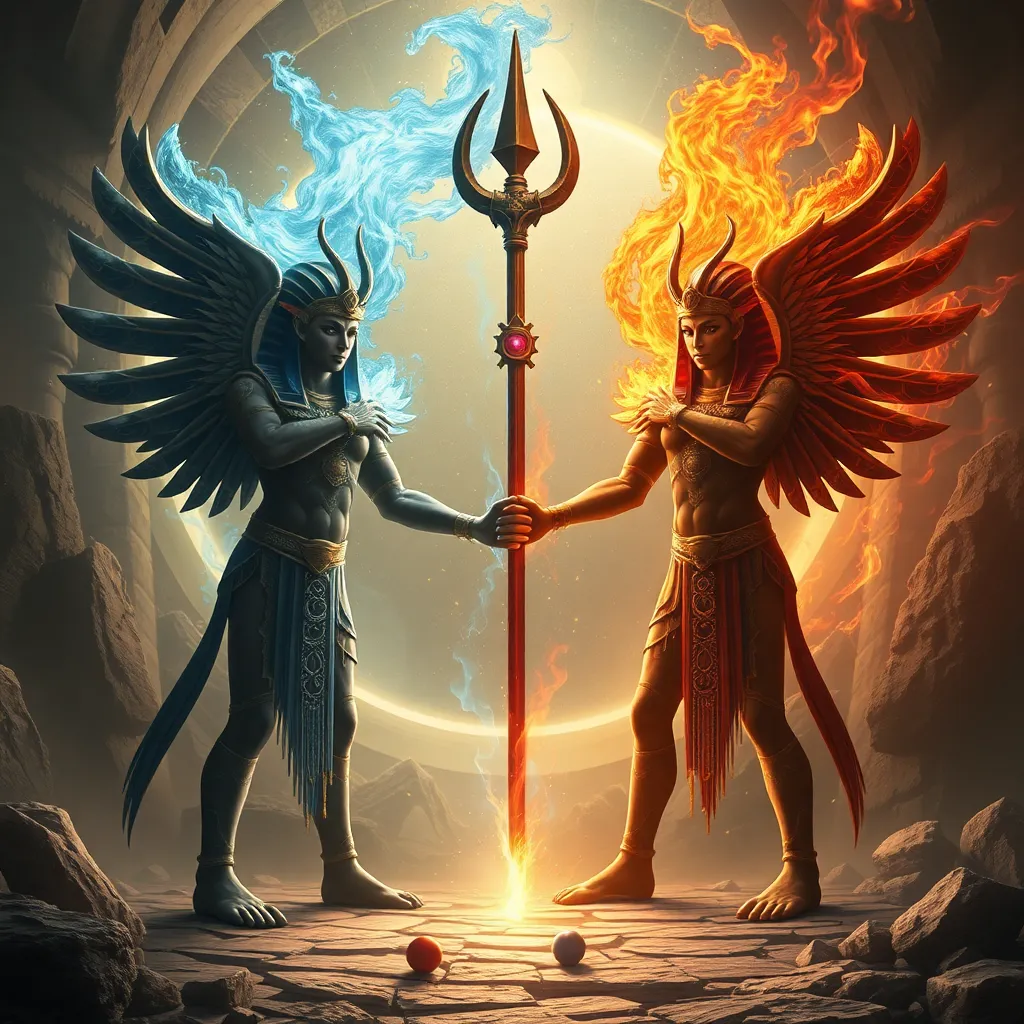
The Dual Nature of Heka: Creation and Destruction
I. Introduction
In ancient Egyptian culture, Heka is defined as the embodiment of magic and the divine force that permeates the universe. It serves as both a means of creation and a powerful tool for destruction. This duality reflects the complex nature of the cosmos, where life and death, healing and harm, coexist in a delicate balance.
This article aims to explore the dual aspects of Heka, highlighting its significance in ancient Egyptian mythology and religion. By delving into its historical context, we can better understand how Heka influenced both the lives of individuals and the broader society.
II. Historical Context of Heka
Heka’s origins in Egyptian mythology can be traced back to the early dynastic periods, where it was seen as a primordial force that existed before the creation of the world. Heka was not only a deity but also a concept that represented the vital energy that enabled creation and order.
In ancient Egyptian religion, Heka played a crucial role in daily life, as it was believed that every action could harness this magical force. From healing rituals to protective spells, Heka was integral in maintaining harmony.
Key figures associated with Heka include:
- Thoth: The god of wisdom and writing, often depicted as a scribe recording spells.
- Isis: A goddess associated with magic, healing, and protection, embodying the nurturing aspect of Heka.
- Set: Although often seen as a god of chaos, Set’s relationship with Heka highlights its destructive potential.
III. Heka as a Force of Creation
In the context of creation myths, Heka is fundamental to the formation of the universe. Ancient Egyptians believed that Heka was present at the beginning of time, assisting in the birth of the world and all its inhabitants.
1. The formation of the universe
According to Egyptian cosmology, Heka was integral in the separation of the primordial waters of chaos, leading to the emergence of dry land and the establishment of order.
2. Birth of gods and humanity
Heka facilitated the birth of the gods and, subsequently, humanity. The act of naming was a powerful exercise of Heka, as it brought entities into existence through the spoken word.
B. Heka’s role in healing and protection
Heka was also associated with healing and protective spells. Priests and practitioners would invoke Heka to cure ailments, safeguard against evil spirits, and ensure a prosperous life.
C. Rituals and practices that harness Heka for positive outcomes
- Rituals involving the recitation of sacred texts and spells.
- Use of amulets inscribed with protective symbols.
- Offerings to deities to gain favor and invoke Heka’s blessings.
IV. Heka as a Force of Destruction
While Heka is celebrated for its creative aspects, it also embodies chaos and disorder. In various myths, Heka is depicted as a force that can bring destruction and punishment.
1. Myths of destruction and the underworld
The stories of the underworld often highlight Heka’s darker side. In these narratives, Heka is involved in the judgment of souls, determining their fate based on their earthly actions.
2. The role of Heka in punishment and retribution
Heka’s power could be invoked to exact retribution against wrongdoers. This aspect reflects the belief that every action has consequences, reinforcing moral and ethical codes within society.
B. The destructive power of curses and spells
Curses, often seen as the darker side of magic, were a manifestation of Heka’s destructive potential. They could be used to harm individuals or invoke chaos in their lives.
C. Historical examples of Heka used for malevolent purposes
Historical texts reference instances where Heka was utilized to enact vengeance, showcasing its dual nature as both a tool for creation and destruction.
V. The Balance of Creation and Destruction
The duality of Heka raises philosophical questions regarding balance in ancient Egyptian thought. The Egyptians believed that creation and destruction were two sides of the same coin, each necessary for the continued existence of the universe.
A. The philosophical implications of Heka’s duality
This duality emphasizes that without destruction, creation cannot occur, highlighting the cyclical nature of life.
B. The necessity of balance in ancient Egyptian thought
Balance was a vital aspect of Ma’at, the principle of truth and order, which governed both the cosmos and human affairs.
C. Symbolism of duality in Egyptian art and literature
This duality is frequently represented in Egyptian art and literature, where contrasting themes of life and death, light and dark, are explored.
VI. Modern Interpretations of Heka
In contemporary spiritual practices, Heka is often revisited as a source of personal empowerment and transformation. Many modern practitioners draw on the ancient concepts of Heka to explore their own creative and destructive potentials.
A. Heka in contemporary spiritual practices
Modern witchcraft and neo-paganism often incorporate elements of Heka, focusing on intention and the ethical use of magic.
B. The relevance of Heka’s dual nature in modern psychology
Psychologically, Heka’s duality can be likened to the human experience, where individuals must navigate both constructive and destructive forces within themselves.
C. Comparisons with other cultural concepts of duality
Heka’s dual nature can be compared to similar concepts in other cultures, such as the yin and yang in Chinese philosophy, highlighting a universal understanding of duality across human belief systems.
VII. Case Studies: Heka in Action
To further understand Heka’s influence, we can examine specific myths and historical artifacts that illustrate its role in ancient Egyptian society.
A. Examination of specific myths or legends involving Heka
Myths such as the story of Osiris’ resurrection illustrate how Heka was called upon to facilitate life after death, showcasing its creative power.
B. Analysis of historical artifacts and texts related to Heka
Artifacts, including spells inscribed on papyrus and amulets, provide evidence of Heka’s importance in daily life and religious practices.
C. Impact of Heka on ancient Egyptian society and governance
Heka influenced governance, as rulers often relied on its power to legitimize their authority and maintain order within their realms.
VIII. Conclusion
Heka’s significance as a force of creation and destruction is a testament to the complexity of ancient Egyptian belief systems. Its dual nature reflects the intricate balance necessary for the functioning of the universe.
As we reflect on Heka’s lasting legacy, it becomes clear that understanding this duality can enrich our comprehension of both ancient and modern spiritual practices.
This exploration encourages us to delve deeper into the complexities of ancient belief systems, recognizing the wisdom they offer in navigating our own lives.