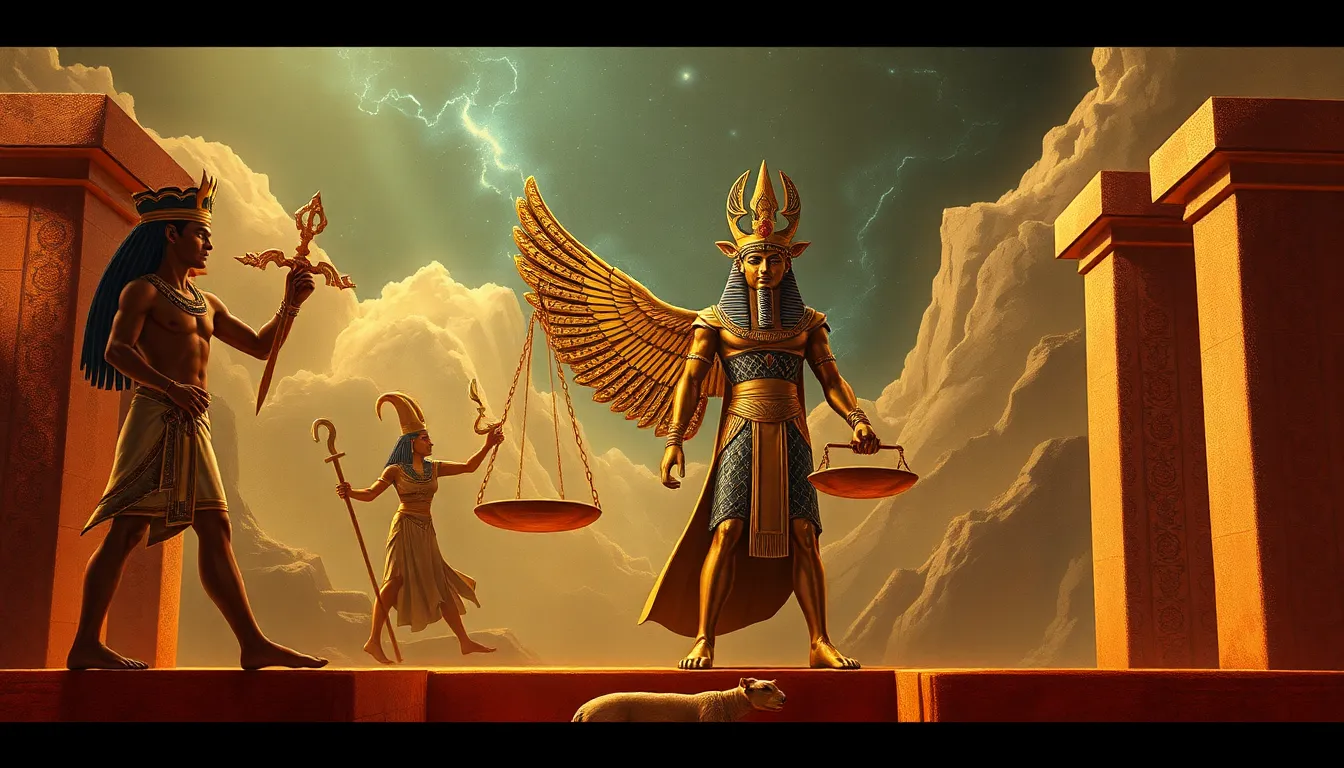
The Divine Reckoning: How Egyptian Myths Portrayed Justice
I. Introduction
Justice held a central role in ancient Egyptian culture, deeply intertwined with the everyday lives of its people. It was not merely a legal concept but a divine mandate that governed the cosmos and human behavior. Egyptian mythology served as a framework for understanding morality, guiding individuals on how to live justly and harmoniously with the universe.
This article explores the intricate relationships between justice and mythology in ancient Egypt, examining how these narratives influenced societal norms and the legal systems that arose from them.
II. The Concept of Ma’at: Order and Justice
Ma’at represents the ancient Egyptian concept of truth, balance, order, and justice. It was personified as a goddess who embodied all these principles. The significance of Ma’at in Egyptian society cannot be overstated; it was essential for maintaining harmony within both the natural and societal order.
Ma’at was the guiding principle for:
- Cosmic order
- Human behavior
- Legal matters
Without Ma’at, chaos would prevail, leading to disorder and injustice. The Egyptians believed that adherence to Ma’at was crucial for personal and communal well-being, as it dictated moral behavior and social justice.
III. The Role of the Gods in Administering Justice
In Egyptian mythology, several deities were closely associated with justice, each playing a unique role in upholding Ma’at:
- Osiris: The god of the afterlife, Osiris was often seen as the ultimate judge of souls.
- Anubis: The god of mummification and the afterlife, Anubis oversaw the weighing of the heart.
- Ma’at: As the goddess of truth and justice, Ma’at was integral in the judgment process.
Myths reveal how these deities intervened in human affairs to ensure justice. For example, Osiris’s resurrection symbolizes the triumph of order over chaos, while Anubis’s role in the judgment of the dead emphasizes the importance of living a just life.
IV. The Weighing of the Heart: The Afterlife Judgment
One of the most significant aspects of ancient Egyptian beliefs about justice is the judgment process that occurred in the Duat, or the underworld. The weighing of the heart against the feather of Ma’at was a critical ritual for determining the fate of souls after death.
During this process:
- The deceased’s heart was placed on one side of a scale.
- The feather of Ma’at, symbolizing truth and justice, was placed on the other side.
If the heart weighed less than or equal to the feather, the soul was deemed just and allowed to enter the afterlife. If it was heavier, it was consumed by Ammit, a fearsome creature, resulting in eternal damnation.
This judgment process highlights the profound significance of justice in life and the afterlife, reinforcing the notion that one’s actions in life directly impacted their fate in the beyond.
V. Myths Reflecting Justice and Injustice
Numerous myths illustrate the themes of justice and injustice, with the story of Osiris and Set being one of the most notable. Osiris, the beloved god, was betrayed and murdered by his brother Set, who represented chaos and disorder. This myth reflects the struggle between good and evil, order and chaos.
Key elements include:
- Osiris’s resurrection symbolizes justice triumphing over injustice.
- Set’s continuous attempts to disrupt order highlight the persistent nature of chaos.
These narratives provide a framework for understanding the consequences of one’s actions, reinforcing the belief that justice will ultimately prevail.
VI. The Impact of Justice on Society and Governance
The myths surrounding justice significantly influenced legal systems and societal norms in ancient Egypt. The concept of Ma’at was not only a religious belief but also a guiding principle for governance.
Key points include:
- Pharaohs were seen as the earthly embodiment of Ma’at, responsible for maintaining order and justice.
- Legal disputes were resolved in accordance with Ma’at, ensuring fairness and balance.
The intertwining of myth and governance ensured that laws reflected the moral ideals of society, reinforcing the importance of justice in maintaining social cohesion.
VII. Modern Interpretations and Legacy of Egyptian Justice Myths
Egyptian concepts of justice have left a lasting legacy that continues to influence contemporary thought. The principles of Ma’at resonate in modern discussions of morality and justice, serving as a reminder of the importance of truth and balance.
Today, we see echoes of these ancient ideals in:
- Legal systems that emphasize fairness and equity.
- Philosophical discussions around ethics and morality.
The enduring relevance of Ma’at in modern society highlights how ancient wisdom can inform current practices and beliefs about justice.
VIII. Conclusion
The relationship between myth and justice in ancient Egypt is both intricate and profound. Through the lens of mythology, we gain insights into the values and beliefs that shaped a civilization. The narratives of gods and their interactions with humanity underscore the importance of justice as a fundamental principle of existence.
As we reflect on the enduring legacy of these myths, it becomes clear that the quest for justice remains a universal pursuit that transcends time and culture, reminding us of the vital role it plays in human society today.