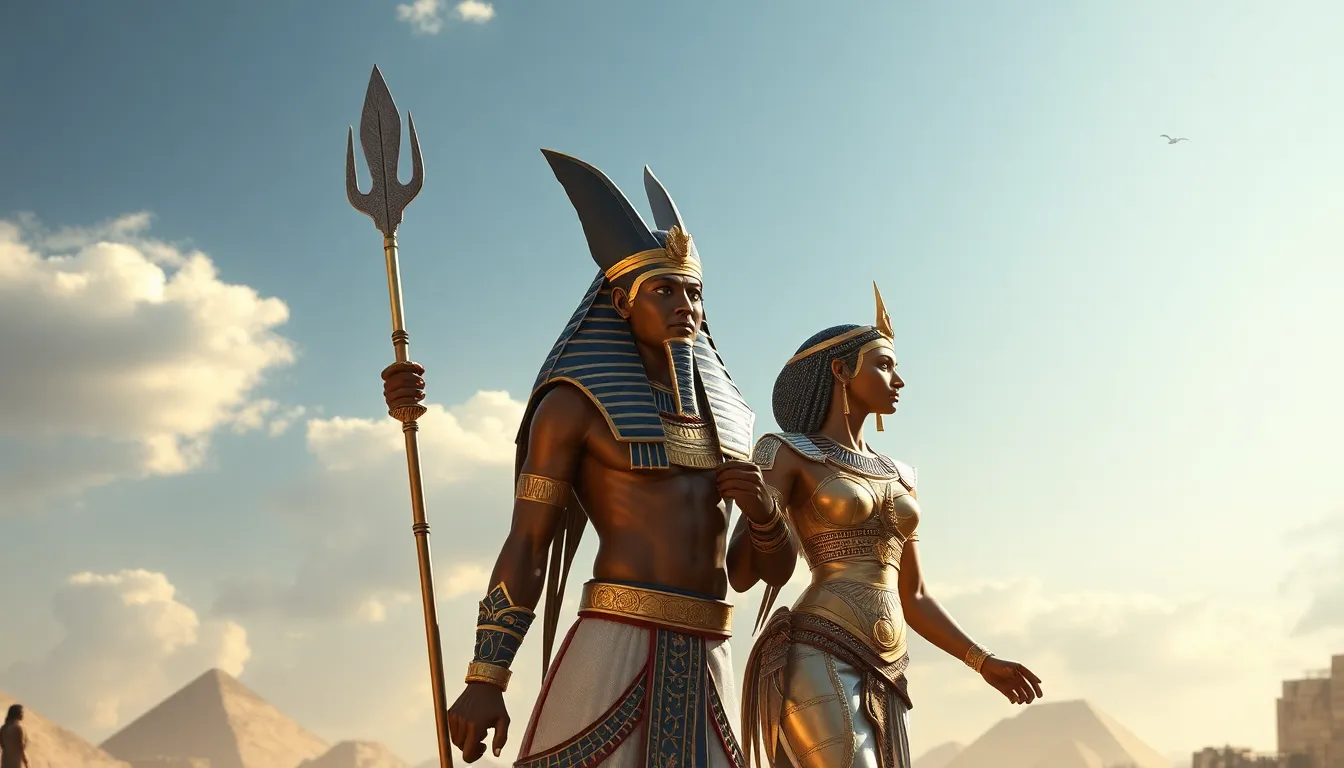
The Divine Protector: How Horus and Isis Supported Each Other
I. Introduction
In the rich tapestry of Egyptian mythology, few relationships are as profound and impactful as that between Horus and Isis. These two deities not only play pivotal roles in the mythological narrative but also embody the principles of protection, motherhood, and revenge. Their relationship is significant in the context of ancient Egyptian beliefs, as it reflects the intertwined nature of divinity, familial bonds, and the struggle against chaos.
This article aims to explore the mutual support between Horus and Isis, highlighting how their partnership shaped their destinies and the ancient world around them.
II. The Mythological Background of Horus and Isis
Horus, often depicted as a falcon-headed god, is one of the most important deities in the Egyptian pantheon. He is primarily associated with the sky, kingship, and protection. As the son of Osiris and Isis, Horus represents the ideal of divine kingship and the rightful heir to the throne of Egypt.
Isis, on the other hand, is revered as the goddess of magic, motherhood, and fertility. She is known for her wisdom, compassion, and ability to conjure powerful spells. Her role extends beyond mere motherhood; she is a protector and a guide for those in need.
Key myths involving Horus and Isis include the tales of Osiris’s death and resurrection, where both deities play crucial roles in the restoration of order and balance in the universe.
III. The Story of Osiris: A Catalyst for Their Bond
The murder of Osiris by his brother Seth is a pivotal event that profoundly impacts both Isis and Horus. Seth’s treachery not only leads to the death of Osiris but also sets the stage for Horus’s quest for justice.
Isis, devastated by the loss of her husband, takes on the monumental task of resurrecting Osiris. Through her magical abilities, she is able to bring him back to life temporarily, which emphasizes her role as a powerful goddess of magic and healing. This event forges an unbreakable bond between Horus and Isis, as they unite in their quest to defeat Seth and restore order to the cosmos.
IV. The Protective Role of Isis
Throughout the myths, Isis is portrayed as a nurturing mother figure to Horus. After Osiris’s death, she hides Horus away from Seth, ensuring his safety and upbringing. Her protective nature is exemplified in various spells and rituals she performs to safeguard her son.
- Isis creates protective amulets for Horus.
- She uses her magical powers to shield him from Seth’s malevolence.
- Her nurturing presence instills strength and resilience in Horus.
The symbolism of Isis is paramount in safeguarding Horus’s destiny, representing the idea that maternal love and protection are essential in the struggle against chaos.
V. Horus as the Avenger: The Role of a Son
Horus’s quest to avenge his father, Osiris, is central to his character. With the guidance and support of Isis, he embarks on a journey to confront Seth and reclaim his rightful place as the ruler of Egypt.
Isis stands by Horus during his battles, providing him with strength and encouragement. This partnership is vital as it underscores the importance of collaboration in overcoming adversity.
- Horus faces numerous challenges in his battles against Seth.
- With Isis’s support, Horus learns the skills necessary to become a formidable warrior.
- His eventual victory over Seth is not just a personal triumph but a restoration of balance in the world.
The significance of Horus’s victory extends to both deities, solidifying their roles as central figures in the mythological narrative and in the hearts of the ancient Egyptians.
VI. The Duality of Power: Complementary Strengths
The relationship between Horus and Isis embodies a balance of feminine and masculine energies, showcasing how their complementary strengths create a powerful partnership. Isis’s nurturing and magical abilities merge with Horus’s martial prowess and leadership qualities, resulting in a dynamic duo capable of confronting any challenge.
The impact of their collaboration is reflected in ancient Egyptian society, where the ideals of justice, protection, and family were celebrated. Their union symbolizes the harmonious coexistence of different forces, whether they be gender, nature, or the balance of chaos and order.
In art and literature, the symbolism of their unity is prevalent, depicted through various forms, such as:
- Statues showing Isis nursing Horus.
- Reliefs illustrating their victories over Seth.
- Literary texts that emphasize their roles in restoring cosmic order.
VII. Legacy of Horus and Isis in Egyptian Culture
The worship of Horus and Isis was deeply embedded in Egyptian culture, with numerous temples and shrines dedicated to both deities. Their myths were recited in various religious practices, and their images adorned the walls of tombs and monuments, signifying their importance in the afterlife.
The influence of Horus and Isis extends beyond ancient Egypt, impacting later mythologies and beliefs across different cultures. Their archetypes can be seen in various forms, from mother-son duos to avengers of justice, showcasing the universal themes of love, loss, and resilience.
In modern interpretations, the relationship between Horus and Isis continues to be explored in literature, film, and art, reflecting the timeless nature of their story and its relevance to contemporary themes of empowerment and familial bonds.
VIII. Conclusion
In summary, the mutual support between Horus and Isis is a cornerstone of their mythological legacy. Their partnership exemplifies the strength found in unity and the enduring power of love and protection in the face of adversity.
The enduring legacy of their relationship in mythology serves as a reminder of the complex interplay between divine forces and the human experience. The story of Horus and Isis remains a relevant and powerful narrative, inspiring generations to seek justice, protection, and love in their own lives.