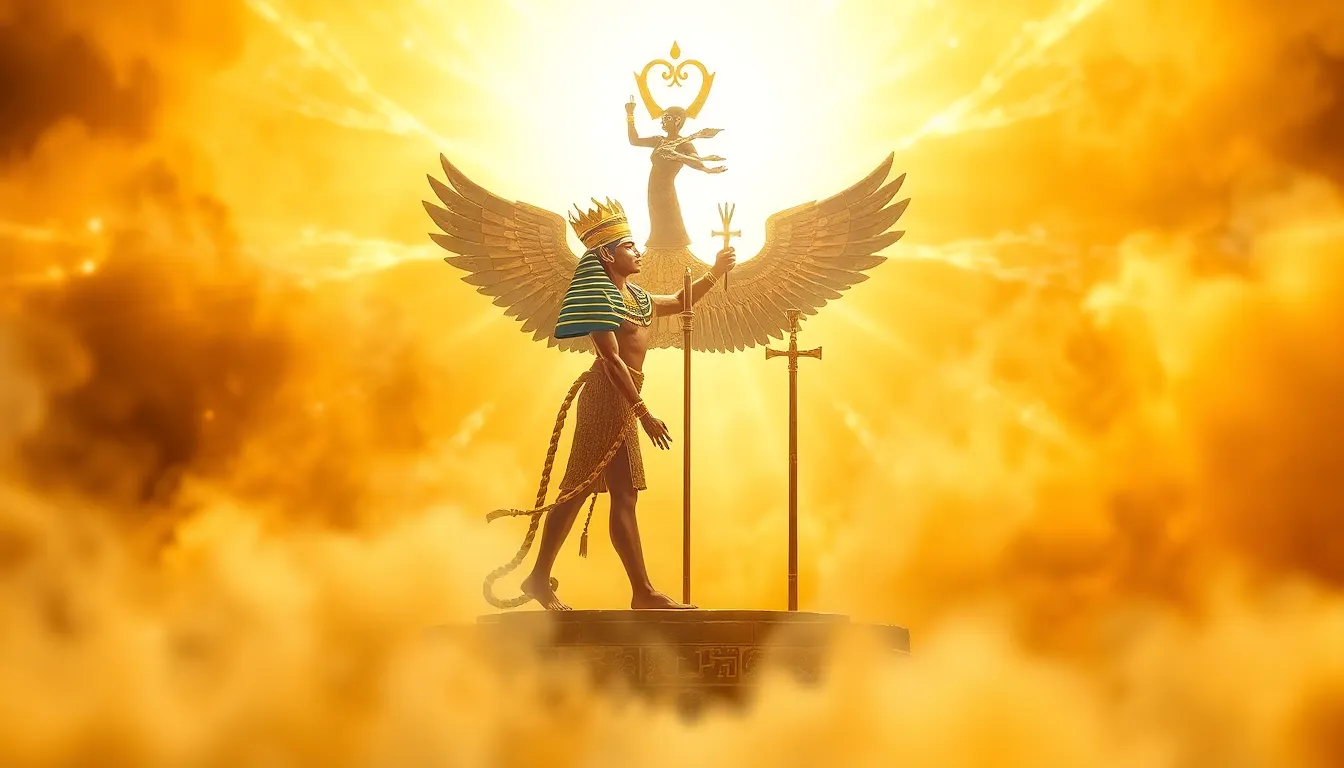
The Divine Order: Ma’at’s Influence in Egyptian Creation Stories
I. Introduction
In ancient Egyptian culture, the concept of Ma’at held profound significance, embodying the principles of truth, balance, and cosmic order. Ma’at was not merely a goddess but a fundamental concept that governed the universe and human society. Egyptian creation stories, which narrate the origins of the world and its inhabitants, are deeply intertwined with Ma’at, highlighting its vital role in establishing and maintaining harmony in the cosmos. This article aims to explore how Ma’at influences these narratives, shaping the understanding of existence in ancient Egypt.
II. The Concept of Ma’at
Ma’at represents not only the ideal of truth and justice but also the cosmic order that maintains the equilibrium of the universe. It is often depicted as a feather, symbolizing lightness and truth. In Egyptian art and literature, Ma’at is frequently shown as a woman with an ostrich feather on her head, embodying the principles she represents.
The role of Ma’at in maintaining harmony is paramount. It is believed that the universe is in a constant state of balance, and any disturbance could lead to chaos, known as Isfet. Therefore, upholding Ma’at is crucial for both the gods and humanity to ensure stability in the world.
III. Overview of Egyptian Creation Myths
Egyptian mythology encompasses several creation stories, each reflecting the unique perspectives of different regions and cultures within ancient Egypt. Major creation narratives include:
- Heliopolitan Creation Myth: Centered around the sun god Ra, this story illustrates how the universe emerged from the primordial waters of Nun.
- Memphite Creation Myth: Focuses on the god Ptah, who creates the world through thought and word, signifying the power of intellect and creativity.
- Theban Creation Myth: Emphasizes the role of Amun, who comes to be identified with Ra, highlighting the merging of different traditions.
In these narratives, key deities such as Ra, Ptah, and Amun play central roles, often embodying elements of Ma’at through their actions and decisions. Common themes include the emergence of order from chaos and the establishment of divine rule.
IV. Ma’at as a Central Theme in Creation Stories
Ma’at is a central theme in the establishment of cosmic order within Egyptian creation myths. The deities, through their creation actions, embody the essence of Ma’at, ensuring that the universe is structured and balanced. For example:
- In the Heliopolitan myth, Ra emerges from Nun and brings forth creation, establishing the sun’s cycle, a fundamental aspect of cosmic order.
- Ptah’s act of creation through thought and word signifies the importance of intention and order in the process of becoming.
The relationship between chaos (Isfet) and order (Ma’at) is fundamental. The existence of Isfet poses a threat to Ma’at, and the ongoing struggle between these two forces is a recurring motif in creation stories, illustrating the delicate balance that sustains the universe.
V. The Symbolism of Ma’at in Creation Narratives
Ma’at’s symbolism permeates creation myths, with significant representations that emphasize its role in the universe:
- The feather of Ma’at, which symbolizes truth and justice, is used in the weighing of souls in the afterlife, highlighting the moral aspect of Ma’at.
- The creation of humanity is often depicted as an act of divine love and order, reflecting Ma’at’s influence in shaping the human condition.
Furthermore, the feather’s significance in the judgment of souls underscores the belief that upholding Ma’at is essential for achieving a harmonious afterlife.
VI. Ma’at’s Influence on Egyptian Society and Governance
Ma’at’s principles extended beyond mythology into the fabric of Egyptian society and governance. The concept was reflected in pharaonic rule, where the pharaoh was considered the embodiment of Ma’at on earth. This divine right was crucial for maintaining order and justice within the kingdom.
The connection between creation myths and the divine right of kings is evident in the way rulers were seen as guardians of Ma’at, responsible for ensuring harmony and balance in society. Rituals and practices aimed at upholding Ma’at were integral to daily life, including:
- Regular offerings to gods to maintain favor and order.
- Legal systems based on the principles of justice and truth.
- Public ceremonies that reinforced the pharaoh’s role as a custodian of Ma’at.
VII. Comparative Analysis with Other Cultures
Similarities exist between Ma’at and concepts of order in other civilizations. For instance:
- The Greek concept of Cosmos represents an orderly universe, akin to Ma’at’s balance.
- In Zoroastrianism, the struggle between Ahura Mazda and Angra Mainyu mirrors the conflict between Ma’at and Isfet.
The influence of Ma’at extended to neighboring cultures, where ideas of balance and justice were integrated into their beliefs. Modern interpretations of order and justice can draw from Ma’at’s principles, emphasizing the importance of truth and balance in contemporary societal structures.
VIII. Conclusion
In conclusion, Ma’at’s significance in Egyptian creation stories is profound, shaping not only the narratives of the cosmos but also the societal structure of ancient Egypt. The enduring legacy of Ma’at continues to resonate in modern interpretations of order and justice, offering valuable insights into the importance of understanding ancient beliefs in today’s world. By exploring Ma’at’s influence, we gain a deeper appreciation for the intricate tapestry of mythology and its implications for human existence.