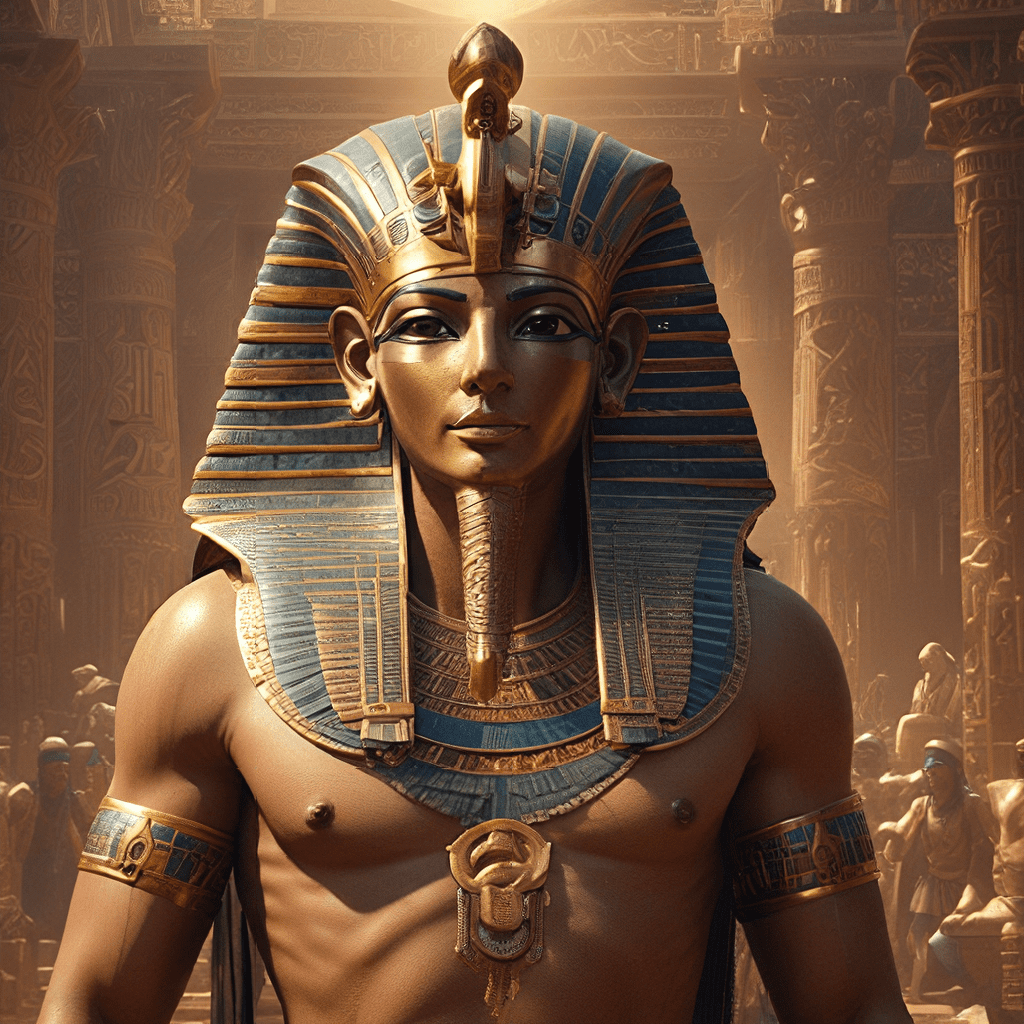
The Divine King: Celebrating the Divine Power of Horus in the Festival
1. Introduction: Horus – The Divine King
Horus, a powerful deity in ancient Egyptian mythology, was much more than just a god. He was deeply intertwined with the concept of kingship, representing the divine right of Pharaohs to rule. Horus, the son of Osiris, was often depicted with a falcon head, embodying strength, power, and protection. His association with kingship stemmed from his victory over Set, the god of chaos, a symbolic triumph of order and stability. Ancient Egyptian festivals played a crucial role in their religious and social life, and those dedicated to Horus held immense significance, reaffirming the king’s divine connection and reinforcing the stability of the kingdom.
2. The Mythological Significance of Horus
In Egyptian mythology, Horus’s story is one of resilience and triumph. Born to Osiris and Isis, he faced the ultimate challenge when his uncle, Set, murdered his father and usurped his throne. Horus, determined to avenge his father and restore order, engaged in a brutal struggle against Set. After a long and arduous battle, Horus emerged victorious, symbolizing the triumph of good over evil, light over darkness, and order over chaos. This victory cemented Horus’s position as a supreme deity and established him as the protector of kings. Ancient Egyptians believed that the Pharaoh, as the king, was a direct descendant of Horus, inheriting his god-like qualities. This divine lineage granted the king legitimacy, power, and the right to rule.
3. The Festivals Honoring Horus: An Overview
Ancient Egyptians celebrated various festivals dedicated to Horus, each with its own distinct purpose and significance. The Sed Festival, the Heb Sed, and the ‘k3bt’ (Festival of Emergence) are some of the most notable. These festivals weren’t just religious celebrations; they were grand spectacles that reinforced the king’s power and authority, while also connecting him to the divine through Horus. The Sed Festival, for example, was a ceremony focused on the king’s rejuvenation, ensuring his continued strength and vitality. The Heb Sed was a grand celebration marking the king’s 30th year of reign, reaffirming his successful governance. The ‘k3bt’ festival, on the other hand, celebrated the king’s rebirth as a divine being, emphasizing his connection to Horus and his divine power.
4. The Sed Festival: A Celebration of Rejuvenation and Power
The Sed Festival, also known as the Jubilees, was a complex and important ritual in ancient Egypt, held to renew the king’s strength and vitality. It was a public affirmation of the king’s continued legitimacy to rule. This festival was deeply connected to Horus, as the king was believed to embody Horus’s youthful energy and strength. The Sed Festival involved various rituals and processions, including a dramatic race where the king would run the “Sed” – a symbolic act that represented his rejuvenation and the renewal of his power. The king would also wear the “Horus-crown,” a symbol of his divine connection to the falcon god. The Sed Festival was a time for the king to demonstrate his physical and spiritual prowess, reminding the people of his divine right to rule and ensuring the prosperity of the kingdom.
5. The Heb Sed: A Grand Celebration of Kingship
The Heb Sed, meaning “The Festival of the Thirty Years,” was a majestic celebration held to commemorate the 30th year of a king’s reign. It marked a significant milestone in the king’s life, signifying his long and successful rule. This majestic celebration was also deeply intertwined with Horus, as the king was seen as embodying Horus’s power and glory. The Heb Sed festival involved elaborate rituals, processions, and grand ceremonies, showcasing the king’s wealth and power. From intricate offerings to symbolic rituals, the festival celebrated the king’s accomplishments and reinforced his divine connection to Horus, ensuring the stability and prosperity of the kingdom.
6. The ‘k3bt’ (Festival of Emergence): A Rebirth of the Divine King
The ‘k3bt’ festival, also known as the “Festival of Emergence,” was a unique celebration that emphasized the king’s rebirth as a divine being. This festival was heavily influenced by Horus, as the king, through this ritual, fully embodied the falcon god’s divine power and immortality. The ‘k3bt’ festival was a powerful symbol of the king’s connection to the divine, signifying his transcendence from mortal to god-like status. The king would wear the “Horus-crown” during this festival, further emphasizing his divine nature and his role as a protector of the kingdom.
7. Conclusion: The Enduring Legacy of Horus and the Divine Kings
The ancient Egyptians, through their elaborate festivals, celebrated the divine power of Horus, connecting the king to this mighty deity. These festivals were more than just religious events; they were grand spectacles that reaffirmed the king’s legitimacy and ensured the stability of the kingdom. The Sed, Heb Sed, and ‘k3bt’ festivals, with their specific rituals and symbolic offerings, all served to cement the king’s divine right to rule, emphasizing his power and authority. Horus’s image and story continue to resonate today, reflecting the enduring importance of kingship, power, and the eternal quest for order in the world.