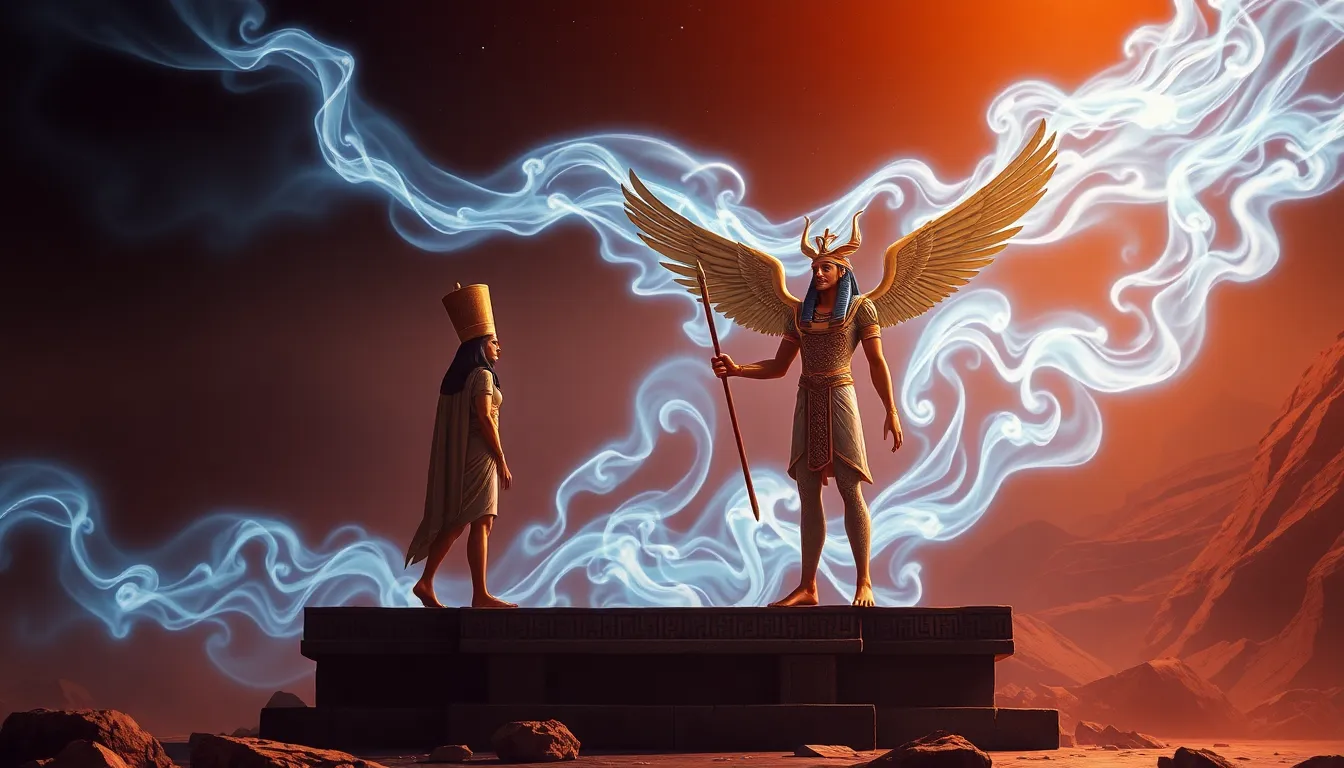
The Divine Judgment: How Egyptian Myths Portrayed Retribution
I. Introduction
In ancient Egyptian culture, divine judgment was a fundamental concept that shaped the understanding of morality, ethics, and justice. It encompassed the belief that the gods would assess human behavior and administer appropriate consequences. Retribution, a vital aspect of this belief system, served to maintain order and reinforce societal norms.
This article aims to explore the themes of justice and retribution as portrayed in Egyptian mythology, shedding light on how these ancient stories have influenced contemporary understandings of morality and justice.
II. The Concept of Ma’at: Order and Justice
At the heart of Egyptian mythology lies the concept of Ma’at, which represents truth, balance, and cosmic order. Ma’at is often depicted as a goddess, symbolizing the harmony of the universe and the ethical framework that governs both human and divine actions.
Ma’at played a crucial role in maintaining societal and divine order, serving as a guiding principle for rulers and citizens alike. The pharaohs were seen as the embodiment of Ma’at, responsible for upholding justice and ensuring the welfare of their people.
This principle significantly influenced the concept of retribution in myths, as it underscored the importance of moral behavior and accountability. The belief in Ma’at fostered a culture where retribution was not merely punishment but a restoration of balance and order.
III. The Weighing of the Heart: Judgment After Death
One of the most profound aspects of Egyptian mythology concerning divine judgment is the Weighing of the Heart ceremony, which took place in the afterlife. In this ritual, the deceased’s heart was weighed against the feather of Ma’at, representing truth and justice.
The symbolism behind the heart and the feather is significant. The heart, believed to be the seat of emotion and morality, was assessed to determine the individual’s worthiness for eternal life. If the heart balanced with the feather, the person was deemed virtuous and granted access to the afterlife. Conversely, if the heart was heavier, it signified a life of wrongdoing, resulting in punishment.
The consequences of this judgment were severe: a favorable outcome led to eternal reward, while an unfavorable result meant a soul’s annihilation or eternal torment, illustrating the high stakes of moral conduct in life.
IV. Osiris and the Cycle of Life, Death, and Resurrection
The myth of Osiris is central to understanding the themes of judgment and retribution in Egyptian mythology. Osiris, the god of the afterlife, was murdered by his brother Set, who sought power and dominance. Osiris’s death and subsequent resurrection symbolize the cycle of life, death, and rebirth.
This myth encapsulates themes of betrayal and retribution. Set’s heinous act not only led to his own downfall but also established Osiris as a judge of the dead, reinforcing the notion that evil deeds would not go unpunished.
The implications of Osiris’s resurrection for the concept of justice are profound, as it signifies the triumph of good over evil and the idea that justice will ultimately prevail, reflecting the moral order upheld by Ma’at.
V. The Role of Deities in Enforcing Divine Retribution
Numerous deities in Egyptian mythology were associated with judgment and retribution, each playing a unique role in enforcing moral order. Key figures include:
- Anubis: The god of mummification and the afterlife, Anubis presided over the Weighing of the Heart, guiding souls through the judgment process.
- Hathor: Often associated with love and joy, Hathor also played a role in protecting the innocent and punishing those who wronged others.
Myths illustrating the actions of these deities often convey moral lessons. For example, Anubis’s guidance during judgment emphasizes the importance of living a virtuous life, while tales of Hathor demonstrate the consequences of moral failings.
VI. Human Actions and Their Consequences in Myths
Egyptian mythology is rich with stories of individuals facing retribution for their actions. One notable example is Set’s betrayal of Osiris. Set’s ambition and treachery led to dire consequences, ultimately resulting in his own downfall and punishment.
These tales carry significant moral implications, teaching that one’s actions have consequences. The relationship between human behavior and divine judgment is a recurrent theme, reminding individuals of their accountability in the eyes of the gods.
VII. The Reflection of Social Justice in Egyptian Myths
Egyptian myths served to reinforce societal norms and values, particularly regarding justice and retribution. The stories often reflected the ideals of fairness, emphasizing that the gods would intervene to restore balance when wrongs were committed.
The impact of retributive justice on ancient Egyptian society was profound, fostering a culture where people were encouraged to act ethically, knowing that their deeds would be judged.
When comparing these mythological concepts with modern notions of justice, one can see parallels in the pursuit of fairness and accountability. However, the divine aspects of ancient Egyptian justice contrast with contemporary secular legal systems.
VIII. Conclusion
In summary, the exploration of divine judgment and retribution in Egyptian myths reveals a complex interplay between morality, ethics, and cosmic order. The principles of Ma’at, the Weighing of the Heart, and the stories of deities like Osiris and Anubis illustrate how deeply ingrained these concepts were in ancient Egyptian culture.
These myths not only shaped the moral framework of their society but also continue to influence contemporary understandings of justice. The significance of mythology in conveying moral lessons remains relevant, as it provides insights into the human condition and the eternal quest for balance and fairness.