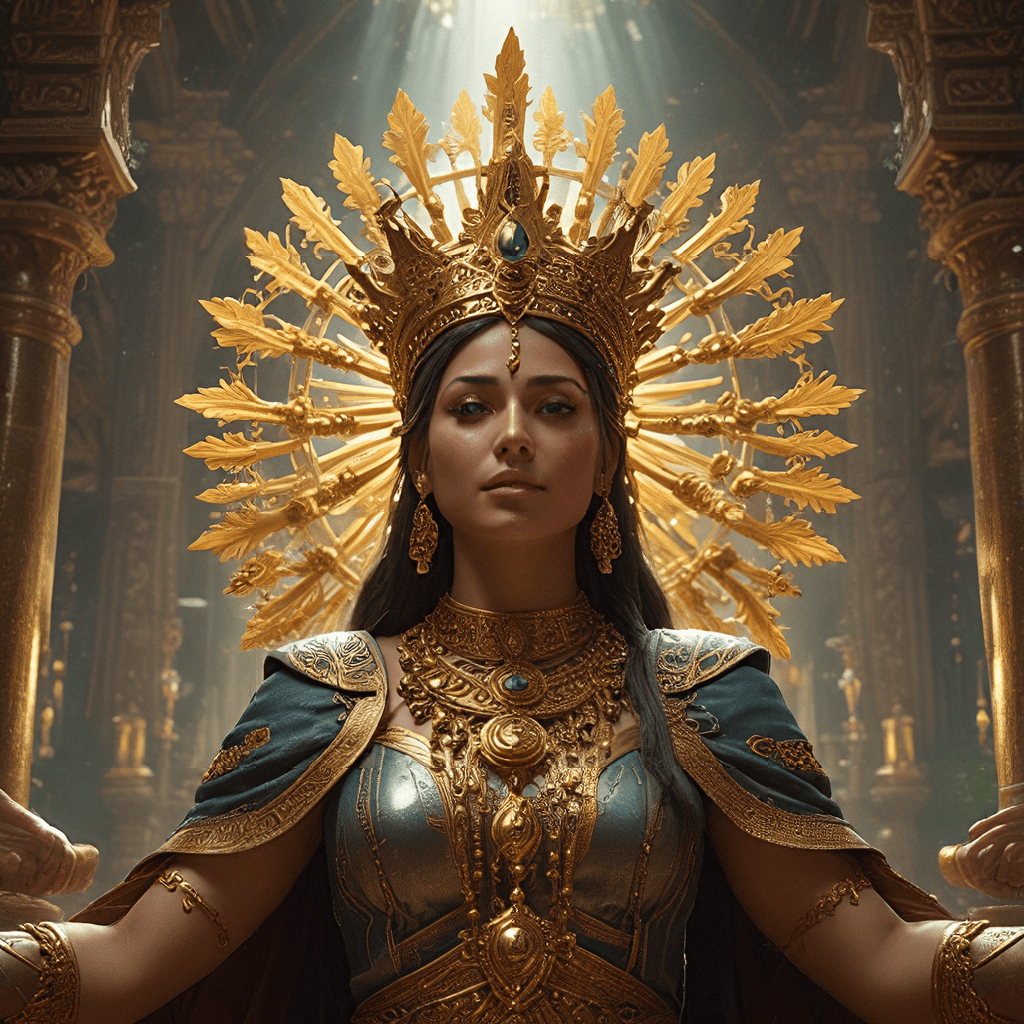
The Divine Coronation: Understanding the Significance of the Opet Rituals
1. Introduction: Unveiling the Opet Rituals
The Opet festivals were an integral part of ancient Egyptian religious life, deeply intertwined with the pharaoh’s divine role and the nation’s prosperity. These grand celebrations, often lasting for several days, were a vibrant spectacle, filled with elaborate processions, symbolic offerings, and a deeply spiritual connection to the divine. The Opet rituals, at their heart, were a symbolic re-enactment of the pharaoh’s divine coronation, reaffirming his role as the living embodiment of the gods, the protector of the cosmos, and the earthly representative of divine order.
2. The Opet Festival: A Journey Through Time
The origins of the Opet festival can be traced back to the Old Kingdom, with its central theme evolving over centuries. Initially, the festival focused on the agricultural cycle, honoring the god Amun, the creator deity, and his connection to the Nile’s annual flooding. As the pharaoh’s role in Egyptian society became increasingly intertwined with divine authority, the Opet festival transformed into a celebration of the pharaoh’s divine kinship with Amun. This symbolic union was established through a sacred journey, a procession that represented the pharaoh’s divine journey to the afterlife, a journey that was also an act of cosmic renewal.
The Opet festival was primarily celebrated in Thebes, the ancient city where Amun held special importance. The festival was celebrated in other locations as well, but the Thebes celebration was the most significant. It involved a grand procession of priests, soldiers, and dignitaries, all dressed in their finest attire, carrying sacred objects and statues, and accompanying the pharaoh on a journey from the Karnak Temple to the Luxor Temple, a distance of roughly two miles. This journey, a symbolic re-enactment of the pharaoh’s divine journey, was an essential element of the Opet rituals, a visual representation of the pharaoh’s divine power and his role as the protector of the cosmos.
3. A Symbolic Re-Enactment: The Divine Journey
The Opet procession was a visual spectacle of color, sound, and grandeur. The pharaoh, adorned in royal regalia, would be carried in a sacred barge, a symbolic representation of the solar bark, the vessel of the sun god Ra that traveled across the sky daily. During the journey, the pharaoh would be accompanied by priests and musicians who chanted hymns and offered prayers. This procession was not simply a parade; it was a symbolic journey that echoed the pharaoh’s divine ascent, emphasizing his cosmic role and the power vested in him by the gods.
At the Luxor Temple, the pharaoh would participate in a series of ceremonies, including the offering of sacrifices, the re-enactment of the divine marriage between the pharaoh and Mut, and the renewal of his royal power. This ceremony was a visual representation of the pharaoh’s symbolic rebirth and his connection to the divine, reaffirming his right to rule. The rituals culminated in a return to the Karnak Temple, with the pharaoh leading the procession, his position as the divine king reaffirmed by the journey.
4. The Divine Couple: Amun and Mut, the Royal Family
The Theban triad, comprised of Amun, Mut, and Khonsu, played a crucial role in the Opet ritual. Amun, the creator god, was the epitome of divine power, while Mut, his consort, embodied the feminine force of creation. Khonsu, their son, represented lunar power and the protection of the pharaoh’s well-being. The Opet ritual, in its celebration of the divine marriage of the pharaoh to Mut, mirrored the cosmic union of Amun and Mut, suggesting the pharaoh’s role as a divine consort, a union that symbolized the harmony of the cosmos and the fertility of the land.
The pharaoh’s sacred marriage to Mut was not a literal union but a symbolic one. The pharaoh, through this ritual act, became an extension of Amun’s divine power, a living embodiment of the divine king. This symbolic union underscored the pharaoh’s divine role and strengthened his connection to the gods, ensuring his legitimacy and securing his right to rule.
5. Divine Renewal: The Pharaoh’s Rejuvenation
The Opet ritual was also a mechanism for renewing the pharaoh’s power and ensuring his legitimacy. The ceremonies, particularly the symbolic journey to the Luxor Temple and the return to the Karnak Temple, represented a process of rebirth and rejuvenation, a cyclical process that reaffirmed the pharaoh’s divine connection and extended his reign. The offerings and sacrifices made during the ritual, including food, precious metals, and animals, were symbolic gestures of appeasement, seeking the favor of the gods and ensuring the pharaoh’s continued reign.
The Opet ritual was a celebration of the cosmic order, a reaffirmation of the pharaoh’s divine role, and a ritual that secured the pharaoh’s power and legitimacy. The symbolic journey, the divine marriage, and the offerings and sacrifices all played a crucial role in this ritual, reinforcing the pharaoh’s connection to the gods and ensuring the prosperity of the nation.
6. Kingship and Cosmos: The Pharaoh’s Cosmic Role
The Opet ritual was deeply connected to Egyptian cosmology, a belief system that viewed the cosmos as a harmonious and interconnected system. The pharaoh was seen as the embodiment of Ma’at, the cosmic order, responsible for maintaining harmony between the earthly and divine realms. The Opet ritual, by emphasizing the pharaoh’s divine connection and his role as the protector of the cosmos, reinforced the pharaoh’s divine right to rule and his responsibility to maintain cosmic order.
The pharaoh’s journey from the Karnak Temple to the Luxor Temple was a symbolic re-enactment of the sun god Ra’s journey across the sky, a journey that represented the cycle of life, death, and rebirth. This journey was not only about the pharaoh’s divine authority but also about his role as the protector of the cosmos, a responsibility that ensured the well-being of the nation and the continuation of life.
7. The Opet Ritual in Art and Literature
The Opet ritual was a significant event in ancient Egyptian life, and its importance is reflected in the numerous artistic and literary depictions of the festival. Many temples, including Karnak and Luxor, boast intricate reliefs and paintings that vividly depict the Opet procession, the pharaoh’s journey, and the ceremonies that took place. These artistic representations provide valuable insights into the rituals, the symbolism, and the significance of the festival.
The Opet ritual also features prominently in ancient Egyptian literature, particularly in religious texts and hymns. These texts often describe the rituals in detail, highlighting the divine aspects of the celebration and the pharaoh’s role as the embodiment of the gods. The Opet ritual, a powerful symbol of ancient Egypt’s belief system, was not a mere spectacle but a deeply emotional and spiritual experience, a celebration of the pharaoh’s divine role, and the nation’s connection to the gods.