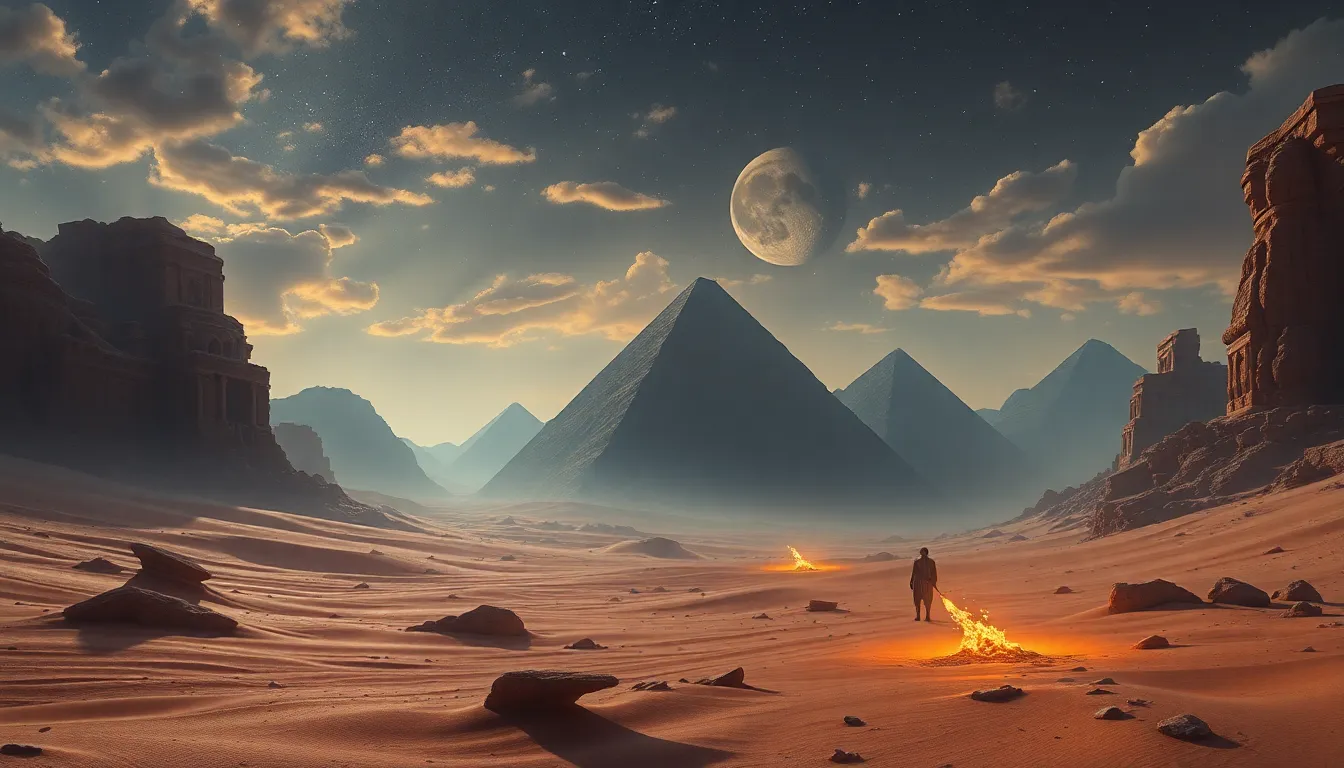
The Desert’s Secrets: Myths of the Great Sand Sea
I. Introduction
The Great Sand Sea, a vast expanse of shifting dunes and ancient landscapes, is not only a geographical marvel but also a treasure trove of myths and legends. Spanning parts of Egypt and Libya, this desert plays a crucial role in the cultural fabric of the region. Myths and stories have been passed down through generations, illustrating the importance of this harsh yet beautiful environment in shaping human experience and understanding.
This article seeks to explore the rich tapestry of myths associated with the Great Sand Sea, emphasizing their significance in desert cultures and their lasting impact on both ancient and modern societies.
II. The Formation of the Great Sand Sea
The geological history of the Great Sand Sea is as complex as its mythological narratives. Formed over thousands of years, the landscape we see today is a result of various geological processes, including erosion and sediment deposition.
- Geological History and Development: The Great Sand Sea began forming during the last Ice Age, around 10,000 years ago, when changing climatic conditions led to the desiccation of large areas.
- Unique Ecosystem and Biodiversity: Despite its arid nature, the desert hosts a surprising diversity of life, including endemic plant species and resilient animals, which have adapted to survive in extreme conditions.
- Cultural Significance of the Landscape: The Great Sand Sea has inspired countless myths that reflect the awe and fear it invokes in those who traverse its vastness.
III. Legendary Creatures of the Desert
The myths of the Great Sand Sea are populated by a variety of legendary creatures, each embodying different aspects of the desert experience.
A. The Sand Serpent: Origins and Symbolism
One of the most renowned mythological beings is the Sand Serpent, often depicted as a massive, sinuous creature that moves beneath the dunes. This serpent is said to guard the treasures of the desert and symbolizes the hidden dangers lurking in the sands.
B. The Phantom Caravan: Tales of Lost Travelers
Another prevalent myth is that of the Phantom Caravan, a ghostly procession of travelers who vanished without a trace. These tales serve as cautionary stories, warning adventurers about the treacherous nature of the desert.
C. Other Mythical Beings: Spirits and Guardians of the Sands
Numerous other spirits inhabit the Great Sand Sea, often described as guardians of the land. These beings are believed to offer protection or, conversely, to punish those who disrespect the desert.
IV. Ancient Civilizations and Their Myths
The Great Sand Sea has significantly influenced the myths of various ancient civilizations that thrived in its vicinity.
A. The Role of the Great Sand Sea in Local Folklore
Local tribes incorporated the landscape into their folklore, creating rich narratives that reflect their relationship with the environment.
B. Stories from Ancient Tribes and Their Interpretations
These stories often feature elements of survival, respect for nature, and the consequences of greed. For example, the tale of a lost tribe that angered the desert spirits serves as a reminder of the desert’s unforgiving nature.
C. Archaeological Evidence of Mythological Influences
Archaeological findings, such as cave paintings and artifacts, indicate that ancient peoples not only navigated the desert but also imbued it with spiritual significance, reinforcing their myths through art and ritual.
V. The Mystique of Desert Oases
Amidst the harshness of the Great Sand Sea, oases emerge as symbols of hope and life, often surrounded by their own set of myths.
A. Oases as Symbols of Hope and Life
These fertile spots are seen as places where life flourishes, providing sustenance for weary travelers and a refuge from the desert’s perils.
B. Myths Surrounding the Creation of Oases
Many cultures have myths explaining the origins of oases, often attributing their formation to divine intervention or the tears of a forsaken lover.
C. The Significance of Oases in Storytelling Traditions
Oases frequently serve as critical plot points in desert tales, representing sanctuary and reprieve in an otherwise inhospitable environment.
VI. The Influence of the Great Sand Sea on Modern Culture
The myths of the Great Sand Sea continue to resonate in contemporary culture, influencing literature, art, and media.
A. Myths in Literature and Art
Many writers draw inspiration from the mystique of the desert, crafting narratives that explore themes of isolation, survival, and the supernatural.
B. Film and Media Representations
Films set in the Great Sand Sea often portray exaggerated versions of its myths, captivating audiences with tales of adventure and danger.
C. The Impact of Tourism on Myth Preservation
As tourism increases in the region, there is a growing interest in preserving these myths, ensuring that they are not lost to time.
VII. Scientific Exploration vs. Mythology
As explorers and researchers venture into the Great Sand Sea, a dynamic interplay between scientific exploration and mythology emerges.
A. The Role of Explorers and Researchers in Demystifying the Desert
Scientific studies have shed light on the ecological and geological aspects of the desert, helping to demystify some of its more fantastical elements.
B. Balancing Scientific Knowledge with Cultural Myths
However, it is crucial to balance this knowledge with respect for the cultural myths that enrich the understanding of the desert.
C. The Importance of Preserving Indigenous Stories
Indigenous narratives offer invaluable insights into the relationship between the people and their environment, emphasizing the need for preservation.
VIII. Conclusion
The myths of the Great Sand Sea are a testament to the enduring power of storytelling in shaping human experience. These narratives reflect the complexities of life in one of the harshest environments on Earth, illustrating the intricate relationship between people and nature.
As we navigate the sands of time, the Great Sand Sea remains a living tapestry of history and culture, inviting us to explore its depths and uncover its secrets. In doing so, we must honor and respect the myths that continue to inspire and educate generations.
Let us embark on a journey of exploration, not only of the physical landscape but also of the rich mythology that breathes life into this magnificent desert.