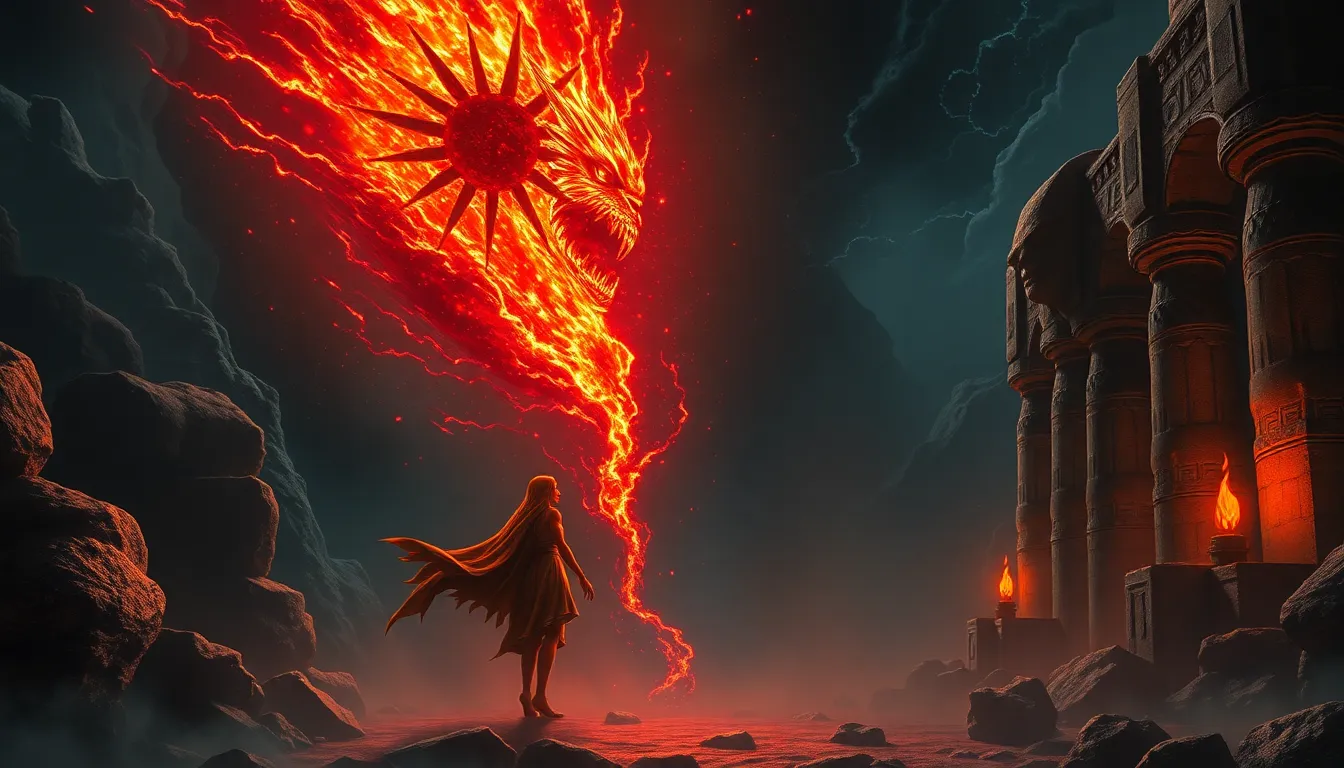
The Dark Legends of Divine Retribution: Egyptian Tales Revealed
I. Introduction
In ancient Egyptian culture, the concept of divine retribution was a fundamental aspect of their worldview. It represented the belief that the gods would administer justice, often through severe and sometimes terrifying means, against those who committed wrongdoings or defied cosmic order. This article aims to explore some of the dark legends surrounding divine retribution in Egyptian mythology, delving into their meanings and significance in both historical and modern contexts.
II. The Concept of Divine Retribution in Ancient Egypt
A. Definition and significance in Egyptian mythology
Divine retribution, or the idea that deities would respond to human actions with reward or punishment, was central to the ancient Egyptians’ understanding of morality and justice. This concept was closely tied to the principle of Ma’at, which emphasized truth, balance, and cosmic order. Violations of Ma’at would invoke the wrath of the gods, leading to chaos and disorder in both the earthly realm and the afterlife.
B. The role of gods in administering justice
The gods of ancient Egypt were seen as the ultimate arbiters of justice. Each deity had specific attributes and responsibilities regarding divine justice:
- Amun-Ra: The supreme god associated with the sun and creation, overseeing the balance of life.
- Ma’at: The goddess who personified truth and order, ensuring that the universe remained in harmony.
- Sekhmet: The fierce lioness goddess who represented vengeance and retribution, often invoked in times of war or conflict.
III. Major Deities and Their Wrath
A. Amun-Ra: The Sun God’s Judgment
Amun-Ra was revered as the king of the gods and the embodiment of light and truth. His judgment was feared and respected, as he had the power to illuminate the darkness of deceit. According to mythology, he would judge the souls of the deceased in the Hall of Ma’at, weighing their hearts against a feather. A heavy heart signified a life of wrongdoing, leading to severe consequences.
B. Ma’at: The Goddess of Truth and Cosmic Order
Ma’at was not only a goddess but also a concept that encapsulated the essence of truth and justice in the universe. Her presence ensured that chaos did not reign, and her principles guided the actions of both the living and the dead. To live in accordance with Ma’at was to align oneself with the gods, whereas deviation from her teachings could result in divine punishment.
C. Sekhmet: The Lioness Goddess of Vengeance
Sekhmet was known for her ferocity and was often depicted as a lioness. As the goddess of war and vengeance, she was believed to unleash her wrath upon those who acted immorally or opposed the will of the gods. In one myth, her rage led to a devastating plague that swept through Egypt, serving as a reminder of the consequences of hubris and disobedience.
IV. Tales of Divine Retribution
A. The Story of Osiris and Set: Betrayal and Punishment
The myth of Osiris and Set is one of the most compelling tales of divine retribution. Set, envious of his brother Osiris, orchestrated his murder and dismembered his body. However, Osiris’s wife, Isis, resurrected him, leading to Set’s eventual defeat. This story illustrates the themes of betrayal and justice, emphasizing that wrongdoing will ultimately be met with punishment.
B. The Plagues of Egypt: A Test of Pharaoh’s Hubris
The biblical account of the plagues of Egypt serves as another example of divine retribution. These ten plagues were unleashed upon Egypt to compel Pharaoh to release the Israelites from slavery. Each plague represented a direct challenge to the Egyptian gods and showcased the consequences of Pharaoh’s arrogance and refusal to heed divine authority.
C. The Destruction of the City of Akhetaten: Hubris Against the Gods
Akhetaten, the city built by Pharaoh Akhenaten to honor the sun god Aten, eventually fell into ruin after his death. Many scholars believe this destruction was a form of divine retribution for Akhenaten’s radical changes to religious practices, which disregarded the traditional pantheon of gods. The collapse of Akhetaten serves as a stark reminder of the dangers of hubris and defiance against divine order.
V. Symbolism and Interpretation of Retribution
A. The symbolism of punishment in Egyptian art and literature
Egyptian art and literature are replete with themes of punishment and divine retribution. Depictions of the weighing of the heart, scenes of the underworld, and illustrations of gods administering justice highlight the importance of moral behavior. These symbols served as warnings to the living about the consequences of their actions.
B. Moral lessons embedded in the tales of retribution
The tales of divine retribution were not merely stories; they were moral lessons that communicated the values of Egyptian society. The consequences faced by those who defied the gods served as a reminder to uphold Ma’at and live righteously. These narratives provided a framework for understanding justice, morality, and the balance of the universe.
VI. The Legacy of Divine Retribution in Modern Culture
A. Influence on contemporary storytelling and media
The themes of divine retribution have transcended ancient Egyptian culture, influencing contemporary storytelling in literature, film, and television. Modern narratives often explore the consequences of hubris and moral transgressions, reflecting the enduring relevance of these ancient tales.
B. Reflections on justice and morality in modern society
In today’s society, the concept of justice remains a significant concern. The stories of divine retribution from ancient Egypt prompt reflections on moral accountability and the repercussions of one’s actions, reminding us that justice, whether divine or human, is an essential aspect of civilization.
VII. Controversies and Debates
A. Historical interpretations of divine retribution
Historians and scholars have debated the interpretations of divine retribution in ancient Egypt. Some argue that these stories reflect historical events, while others view them as allegorical tales meant to convey moral lessons. The complexity of these narratives often leads to various interpretations.
B. The impact of archaeology on understanding these tales
Archaeological discoveries have shed light on the beliefs and practices of ancient Egyptians, allowing for a deeper understanding of their concepts of divine retribution. Artifacts, tomb inscriptions, and temple reliefs provide context and insight into how these stories were perceived and their significance in daily life.
VIII. Conclusion
The importance of divine retribution in Egyptian lore cannot be overstated. These dark legends serve as powerful reminders of the ancient Egyptians’ values and their understanding of justice, morality, and the cosmic order. As we reflect on these tales today, we find that the lessons of divine retribution continue to resonate, urging us to consider the implications of our actions in a world that often grapples with questions of justice and accountability.