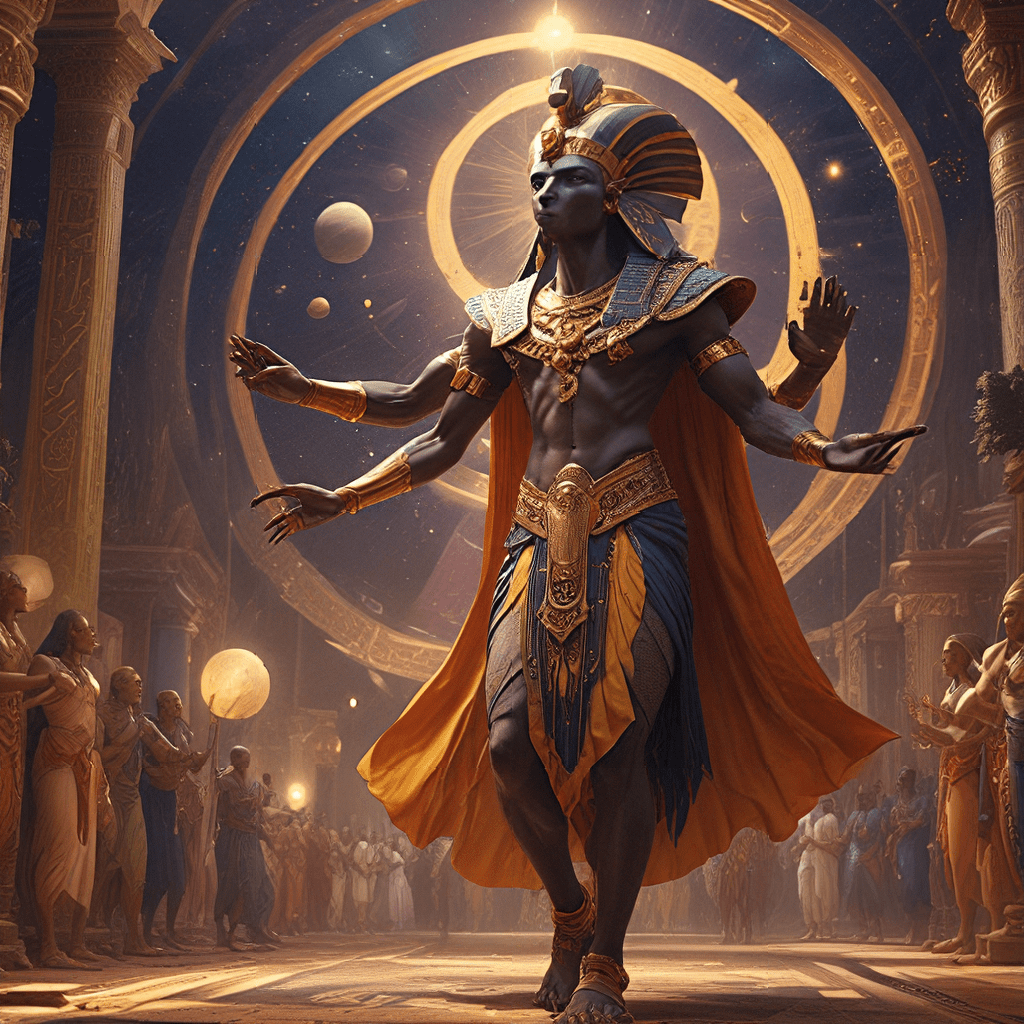
The Dance of the Planets: Understanding the Significance of the Festival of Thoth
In the ancient world of Egypt, the heavens held a profound significance. The Egyptians believed that the movements of the stars, planets, and the moon directly influenced their lives. A key figure in this celestial understanding was Thoth, the god of knowledge, wisdom, magic, and the moon. His annual festival, known as the Festival of Thoth, was a time of great celebration, reflection, and connection to the cosmic dance of the universe.
1. Thoth: The God of Knowledge, Wisdom, and the Moon
Thoth, often depicted as an ibis-headed man with a writing palette and stylus, was revered as the divine scribe of the gods. He was credited with creating the written language, the calendar, and the arts of magic and astronomy. Thoth’s association with the moon, a celestial body that governs the tides, fertility, and the cycles of life, further deepened his significance. The moon’s cycle of waxing and waning served as a reminder of the cyclical nature of existence, aligning with Thoth’s role as a god of knowledge and wisdom.
Thoth’s knowledge spanned countless realms. He was a skilled magician, healer, and judge, presiding over the weighing of the heart in the afterlife. His wisdom was considered boundless, and his teachings were sought after by both gods and mortals. He was the embodiment of learning, reason, and the pursuit of understanding. The Egyptians believed that Thoth’s presence in their lives allowed them to tap into the cosmic wisdom and navigate the complexities of life.
2. The Festival of Thoth: A Celebration of Cosmic Harmony
The Festival of Thoth, held during the month of Thoth (corresponding to September/October in the Gregorian calendar), was an important event in the ancient Egyptian calendar. It marked the beginning of the new year and the start of the annual flooding of the Nile River. This festival was a time of great joy and celebration, reflecting the Egyptians’ gratitude for the life-giving power of the Nile and the bounty of the land. The festival also served as a time to honor Thoth, the embodiment of knowledge and the celestial order, reaffirming their understanding of the universe.
The Festival of Thoth was a celebration of cosmic harmony and the interconnectedness of all things. The Egyptians believed that the planets, stars, and celestial bodies played a significant role in shaping the course of their lives. The festival provided an opportunity to observe the celestial dance of the planets, acknowledging their influence on earth and the rhythms of life.
3. The Role of the Planets in Egyptian Cosmology
In ancient Egyptian cosmology, the planets were viewed as divine beings with unique attributes and powers. Each planet was associated with a specific god or goddess, reflecting its influence on human affairs. The movements of the planets were closely observed, as they were believed to be connected to the cycles of nature, the fortunes of individuals, and the fate of nations.
The Egyptians understood the planets’ cyclical movements as a reflection of the cyclical nature of existence. The planets’ positions in the sky were interpreted as messages from the gods, guiding their actions and decisions. This understanding of the heavens was woven into their daily lives, guiding their agricultural practices, religious rituals, and even political endeavors.
4. The “Dance” of the Planets: Celestial Cycles and their Importance
The apparent movement of the planets across the sky, known as the “Dance of the Planets,” was a source of fascination and awe for the ancient Egyptians. They carefully charted the planets’ movements, noting their conjunctions, oppositions, and retrograde motions. These celestial events were believed to have profound implications for human life, influencing the weather, crop yields, and even the outcome of wars.
The Egyptians developed a complex astronomical system that allowed them to predict the movements of the planets with accuracy. This knowledge was crucial for planning their agricultural practices, which relied heavily on the annual flooding cycle of the Nile River. The celestial cycles also influenced their religious beliefs, as they were seen as reflections of the divine order and the cyclical nature of existence.
5. The Festival’s Rituals and Symbolism: Reflecting the Celestial Rhythms
The Festival of Thoth was a time of elaborate rituals and symbolism, reflecting the Egyptians’ deep understanding of the celestial rhythms. During the festival, people would wear special garments, decorate their homes, and participate in processions and offerings to Thoth. These rituals were designed to honor the god of knowledge and wisdom, to acknowledge the influence of the celestial bodies, and to seek guidance for the coming year.
One of the most important rituals involved the creation of a cosmic map, representing the celestial dome and the positions of the stars and planets. This map was used during the festival to guide offerings and prayers, ensuring that the energies of the universe were aligned with the desires of the people. Other rituals included the lighting of lamps, the burning of incense, and the recitation of hymns, all designed to connect with the divine and seek guidance from the celestial realms.
6. The Significance of the Moon in Thoth’s Festival: Lunar Cycles and Renewal
As the god of the moon, Thoth’s festival heavily emphasized the lunar cycle’s significance. The moon’s monthly cycle of waxing and waning was not just a celestial phenomenon; it resonated deeply with the Egyptians’ understanding of life, death, and rebirth. The moon, like life itself, undergoes a cycle of growth, decline, and renewal, mirroring the cyclical nature of the universe and human existence.
The Festival of Thoth was a period for reflection, renewal, and a time to align with the moon’s energy. By engaging in rituals and offerings during this time, the Egyptians sought to embrace the cyclical nature of life and seek guidance from the celestial order. The moon, through its waxing and waning phases, represented a constant cycle of change and renewal, a reminder that even in the midst of darkness, light will eventually return.
7. Connecting the Festival to the Egyptian Calendar: A Time of Transition and Rebirth
The Festival of Thoth marked the beginning of the new year in the ancient Egyptian calendar. This calendar, based on the cycles of the sun and the stars, was closely aligned with the agricultural practices of the time. The flooding of the Nile River, a vital event for Egyptian agriculture, coincided with the beginning of the month of Thoth. The festival was a time of transition and rebirth, signifying the renewal of the land and the start of a new cycle of life.
This alignment with the agricultural cycle deepened the significance of the festival. The festival’s timing at the beginning of a new year served as a reminder of the cyclical nature of life and the constant renewal of the natural world. It was a time to express gratitude for the abundance of the past year and to look forward to the promise of the year ahead, aligning with the cosmic dance of the planets and the moon.
8. Thoth’s Influence on Human Knowledge and Learning: The Festival as an Inspiration
As the god of knowledge and wisdom, Thoth was an inspiration for the pursuit of learning and the exploration of the unknown. His festival served as a reminder of the value of knowledge and the importance of seeking understanding. The Egyptians believed that knowledge was a powerful tool for navigating the complexities of life, solving problems, and advancing civilization. The festival, through its focus on knowledge and the cosmic order, encouraged the pursuit of understanding and enlightenment.
The Festival of Thoth fostered an appreciation for the natural world, encouraging the observation of the celestial bodies, and the exploration of the universe. This emphasis on knowledge and learning influenced the development of Egyptian astronomy, mathematics, and medicine, fields that flourished in ancient Egypt.
9. The Festival’s Legacy: Impact on Ancient Egyptian Society and Culture
The Festival of Thoth had a profound impact on ancient Egyptian society and culture. It shaped their religious beliefs, their understanding of the universe, and their daily lives. The festival’s focus on the celestial dance of the planets, the moon, and the cyclical nature of life instilled in the Egyptians a profound sense of interconnectedness with the cosmos.
The festival’s legacy continued long after the decline of ancient Egypt. Its influence can be seen in the writings of ancient philosophers, in the development of astrology, and in the enduring fascination with the celestial bodies. The Festival of Thoth served as a reminder of the importance of knowledge, wisdom, and the cyclical nature of existence, concepts that continue to resonate with us today.
10. Modern Perspectives on the Festival: Astrology, Mythology, and Contemporary Interpretation
Today, the Festival of Thoth continues to hold significance for those interested in ancient Egyptian mythology, astrology, and the mysteries of the cosmos. Modern astrologers often use the knowledge of the ancient Egyptians to interpret the movements of the planets and their influence on human affairs. The festival’s emphasis on the interconnectedness of all things resonates with those who seek a deeper understanding of the natural world and the universe.
The Festival of Thoth offers a unique perspective on the relationship between humanity and the cosmos. It reminds us of the importance of knowledge, the cyclical