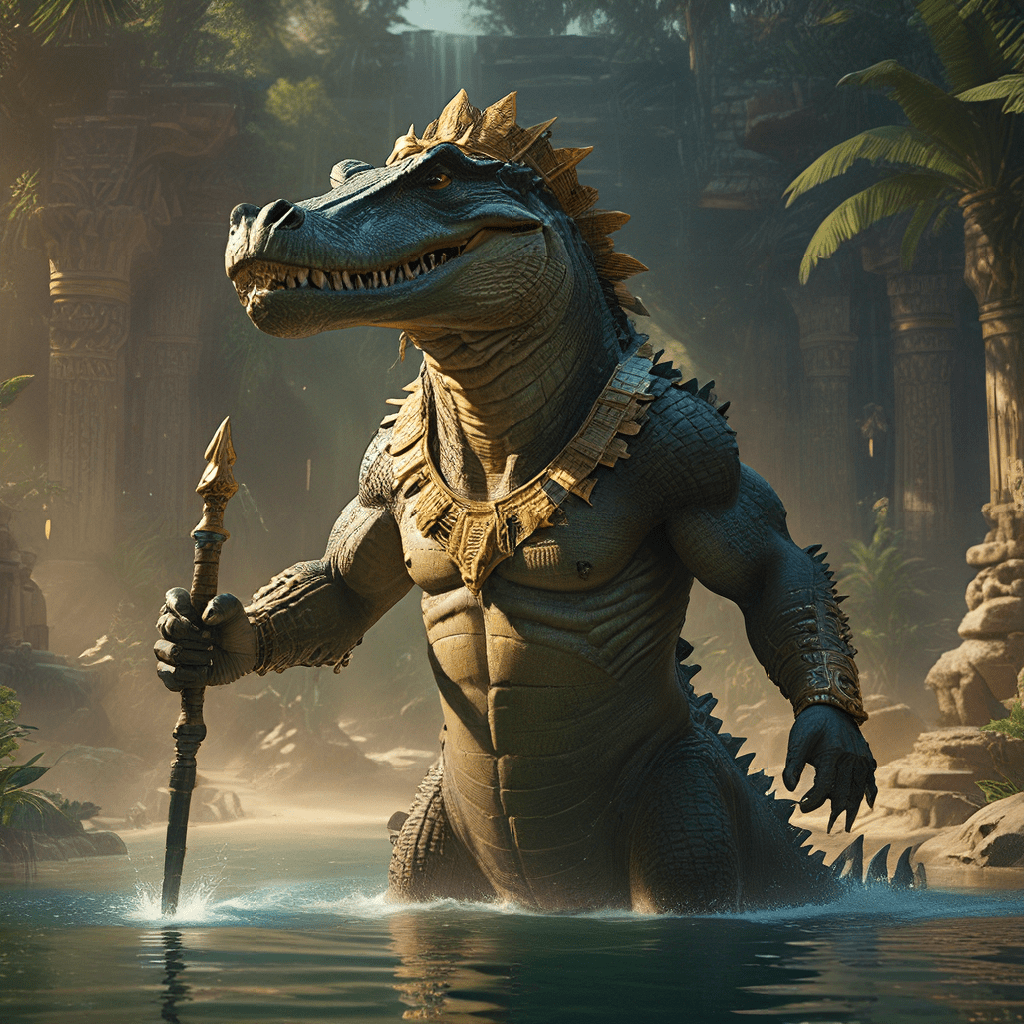
The Crocodile God Sobek: Guardian of the Nile
Sobek, the crocodile god, was a powerful and revered deity in ancient Egyptian mythology. He was associated with strength, power, and fertility, and was often depicted as a crocodile or a man with a crocodile head. Sobek was believed to be the guardian of the Nile River, the lifeblood of Egypt, and he was also associated with the sun god Ra. Sobek was worshiped throughout Egypt, and his cult centers were located in various regions, including the Fayoum Oasis.
Sobek’s Origins and Attributes
The origins of Sobek are shrouded in mystery, but he was likely a very ancient god whose worship predated the Old Kingdom period. He was often depicted as a crocodile, a creature that represented both danger and power. Crocodiles were seen as fierce predators, and their ability to survive in the harsh conditions of the Nile River made them symbols of strength and resilience. The crocodile was seen as a powerful and fearsome creature, and its association with Sobek made him an awe-inspiring deity. Sobek’s attributes also included strength, power, fertility, and protection. In some depictions, he was shown with a crown, representing his royal authority and his role as a protector of Pharaohs.
Sobek’s Role in Egyptian Mythology
Sobek played a significant role in Egyptian mythology. He was often associated with the creation myth, and he was believed to have assisted Ra in the creation of the world. He was also associated with the sun god Ra, and he was sometimes depicted as a crocodile with a sun disk on his head. In this role, Sobek represented the power of the sun to bring life and fertility to the land. Sobek was also believed to be the protector of the Pharaohs and the patron of warriors. He was often invoked for protection in battle and for success in hunting.
The Festival of Sobek: A Celebration of Fertility and Protection
The Festival of Sobek, also known as the “Feast of Sobek,” was a major religious event in ancient Egypt. It was celebrated annually, and it was particularly important in the regions where Sobek was worshipped. The festival was a time to honor Sobek and to seek his blessings for fertility, protection, and good fortune. The festival was a time for feasting, dancing, and music, and it was also a time for religious ceremonies and rituals.
The Preparations for the Festival: Offerings and Rituals
In preparation for the festival, people would clean their homes and prepare offerings for Sobek. The offerings included food, drinks, and incense, and they were presented to the god in his temples. The gifts would be placed on altars, and priests would perform rituals to appease Sobek and to ask for his favors. The offerings were often symbolic of the things that Sobek was believed to represent, such as fertility, power, and protection. The people would also wear special clothing and jewelry, and they would decorate their homes and streets with flags and banners.
The Main Events of the Festival: Processions and Sacrifices
The main event of the Festival of Sobek was a procession in which a sacred image of Sobek was carried through the streets. The procession was often accompanied by music, dancing, and singing, and it was a time for people to celebrate Sobek and to show their devotion to him. The procession would end at the temple of Sobek, where a sacrifice was made to the god. The sacrifice was often a crocodile, and it was believed to appease Sobek and to ensure his continued protection. The people would then feast and celebrate, and they would enjoy the festivities until the end of the festival.
The Symbolism of the Crocodile: Strength, Power, and Fertility
The crocodile was a powerful symbol in ancient Egyptian culture. It was seen as a fierce predator, and its ability to survive in the harsh conditions of the Nile River made it a symbol of strength and resilience. The crocodile was also associated with fertility, as it was believed to be a powerful force in the cycle of life and death. This association with fertility was likely due to the crocodile’s ability to reproduce rapidly and to its role in the ecosystem of the Nile River. The crocodile was also associated with protection, as it was believed to guard the waters of the Nile and to keep people safe from harm.
The Importance of the Festival for the Egyptians
The Festival of Sobek was an important cultural and religious event for the ancient Egyptians. It was a time to honor Sobek, to seek his blessings, and to celebrate the power of the Nile River. The festival also served as a reminder of the interconnectedness of all life and of the importance of maintaining balance in the natural world. The festival was a testament to the Egyptians’ deep respect for the natural world and their belief in the power of the gods.
The Decline of the Festival and Sobek’s Legacy
The Festival of Sobek declined in importance over time, as the worship of Sobek became less popular. This was partly due to the rise of other religions and the decline of the Old Kingdom period. However, Sobek’s legacy continued to be felt in Egyptian culture, and he remained an important figure in mythology and folklore. The modern-day Egyptians still recognize the importance of the Nile River, and they continue to celebrate its power and its role in their culture.
Sobek in Modern Egyptian Culture
Though the Festival of Sobek is no longer celebrated, Sobek’s legacy continues to be felt in Egyptian culture. The crocodile remains a powerful symbol of strength, power, and fertility. The Nile River, which Sobek was believed to guard, is still a vital part of Egyptian life, and its waters are an essential source of sustenance for many people. Sobek’s story is a reminder of the importance of the natural world and the power of ancient traditions.