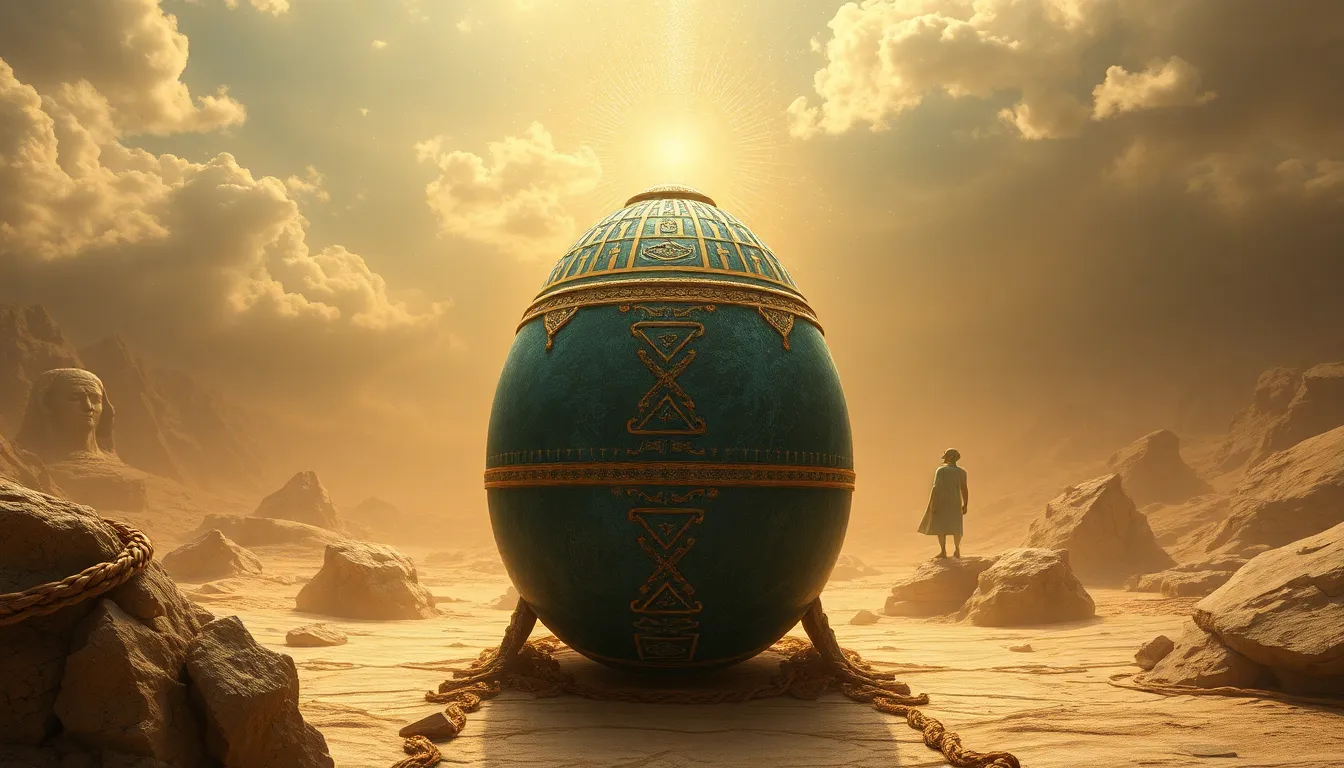
The Cosmic Egg: Egyptian Myths of Creation
I. Introduction to Egyptian Creation Myths
Ancient Egyptian mythology is a rich tapestry of beliefs and stories that explain the nature of the universe, the gods, and humanity’s place within it. Among these myths, creation stories hold a special significance, as they outline the origins of the world and the divine beings that govern it. They provide insight into the values and beliefs of the ancient Egyptians, reflecting their understanding of life, death, and the cosmos.
Creation myths in Egyptian culture serve not only to explain the beginnings of the world but also to reinforce the centrality of the gods in everyday life. These narratives often depict a primordial state of chaos from which order is established, and one of the most intriguing symbols in this context is the Cosmic Egg.
The Cosmic Egg represents the potential for creation, embodying the mysteries of the universe and the beginnings of existence itself. This article delves into the symbolism, deities, processes, and cultural significance of the Cosmic Egg in Egyptian mythology.
II. The Symbolism of the Cosmic Egg
The Cosmic Egg is a powerful symbol found in various mythologies around the world, including that of ancient Egypt. It is often depicted as a primordial egg from which life emerges, representing the essence of creation.
A. Definition and characteristics of the Cosmic Egg
In Egyptian mythology, the Cosmic Egg is often associated with the deity Atum, who is said to have emerged from it. The egg signifies both the beginning of all things and the potential contained within.
B. The Cosmic Egg as a symbol of potential and creation
The Cosmic Egg embodies several key characteristics:
- It symbolizes the universe’s potential, containing all that is needed for creation.
- It represents the cyclical nature of life, death, and rebirth.
- It serves as a metaphor for the birth of gods and the emergence of order from chaos.
C. Comparisons to other cultural creation myths featuring eggs
The concept of the Cosmic Egg is not unique to Egyptian mythology. Similar motifs can be found in various cultures:
- In Hindu mythology, the “Hiranyagarbha” or “golden womb” is a cosmic egg from which the universe is born.
- In Greek mythology, the Orphic Egg is said to contain all of existence and is associated with the god Phanes.
III. The Role of Key Deities in Creation
Central to the creation myth surrounding the Cosmic Egg are various deities who play crucial roles in the emergence of the world and its order.
A. Atum and the emergence from the Cosmic Egg
Atum is often recognized as the creator god who emerged from the Cosmic Egg. He represents completeness and is an embodiment of the universe itself. According to myth, Atum created himself and, from his own body, birthed the first gods.
B. The involvement of other deities (e.g., Ra, Ptah, Nun)
Other significant deities include:
- Ra: The sun god, often associated with creation and rebirth.
- Ptah: The god of craftsmen and architects, sometimes credited with shaping the world.
- Nun: The primordial waters, symbolizing chaos before creation.
C. The relationship between the Cosmic Egg and the pantheon of gods
The Cosmic Egg is closely linked to the Egyptian pantheon, as the gods who emerge from it establish the order of the cosmos and the natural world.
IV. The Process of Creation from the Cosmic Egg
The Egyptian creation myth unfolds in several stages, illustrating how the world came into being through divine intervention.
A. The stages of creation according to Egyptian mythology
Creation begins with the Cosmic Egg’s emergence from the watery chaos of Nun, followed by the birth of Atum:
- Atum creates the first deities, Shu (air) and Tefnut (moisture).
- Shu and Tefnut give birth to Geb (earth) and Nut (sky).
- The separation of Geb and Nut establishes the world as we know it.
B. The birth of the first gods and the formation of the world
As the gods continue to emerge, they create various elements of the world, including plants, animals, and humans. This process establishes the balance and order that are central to Egyptian cosmology.
C. The significance of the Nile and other natural elements in creation
The Nile River plays a crucial role in Egyptian mythology, often viewed as a life-giving force. Its annual flooding was seen as a renewal of life and a manifestation of the divine order established during creation.
V. The Cosmic Egg in Ancient Texts and Art
The Cosmic Egg is referenced in various ancient Egyptian texts and depicted in numerous artworks, illustrating its importance in the cultural narrative.
A. References to the Cosmic Egg in ancient Egyptian texts (e.g., Pyramid Texts)
The Pyramid Texts contain some of the earliest references to the concept of the Cosmic Egg, where it is associated with creation and the afterlife, emphasizing its role in the cycle of existence.
B. Depictions of the Cosmic Egg in Egyptian art and artifacts
Artistic representations often show the egg as a central motif, sometimes adorned with images of deities or symbols of life, showcasing its significance in ritual and belief.
C. Interpretations of these texts and images by modern scholars
Modern scholars interpret these references as reflections of the ancient Egyptians’ understanding of existence, highlighting the Cosmic Egg’s role in the transition from chaos to order.
VI. The Cosmic Egg’s Influence on Later Myths and Philosophies
The legacy of the Cosmic Egg extends beyond ancient Egypt, influencing later beliefs and philosophical systems.
A. The legacy of the Cosmic Egg in later Egyptian beliefs
The concept of creation through the Cosmic Egg continued to resonate in later Egyptian thought, often linked with the afterlife and the journey of the soul.
B. Influence on other mythologies and philosophical systems (e.g., Gnosticism)
Similar themes of the Cosmic Egg appear in Gnostic texts, where the egg symbolizes divine potential and the emergence of spiritual realities.
C. The Cosmic Egg in contemporary spiritual and esoteric practices
Today, the Cosmic Egg motif is embraced by various spiritual and esoteric traditions, symbolizing new beginnings and the interconnectedness of all life.
VII. Comparative Analysis with Other Creation Myths
The Cosmic Egg shares similarities with creation myths from various cultures, offering a fascinating comparison.
A. Similarities between the Cosmic Egg and other creation myths (e.g., Hindu, Greek)
In many cultures, creation is depicted as emerging from an egg, highlighting a universal theme of potentiality and emergence:
- The Hindu Hiranyagarbha represents a similar concept of a cosmic womb.
- The Orphic Egg in Greek mythology serves as a source of all existence.
B. The role of chaos and order in creation narratives
Many creation myths begin with chaos, from which order is established, a theme evident in the Cosmic Egg narrative as well.
C. Discussion on the universality of the Cosmic Egg motif
The Cosmic Egg serves as a potent symbol across cultures, reflecting shared human questions about existence and creation.
VIII. Conclusion
The Cosmic Egg holds a significant place in Egyptian mythology, encapsulating the themes of creation, potential, and the divine. It illustrates how the ancient Egyptians understood their world and the forces that shaped it.
The enduring impact of these myths continues to influence modern perspectives on creation and existence, reminding us of the deep connections between ancient beliefs and contemporary understanding.
By studying and preserving these ancient narratives, we gain valuable insights into the human experience and the timeless quest for meaning in the cosmos.