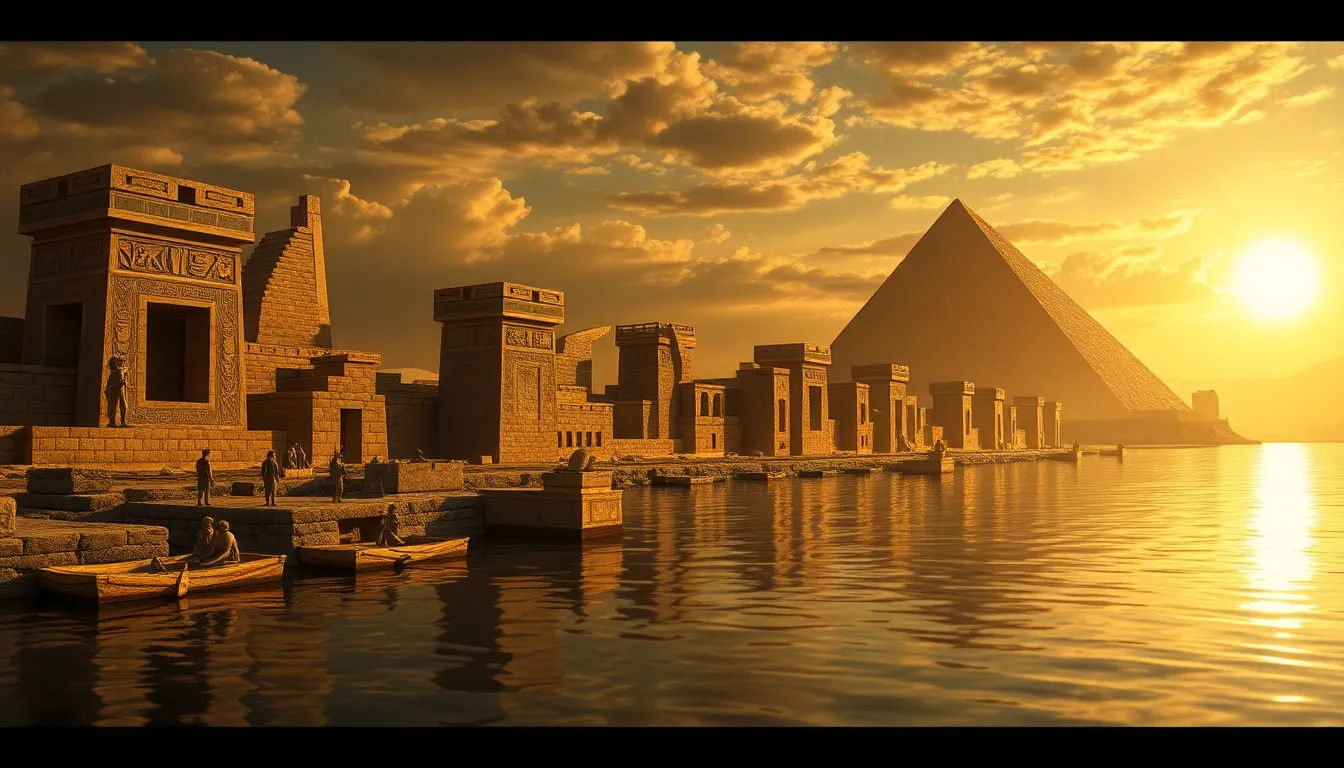
The Connection Between the Nile and Egyptian Art
I. Introduction
The Nile River, often referred to as the lifeblood of ancient Egypt, played a pivotal role in shaping the civilization that flourished along its banks. Stretching over 4,135 miles, it is the longest river in the world, providing essential resources that supported agriculture, trade, and daily life. In tandem with the importance of the Nile, art emerged as a vital aspect of Egyptian culture, serving as a means of communication, expression, and preservation of beliefs.
This article explores the profound influence of the Nile River on various aspects of Egyptian art forms. From the symbolism embedded in artistic representations to the materials utilized in their creation, the relationship between the Nile and Egyptian art is rich and multifaceted.
II. The Nile as a Lifeline: Geographic and Cultural Context
The geographical features of the Nile River are nothing short of remarkable. Originating from the Great Lakes region of Central Africa, the Nile flows northward through eleven countries before emptying into the Mediterranean Sea. The river’s annual flooding deposited nutrient-rich silt on the surrounding land, creating fertile soil that became the foundation of Egypt’s agricultural economy.
The role of the Nile in agriculture and sustenance cannot be overstated. It provided water for irrigation, allowing for the cultivation of crops such as wheat, barley, and flax. This agricultural bounty supported a growing population and laid the groundwork for the development of a complex society.
Moreover, the Nile influenced the daily life and cultural practices of ancient Egyptians. Festivals, rituals, and community gatherings often revolved around the river, highlighting its centrality to their existence. Its presence permeated every aspect of life, from economic activities to spiritual beliefs.
III. Symbolism of the Nile in Egyptian Art
In Egyptian art, the Nile is imbued with rich symbolism and is a recurring theme across various mediums. Common motifs related to the Nile include:
- Depictions of the river itself, often shown flowing through landscapes.
- Imagery of plants and wildlife, such as papyrus and lotus flowers, which thrive along the Nile.
- Scenes of agricultural activities, including harvesting and fishing.
Artistic representations of the Nile can be found in paintings, sculptures, and hieroglyphs. For instance, tomb paintings frequently illustrate the river’s significance in the afterlife, depicting the deceased’s journey alongside the Nile.
The symbolic meanings associated with the Nile are profound, often representing fertility, sustenance, and life itself. The river was seen as a divine gift, fostering growth and prosperity for the Egyptian people.
IV. The Nile’s Influence on Artistic Techniques and Materials
The availability of resources along the Nile significantly influenced artistic practices in ancient Egypt. Papyrus, a plant that flourished along the riverbanks, was used to create one of the earliest forms of paper. This material became a canvas for countless artworks and written records.
Additionally, the vibrant pigments derived from minerals found near the Nile enabled artists to create vivid paintings and decorations. Techniques such as fresco painting and relief carving were developed to enhance the visual storytelling of the Nile’s impact on Egyptian life.
When comparing materials used in Nile-related art to other regions, it is evident that the unique resources available along the river facilitated a distinct artistic style. The use of local materials contributed to the longevity and durability of these artworks, many of which have survived through millennia.
V. The Nile in Religious and Mythological Representations
The Nile’s significance extended beyond daily life and agriculture; it also played a crucial role in Egyptian mythology and religion. The river was often personified as a god, Hapi, who represented fertility and abundance. Artistic depictions of Hapi featured him as a plump man with a large belly, symbolizing the richness of the Nile.
Gods and goddesses associated with the Nile, such as Osiris and Isis, were frequently depicted in art, underscoring the river’s divine connection. Rituals and ceremonies, such as the annual flooding and its implications for agriculture, were celebrated and reflected in artistic works.
VI. The Impact of Seasonal Changes of the Nile on Art
The annual flooding cycle of the Nile, known as the Inundation, was a defining feature of Egyptian life and was vividly represented in art. This cycle not only rejuvenated the land but also inspired seasonal themes in artistic expression.
Artworks often depicted scenes of the flooding river, showcasing the inundation’s transformative effects on the landscape. Through these representations, artists captured the essence of renewal and the agricultural cycles that dictated the rhythms of life.
Furthermore, the reflection of agricultural cycles in artistic expression highlights the deep connection between the Nile and the sustenance of Egyptian civilization.
VII. Case Studies: Notable Artworks Reflecting the Nile’s Influence
Several notable artworks exemplify the influence of the Nile on Egyptian art. For instance:
- Tomb Paintings of Nebamun: These paintings depict scenes of hunting and fishing along the Nile, emphasizing the river’s role in providing sustenance.
- Statues of Hapi: Sculptures of the fertility god highlight the reverence for the Nile and its life-giving properties.
- Hieroglyphs: Many inscriptions include references to the Nile, showcasing its importance in religious and cultural contexts.
Each of these works illustrates the profound impact of the Nile on the artistic expressions of ancient Egyptians, reflecting their reverence for this vital resource.
VIII. Conclusion
In summary, the Nile River’s multifaceted influence on Egyptian art is a testament to its significance in ancient Egyptian culture. From its role as a lifeline providing sustenance to its deep connections with mythology and religion, the Nile shaped artistic expression in profound ways.
The enduring legacy of this connection continues to enhance our understanding of ancient Egyptian civilization and its rich artistic heritage. Ultimately, the Nile was not just a river; it was a source of inspiration that shaped the artistic identity of a remarkable civilization throughout history.