The Connection Between the Moon and the Nile
I. Introduction
The Moon has held significant importance across various cultures throughout history. Its phases have been associated with timekeeping, agricultural practices, and spiritual beliefs. In particular, ancient civilizations viewed the Moon as a celestial body that influenced life on Earth, often linking it to fertility and cycles of nature.
In contrast, the Nile River has been the lifeblood of Egypt, crucial for agriculture, trade, and daily life. Its annual flooding provided fertile soil, enabling civilizations to thrive in an otherwise arid landscape. This article aims to explore the fascinating relationship between the Moon and the Nile, examining how these two elements intertwined in ancient Egyptian culture.
II. Historical Significance of the Nile River
The Nile River has played a pivotal role in shaping ancient Egyptian civilization. It stretches over 6,650 kilometers, making it one of the longest rivers in the world. The river served not just as a water source, but also as a means of transportation and trade.
- Annual Flooding: The Nile’s annual inundation was a natural phenomenon that brought nutrient-rich silt to the surrounding lands, making them fertile for agriculture.
- Source of Life: The river supported a diverse ecosystem and provided resources such as fish and reeds, which were essential for the construction of boats and homes.
- Mythological Importance: In Egyptian mythology, the Nile was often personified as the god Hapi, who represented fertility and abundance.
III. The Moon in Ancient Egyptian Culture
In ancient Egyptian culture, the Moon was a powerful symbol, associated with various deities and spiritual beliefs. The lunar cycle had significant implications for religious practices and daily life.
- Symbolism: The Moon represented time, cycles, and renewal. Many Egyptians believed that the Moon controlled the tides and influenced the fertility of the land.
- Lunar Cycles in Religion: The phases of the Moon dictated many religious festivals and rituals, with specific times deemed more auspicious for worship.
- Key Deities: Khonsu, the god of the Moon, was revered in ancient Egypt for his ability to measure time and was often depicted as a young man with a sidelock of youth.
IV. Agricultural Cycles and Lunar Phases
The alignment of agricultural practices with lunar phases was crucial for the farmers along the Nile. The Moon’s cycles were observed closely, as they influenced the agricultural calendar.
- Influence on Farming: Farmers would plant and harvest crops based on the lunar phases, believing that certain phases were more favorable for specific crops.
- Planting and Harvesting: The new Moon was often seen as a time for planting, while the full Moon was associated with harvesting.
- Connection to the Nile: The annual flooding of the Nile also aligned with lunar cycles, with the inundation typically occurring during the summer months.
V. Navigation and Trade on the Nile
The Moon played a vital role in navigation and trade along the Nile River. Ancient Egyptians relied on lunar cycles to guide their journeys and manage trade routes effectively.
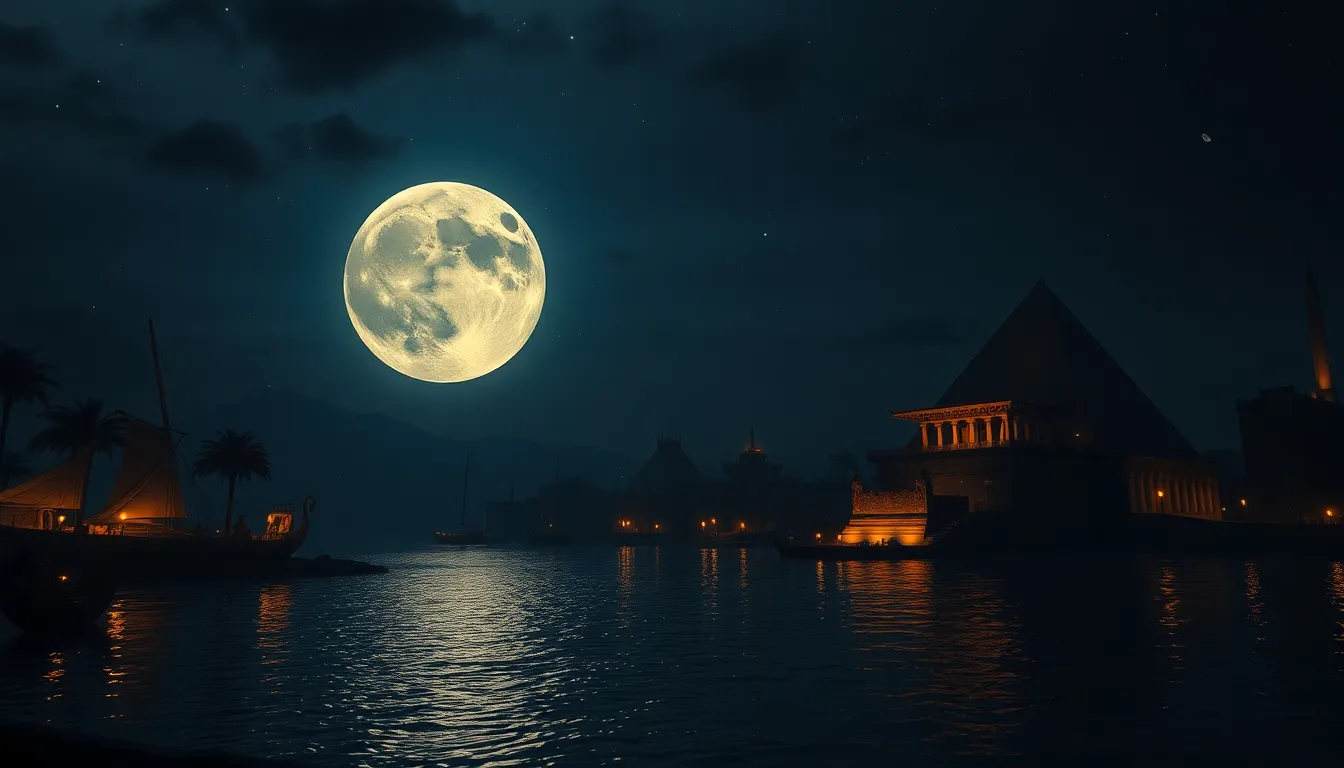
- Navigating at Night: The light of the Moon made nighttime travel safer and easier, allowing traders and fishermen to navigate the river’s currents.
- Lunar Calendars: The importance of lunar calendars extended to trade, helping merchants track seasons and plan for optimal trading times.
- Cultural Exchanges: The alignment of trade routes with lunar cycles facilitated cultural exchanges between different regions along the Nile.
VI. Astronomy and Calendar Systems
The ancient Egyptians were skilled astronomers and developed intricate calendar systems based on the Moon’s cycles.
- Lunar Calendars: The lunar calendar comprised 12 months of 30 days, with additional days added to align with the solar calendar.
- Alignment with the Nile’s Flooding: The lunar calendar was carefully synchronized with the annual flooding of the Nile, ensuring that agricultural activities were timely.
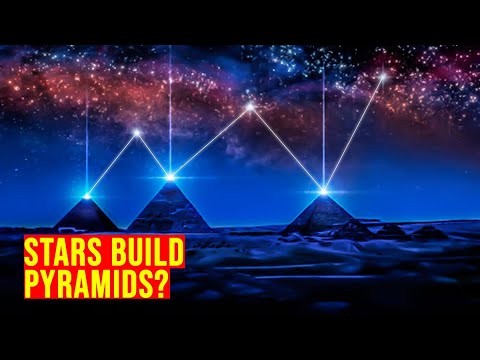
- Astronomy’s Impact: The Egyptians’ understanding of astronomy influenced various aspects of their society, from religious practices to architectural alignments.
VII. Artistic and Literary Representations
The Moon and the Nile have been depicted in various forms of ancient Egyptian art and literature, highlighting their significance in cultural narratives.
- Artistic Depictions: Ancient artworks often showcased the Moon alongside the Nile, symbolizing the duality of life and death, fertility and barrenness.
- Literature and Poetry: Texts from ancient Egypt contain references to the Moon and the Nile, expressing the deep relationship between the two in poetic forms.
- Modern Interpretations: Today, artists and writers continue to draw inspiration from these ancient symbols, reflecting on their enduring cultural significance.
VIII. Conclusion
The interconnectedness of the Moon and the Nile is a testament to the profound relationship between celestial and earthly elements in ancient Egyptian culture. Both the Moon and the Nile were essential to the survival and prosperity of ancient civilizations, influencing agriculture, navigation, and spirituality.
As we reflect on their significance, it is clear that understanding these historical relationships provides insight into how societies adapt and thrive in their environments. The legacy of the Moon and the Nile continues to resonate in contemporary culture, reminding us of the enduring connections between nature, mythology, and human existence.