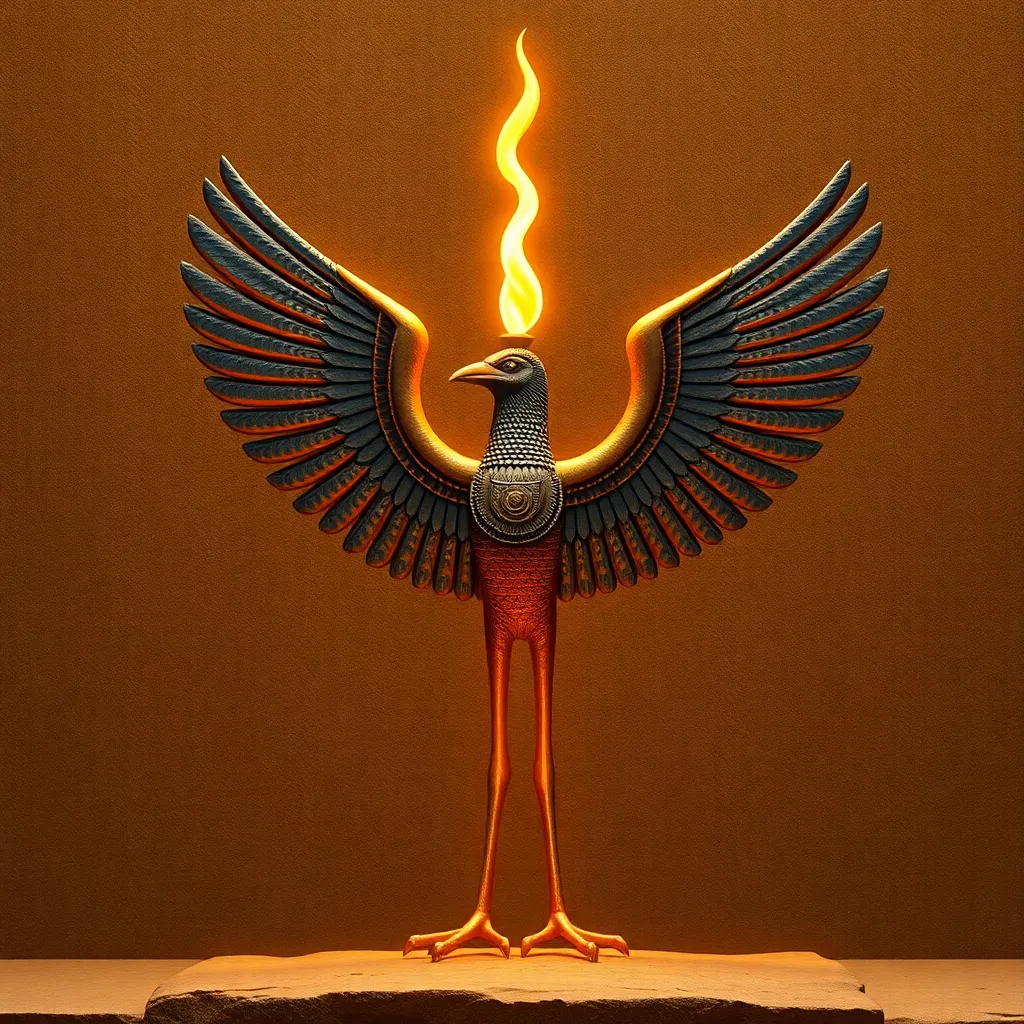
The Bennu Bird: The Flame of Creation in Ancient Egypt
I. Introduction to the Bennu Bird
The Bennu bird holds a significant place in ancient Egyptian mythology as a symbol of creation, rebirth, and renewal. Often associated with the sun and the cycle of life, this mythical bird embodies the eternal nature of existence in ancient Egyptian beliefs. In this article, we will explore the rich symbolism and cultural importance of the Bennu bird, delving into its mythological origins, artistic representations, religious practices, and its enduring legacy in modern culture.
II. Mythological Origins and Symbolism
The Bennu bird is closely linked to the creation myth of ancient Egypt. According to the mythology, the Bennu emerged from the primordial waters of chaos, symbolizing the beginning of life and the universe. This mythical bird is often associated with the sun god Ra, representing not only creation but also the cyclical nature of life and death.
In ancient Egyptian beliefs, the Bennu bird represented:
- Rebirth: It was believed that the Bennu bird could rise from its ashes, symbolizing the idea of resurrection and new beginnings.
- Renewal: The cycle of the Bennu’s life mirrored the seasonal changes, emphasizing the importance of renewal in nature.
- Connection to Ra: As a manifestation of Ra, the Bennu bird played a crucial role in the daily cycle of the sun, embodying the sun’s power to give life.
III. Physical Description and Artistic Representations
Descriptions of the Bennu bird in ancient texts depict it as a heron or a stork, often adorned with colorful plumage and a distinctive crest. It was believed to have a striking appearance that set it apart from other birds.
Artistic depictions of the Bennu bird can be found in various forms:
- Tombs: The Bennu was often illustrated in tomb paintings, symbolizing the deceased’s journey towards rebirth.
- Temples: Artistic representations in temples served as reminders of the divine nature of the pharaohs and their connection to the gods.
- Artifacts: Various artifacts, including amulets and jewelry, featured the Bennu bird, reinforcing its significance in daily life and spirituality.
When compared to other mythological birds in different cultures, such as the Phoenix in Greek mythology, the Bennu bird shares similar themes of resurrection and immortality, highlighting the universal symbolism of these mythical creatures.
IV. The Bennu Bird in Religious Practices
In ancient Egyptian religious practices, the Bennu bird played a vital role in various rituals and ceremonies. Its significance can be summarized as follows:
- Rituals: The Bennu was part of rituals aimed at ensuring the renewal of life and the cyclical nature of the seasons.
- Pharaoh’s Divine Right: The bird symbolized the pharaoh’s connection to the divine, reinforcing the belief in the ruler’s authority and legitimacy.
- Funerary Practices: The Bennu was often included in funerary texts, emphasizing the belief in an afterlife and the hope for rebirth.
V. The Bennu Bird and the Concept of Time
The concept of time in ancient Egypt was closely tied to the cyclical nature of existence. The Bennu bird exemplified this relationship through:
- Cyclical Nature: The Bennu’s life cycle mirrored the natural cycles of the seasons, reinforcing the idea of eternity.
- Flood and Agricultural Cycles: The Bennu was associated with the flooding of the Nile, which was crucial for agriculture and sustenance.
- Interpretations of Eternity: The Bennu bird’s ability to rise from its ashes symbolized the concept of eternal life and the continuity of existence.
VI. The Bennu Bird’s Influence on Modern Culture
The legacy of the Bennu bird extends beyond ancient Egypt, influencing contemporary literature, art, and spiritual practices. Its symbolism can be found in various aspects of modern culture:
- Literature: The Bennu bird has inspired countless authors and poets, often serving as a metaphor for resilience and transformation.
- Spiritual Practices: In modern spiritual beliefs, the Bennu represents personal rebirth and the journey of self-discovery.
- Art: Contemporary artists draw upon the imagery of the Bennu, reflecting themes of renewal and change in their work.
VII. Archaeological Discoveries and Historical Context
Archaeological discoveries have shed light on the importance of the Bennu bird in ancient Egyptian civilization. Key findings include:
- Hieroglyphics: Inscriptions depicting the Bennu bird provide insights into its symbolic meanings and associations with the gods.
- Artifacts: Items such as amulets and sculptures featuring the Bennu have been excavated, revealing its role in daily life and spirituality.
- Historical Significance: Understanding the Bennu bird’s place in mythology helps historians piece together the belief systems and cultural practices of ancient Egypt.
VIII. Conclusion
In conclusion, the Bennu bird holds a multifaceted significance in ancient Egyptian mythology. From its origins as a symbol of creation to its enduring legacy in modern culture, the Bennu represents the universal themes of rebirth, renewal, and the cyclical nature of existence. The exploration of the Bennu bird’s symbolism and cultural importance not only enriches our understanding of ancient Egyptian beliefs but also highlights the importance of preserving these ancient cultural symbols for future generations.
As we reflect on the enduring legacy of the Bennu, we recognize its role as a powerful metaphor for resilience and transformation, reminding us of the timeless nature of life and the continuous journey of renewal.