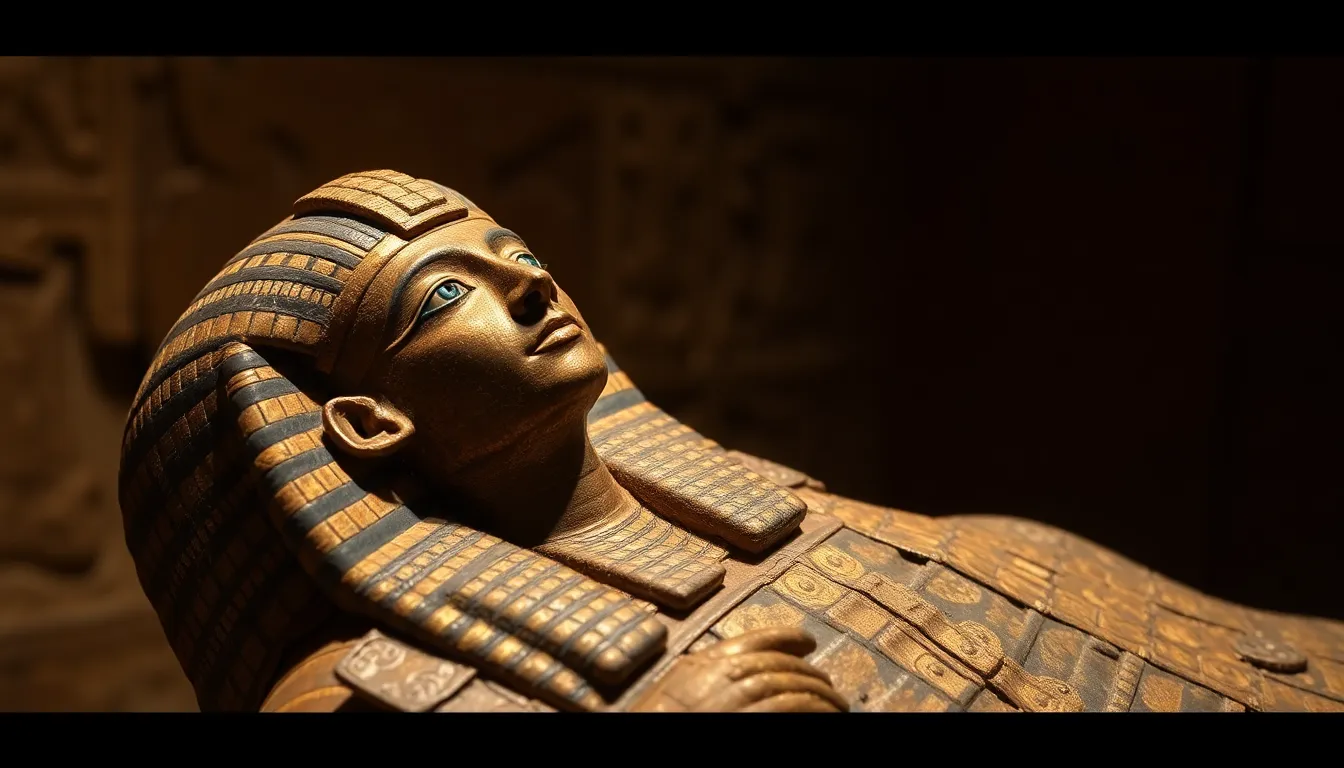
The Art and Science of Egyptian Mummification
I. Introduction to Mummification
Mummification is a fascinating and complex practice that played a crucial role in ancient Egyptian culture. It refers to the preservation of a deceased body, which was believed to be essential for the journey into the afterlife. The significance of mummification goes beyond mere physical preservation; it encapsulates deep religious beliefs and societal values of ancient Egypt.
The mummification process was meticulously designed with specific purposes in mind, including the protection of the body from decay, the preparation for the afterlife, and the honoring of the deceased. This process reflects the Egyptians’ profound respect for life after death, making it a central element of their belief system.
II. Historical Context of Mummification
The practice of mummification has its origins in the prehistoric period of ancient Egypt, around 3000 BCE. Initially, natural mummification occurred due to the arid climate, which preserved bodies buried in the desert sands. Over time, as beliefs about the afterlife evolved, so did the methods of mummification.
Throughout the dynasties, mummification techniques became increasingly sophisticated. The early methods were simple, involving basic wrapping and the use of natural preservatives. By the time of the New Kingdom, highly elaborate techniques and rituals had developed, indicating a significant evolution in both religious beliefs and technological advancements in embalming.
III. The Beliefs Behind Mummification
Central to the practice of mummification were the ancient Egyptians’ beliefs about the afterlife. They held a firm conviction that life continued after death, and the condition of the body was vital for the soul’s journey. This belief system was intricately tied to their pantheon of gods and the concept of Ma’at, which represented truth, balance, and cosmic order.
The soul, or “Ba,” and the body, or “Ka,” were viewed as essential components in the afterlife journey. The “Ka” was the life force that needed a physical body to sustain its existence, while the “Ba” represented the personality and could move between the worlds of the living and the dead. Mummification preserved the body, allowing the “Ka” to recognize it and ensuring that the soul could thrive in the afterlife.
IV. The Mummification Process: Step by Step
The mummification process involved several carefully orchestrated steps, each with its own rituals and significance:
- Initial preparations and rituals: The deceased was washed and purified. Prayers and incantations were recited to protect the soul.
- Extraction of internal organs: The embalmers removed the internal organs, which were considered prone to decay. The heart was often left in place, as it was believed to be the center of intelligence and emotion.
- Embalming techniques: The organs were treated with natron (a naturally occurring salt) to dehydrate them and then placed in canopic jars, each protected by a specific deity.
- Drying and wrapping process: The body was packed with natron and left to dry for about 40 days. After this, it was wrapped in linen strips, often adorned with amulets and other protective items.
V. Materials and Tools Used in Mummification
Various materials and tools were essential for the mummification process:
- Natural substances: Resins, oils, and salts were used for embalming. These substances helped to preserve the body and prevent decay.
- Tools and technologies: Embalmers used specialized tools like knives, hooks, and saws for the extraction of organs and the preparation of the body. The ingenuity of these tools reflects the advanced understanding of anatomy and preservation techniques.
VI. The Role of Priests and Embalmers
Embalming was not just a technical process; it was also a deeply spiritual one. Professional embalmers, often priests, played a crucial role in the mummification process:
- Training: Embalmers underwent rigorous training, learning the sacred rituals and techniques necessary for mummification.
- Religious duties: They performed various rituals to honor the deceased and invoke the protection of the gods during the mummification process.
VII. Mummification in Popular Culture and Modern Science
Mummification has captured the imagination of many, leading to its portrayal in films, literature, and art. From horror movies to adventure tales, mummies have become iconic symbols of ancient Egypt’s mysteries.
Modern science has also made significant strides in understanding mummification. Archaeological techniques, such as CT scanning and DNA analysis, have provided insights into the mummification process and the lives of the people who underwent it. Discoveries of mummies have revealed details about ancient Egyptian health, diet, and even their burial practices.
VIII. Conclusion: The Legacy of Egyptian Mummification
The practice of mummification has left an indelible mark on our understanding of ancient Egyptian civilization. It offers a window into their beliefs, culture, and technological advances. Mummification was not merely an act of preserving the dead; it was a profound expression of the Egyptians’ views on life, death, and the afterlife.
Today, the fascination with mummies continues, driving research and exploration into ancient Egyptian practices. The legacy of mummification endures, reminding us of the complexities of life and death in one of history’s most intriguing cultures.