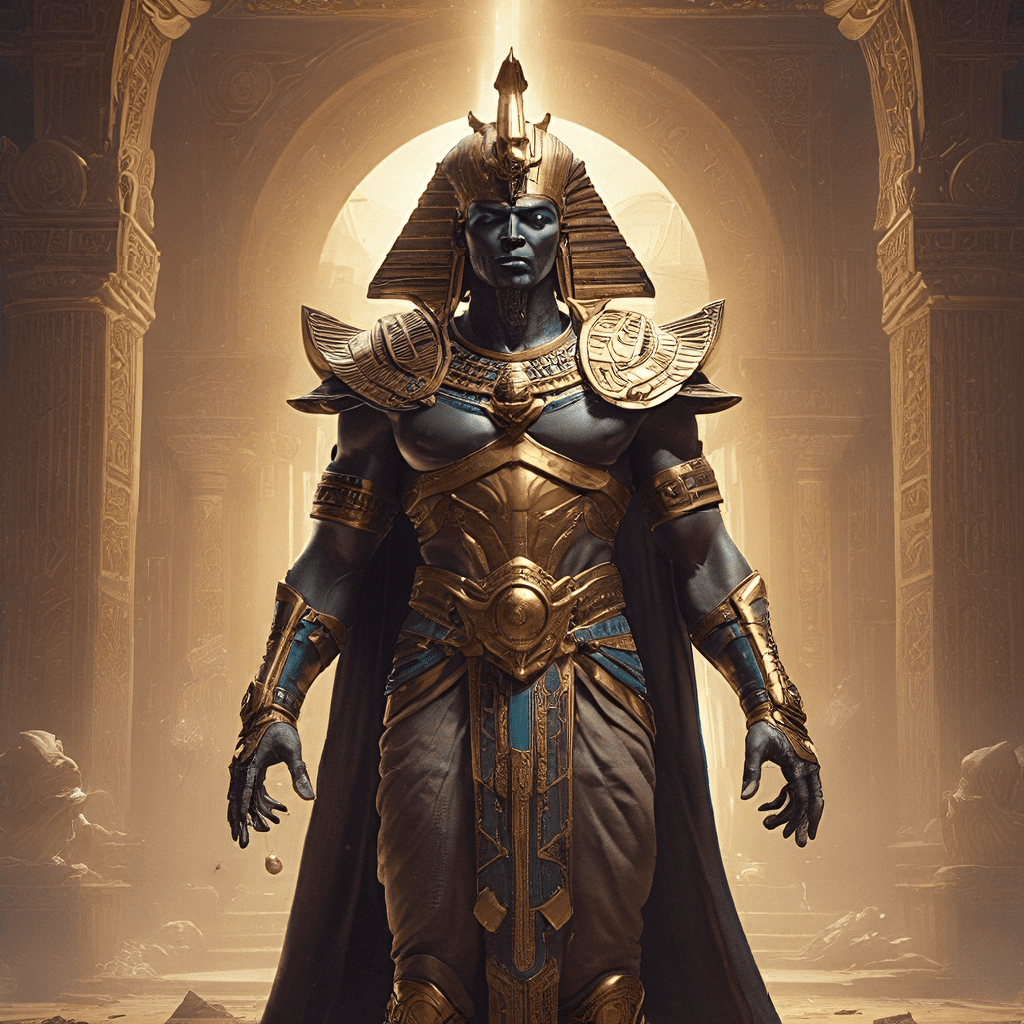
Osiris: The God of Justice
Osiris, in ancient Egyptian mythology, is a pivotal figure, revered as the god of the underworld, resurrection, and justice. His story is a compelling blend of death, rebirth, and the eternal cycle of life, making him a central figure in Egyptian religious beliefs and practices.
1. Origins and Family:
Osiris was born to Geb, the god of Earth, and Nut, the goddess of the Sky. His siblings included Isis, Nephthys, and Seth. He married his sister Isis, and together they had a son, Horus, who would later play a crucial role in avenging his father’s death.
Osiris is believed to have been the first king of Egypt, a role that defined his image as a benevolent ruler, bringing civilization and agriculture to the land. He is often depicted as a majestic figure, embodying order, justice, and prosperity.
2. The Reign of Osiris:
As the first king, Osiris ruled with wisdom and compassion, teaching the Egyptians about agriculture, law, and morality. He established a system of justice and a moral code, laying the foundation for a civilized society. His reign is often associated with a golden age, where prosperity and harmony flourished.
His teachings emphasized the importance of living a just and righteous life, believing that good deeds would be rewarded in the afterlife. This concept of justice and moral accountability extended beyond his earthly reign, influencing the beliefs surrounding the judgment of the dead.
3. The Murder of Osiris:
Osiris’s reign was tragically cut short by the jealousy and malice of his brother, Seth. Driven by envy, Seth plotted to usurp his brother’s throne. He devised a cunning plan to kill Osiris. He lured him into a beautiful, elaborately decorated chest, promised as a gift to the rightful king.
Once Osiris entered the chest, Seth slammed the lid shut, sealed it with lead and threw it into the Nile River. This act, symbolic of death and decay, set in motion a chain of events that would shape Egyptian mythology.
4. Isis’s Search and Reassembly:
Isis, heartbroken and determined to avenge her husband’s death, embarked on a tireless search for Osiris’s body. She journeyed across the Nile, overcoming obstacles and battling demons, finally finding the chest.
Isis, a goddess of magic, used her powers to reassemble Osiris’s dismembered body, a task that symbolized her unwavering love, devotion, and magical ability. This act of love and resilience established Isis as a powerful and compassionate figure, a mother, wife, and goddess who would forever be linked to the cycle of death and resurrection.
5. The Resurrection and Judgment:
Through the power of magic and the unwavering love of Isis, Osiris was resurrected for a short time. This allowed him to father Horus, who was destined to avenge Osiris’s death. However, Osiris’s resurrection was temporary, and he ultimately returned to the underworld, assuming his rightful place as the ruler of the afterlife.
Osiris’s dominion in the afterlife extended beyond simply ruling the realm of the dead. He became the judge of souls, overseeing a system of judgment that determined the fate of the deceased. The concept of the Weighing of the Heart, a central part of Egyptian funerary beliefs, was directly linked to Osiris’s judgment.
6. Osiris as Judge of the Dead:
In the Hall of Two Truths, the souls of the deceased were subjected to a rigorous judgment by Osiris. Their hearts were weighed against the feather of Ma’at, the goddess of truth and justice. If the heart balanced the feather, the soul was deemed worthy of entering the afterlife and joining Osiris in the Field of Reeds, a paradise filled with eternal bliss. If the heart was heavier than the feather, it was devoured by Ammit, a monstrous beast representing chaos and disorder, and the soul was condemned to eternal darkness.
The symbolism of the Weighing of the Heart resonated deeply with the Egyptians, emphasizing the importance of living a moral life, guided by justice and truth, to ensure a favorable afterlife.
7. Symbolism of Osiris:
Osiris’s influence transcended the realm of myth, finding expression in various aspects of Egyptian culture and beliefs. His symbols and attributes were deeply intertwined with the concepts of death, rebirth, and the eternal cycle of life.
The color green was associated with Osiris, representing renewal, rebirth, and the flourishing of vegetation. The Djed pillar, a stylized representation of the backbone of Osiris, symbolized stability, strength, and resurrection.
The intricate process of mummification, a central aspect of Egyptian funerary practices, was seen as a connection to Osiris and the afterlife. The Egyptians believed that by preserving the body, they were enabling the deceased to join Osiris in the afterlife and experience a new life.
Through his myths, symbols, and rituals, Osiris has left an enduring legacy, influencing the beliefs and practices of the ancient Egyptians, and continuing to captivate and inspire generations with his story of death, resurrection, and the eternal quest for justice.