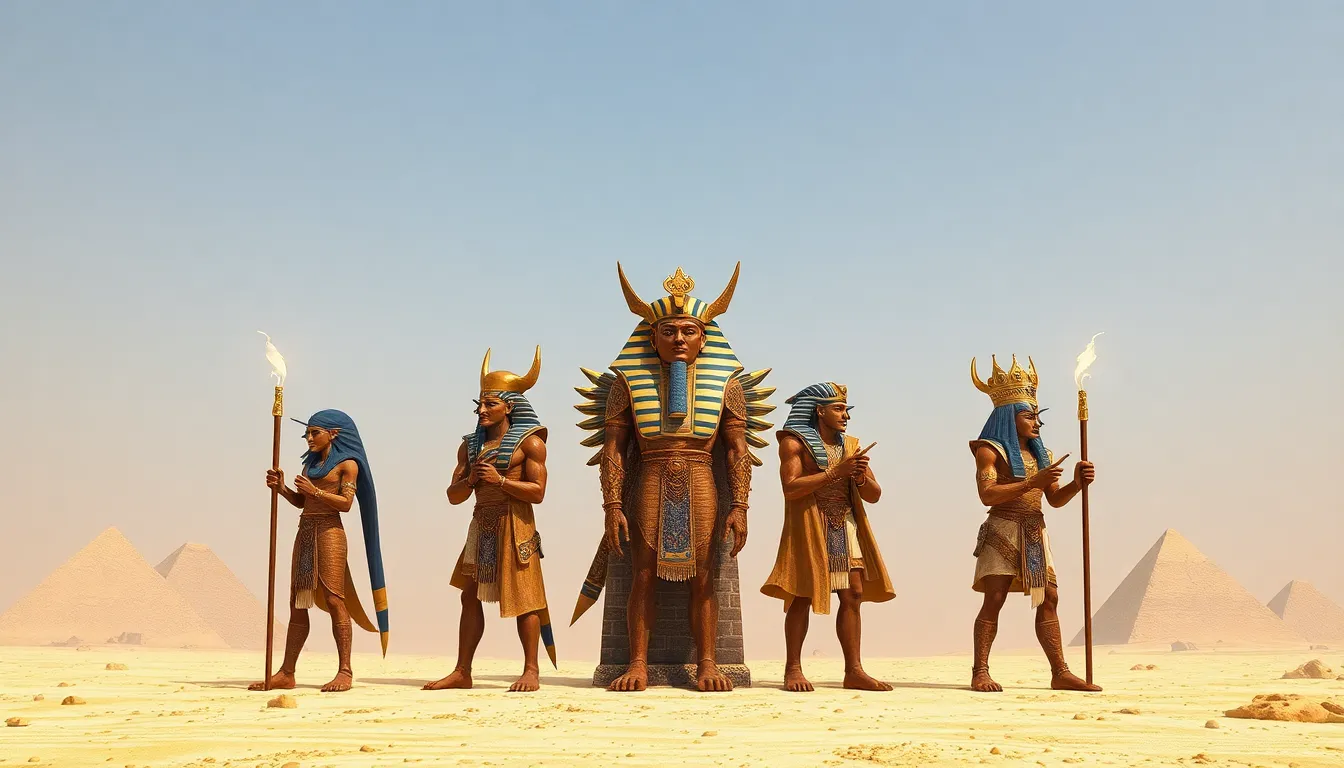
Nomes and Their Deities: The Divine Forces of Ancient Egypt
I. Introduction to Nomes in Ancient Egypt
Nomes were the administrative divisions of ancient Egypt, serving as both geographical and political entities. Each Nome was governed by its own officials and was associated with a specific deity that provided divine patronage and protection. The significance of Nomes extended beyond mere administration; they were integral to the social and religious life of the ancient Egyptians.
This article will explore the structure of Nomes, the deities associated with them, their rituals and worship practices, and their broader implications in ancient Egyptian society and mythology.
II. Structure and Geography of Nomes
The division of ancient Egypt into Nomes is primarily categorized into two regions: Upper Egypt and Lower Egypt. Upper Egypt consists of 22 Nomes, while Lower Egypt includes 20, bringing the total to 42 Nomes.
Key Characteristics of Nomes:
- Upper Egypt: Characterized by a narrow valley along the Nile, rich in agricultural potential.
- Lower Egypt: A broader delta region where the Nile splits into several branches, supporting diverse ecosystems.
The geographic features of each Nome influenced local resources, economy, and the deities worshiped there. For example, Nomes situated near the Nile were often associated with fertility deities due to the river’s crucial role in agriculture.
III. The Pantheon of Nomial Deities
Each Nome was associated with a unique set of deities, often reflecting the local environment and culture. Some major deities associated with various Nomes include:
- Horus: Associated with the Nome of Hierakonpolis, revered as a sky god and protector of the pharaohs.
- Thoth: God of wisdom and writing, associated with the Nome of Hermopolis.
- Sobek: Crocodile god of the Nile, primarily worshiped in the Nome of Crocodilopolis.
These deities were not only objects of worship but also served roles in local governance and protection. They were believed to grant legitimacy to rulers and ensure the prosperity of the land.
IV. Rituals and Worship Practices
Rituals and worship practices varied between Nomes but shared common themes that highlighted the relationship between the people and their deities. Common rituals included:
- Daily offerings of food and incense at temple altars.
- Festivals celebrating the deities, which often involved processions, music, and dance.
Festivals were significant for local communities, fostering a sense of unity and shared identity. Temples, as centers of worship, played a crucial role in community life, serving as places for gatherings, education, and administration.
V. Nomes in Mythology and Cosmology
Nomes were not merely political entities; they held a deep cosmological significance in Egyptian mythology. Some myths describe how the world was divided into Nomes as part of the creation narrative:
- The establishment of the first Nome, often linked to the primordial mound from which the world emerged.
- Symbolism of Nomes as representations of order in the chaos of creation.
The interconnections between Nomes and greater Egyptian mythology illustrate the belief that these geographic divisions were reflections of divine order and cosmic balance.
VI. The Political and Social Impact of Nomes
Nomes played a crucial role in the administration of Ancient Egypt. Each Nome had its own local governance, which contributed to the overall stability of the nation. The influence of Nomial deities was significant in terms of political power and legitimacy:
- Pharaohs often associated themselves with the deities of their respective Nomes to strengthen their rule.
- Nomes served as centers of culture and economic activity, promoting trade and agriculture.
The competition and cooperation between different Nomes also shaped the political landscape of ancient Egypt, influencing alliances and conflicts.
VII. Archaeological Discoveries and Insights
Numerous archaeological sites have revealed insights into the worship practices and beliefs associated with Nomes. Key sites include:
- Hierakonpolis: The capital of Upper Egypt, rich in artifacts related to the worship of Horus.
- Hermopolis: Known for its temples dedicated to Thoth, with inscriptions detailing rituals and myths.
Recent findings continue to shed light on the daily lives of ancient Egyptians and the significance of their deities. Current research trends focus on interdisciplinary approaches that combine archaeology, anthropology, and history to explore the complexities of Nomial worship.
VIII. Conclusion
The study of Nomes and their deities reveals the intricate tapestry of ancient Egyptian culture, religion, and society. These divisions were not only administrative units but also vital components of the religious framework that governed daily life.
Understanding the legacy of Nomes enhances our comprehension of ancient religions and their influences on modern beliefs. As research continues, new discoveries will undoubtedly unravel further layers of the relationship between geography, divinity, and culture in ancient Egypt.