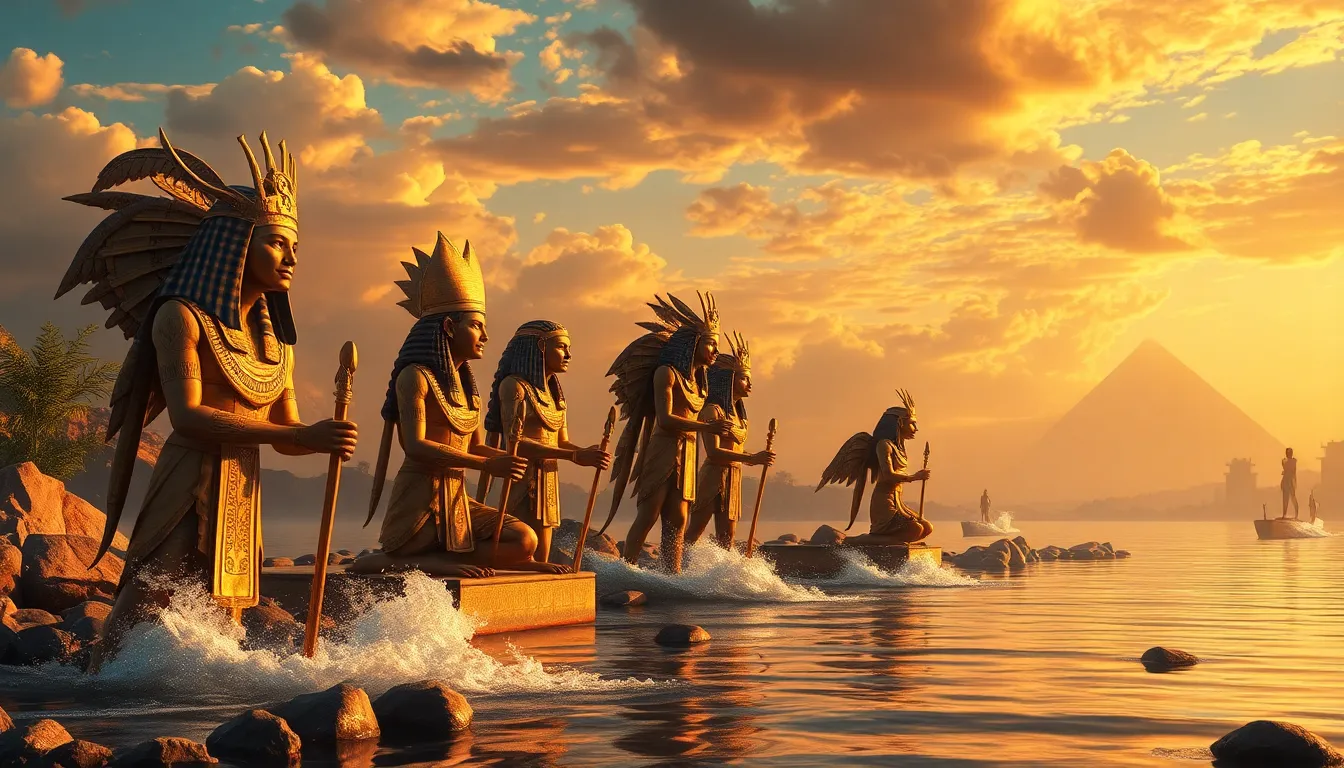
Nile Gods: Deities of the River
I. Introduction
The Nile River holds a central place in ancient Egyptian culture, acting not only as a vital source of water but also as a life-giving artery that nourished the land and its people. The annual flooding of the Nile was a phenomenon that shaped the rhythms of agricultural life, and it was revered as a divine event. As such, the ancient Egyptians personified the river and its life-giving properties through various deities, each representing different facets of the Nile’s significance.
This article aims to explore the major gods associated with the Nile, shedding light on their roles, attributes, and the rituals that honored them. By understanding these deities, we can gain deeper insight into the intricate relationship between the Nile and ancient Egyptian spirituality.
II. The Role of the Nile in Ancient Egyptian Life
The Nile was indispensable to ancient Egyptians, influencing nearly every aspect of life, including agriculture, religion, and daily routines.
- Importance for Agriculture: The annual inundation provided rich silt that fertilized the surrounding fields, enabling the growth of crops like wheat and barley.
- Source of Life: The river was seen as a source of sustenance, providing fish and water for drinking and irrigation.
- Symbol of Fertility: The Nile’s predictable flooding represented renewal and fertility, making it a central theme in agricultural and religious practices.
- Influence on Religion and Mythology: The river’s significance led to the development of a rich tapestry of myths and deities that celebrated its life-giving properties.
III. Hapi: The God of the Nile Floods
Hapi, often depicted as a man with a large belly and a papyrus plant on his head, was the god of the annual Nile floods. He personified the fertility and abundance that came with the inundation, which was crucial for the agricultural success of ancient Egypt.
The significance of Hapi’s flooding was multifold:
- The floods brought nutrient-rich silt to the fields, ensuring successful harvests.
- Hapi was celebrated during the Wepet-Renpet festival, marking the beginning of the agricultural year.
Rituals and offerings to Hapi included:
- Prayers for bountiful harvests and favorable flooding.
- Offerings of food and drink, symbolizing gratitude for his blessings.
IV. Osiris: God of the Afterlife and Agriculture
Osiris, one of the most important deities in the Egyptian pantheon, was closely associated with the Nile’s fertility. As the god of the afterlife and resurrection, he also represented the cyclical nature of life and death, paralleling the seasonal floods of the Nile.
Myths surrounding Osiris often highlight his connection to the river:
- His resurrection after being killed by Set symbolizes the annual flooding of the Nile and the rebirth of the land.
- Osiris was frequently depicted with green skin, representing fertility and rebirth.
Worship practices associated with Osiris included:
- The annual Osiris Mysteries, which reenacted his death and resurrection.
- Offerings at his temples, particularly during the flooding season, to ensure his favor.
V. Sobek: The Crocodile God
Sobek, depicted as a man with the head of a crocodile, represented the dual nature of the Nile – both as a protector and a destroyer. He was associated with the fertility of the Nile as well as the dangers it posed through crocodile attacks.
The characteristics and symbolism of Sobek include:
- Protector: Sobek was believed to protect the pharaoh and the people from the dangers of the river.
- Destruction: His association with crocodiles made him a representation of the river’s ferocity.
Sobek was worshipped in various temples along the Nile, with one of the most notable being the Temple of Sobek in Kom Ombo.
VI. Khnum: The Creator God
Khnum, depicted as a man with the head of a ram, was revered as the creator god who shaped humanity from the clay of the Nile. He was believed to control the waters of the Nile, essential for life and creation.
Myths about Khnum include:
- His role in the creation of humans, where he molded them on his potter’s wheel.
- The belief that he provided the Nile’s waters, essential for sustaining life.
Cultural artifacts depicting Khnum often feature him with pottery and clay, symbolizing his creative powers.
VII. Other Notable Nile Deities
Aside from the major gods, several lesser-known deities were associated with the Nile, each contributing to the rich tapestry of Egyptian mythology:
- Meretseger: The goddess of the valley who protected the deceased and was associated with the Nile’s swamps.
- Annual Flood Spirits: Various spirits that were believed to inhabit the Nile during the flooding season, embodying the essence of fertility.
These deities played significant roles in local myths and practices, reflecting the diverse spiritual landscape of ancient Egypt. Their collective impact emphasized the Nile’s centrality in Egyptian spirituality.
VIII. Conclusion
The Nile gods were integral to ancient Egyptian belief systems, personifying the river’s life-giving properties and its profound influence on agriculture, spirituality, and daily life. These deities shaped the cultural landscape of ancient Egypt, fostering a deep reverence for the Nile that persists in modern interpretations of their mythology.
In summary, the legacy of the Nile deities underscores the importance of the river in shaping not only the physical environment of Egypt but also the spiritual and cultural identity of its people. Their stories continue to resonate, providing insight into how ancient Egyptians understood the world around them.