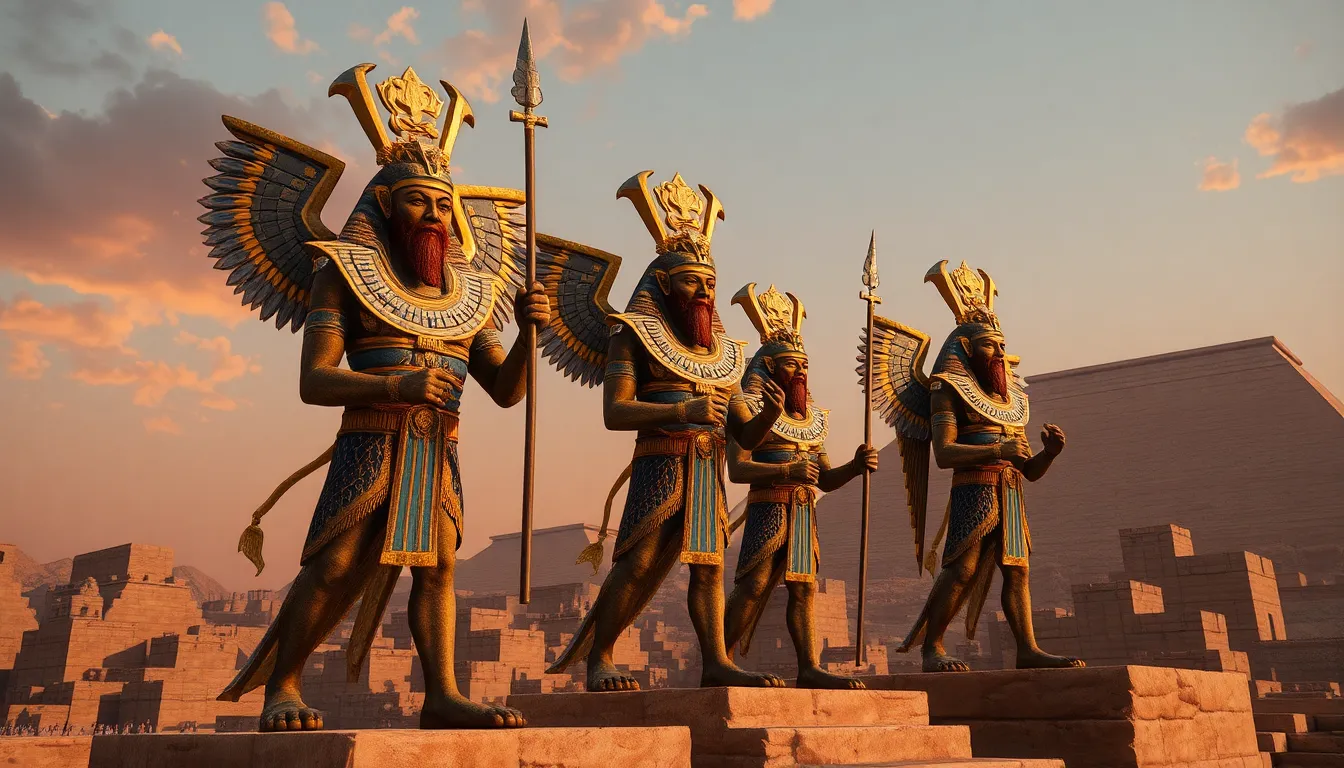
Gods of the Nomes: The Divine Protectors of Egyptian Cities
I. Introduction
Ancient Egyptian religion was a complex system of beliefs and rituals centered around the worship of numerous deities, each representing various aspects of life, nature, and the cosmos. This polytheistic faith played a pivotal role in shaping the cultural and social structure of ancient Egypt.
The concept of Nomes—regional divisions of ancient Egypt—was significant in this religious landscape. Each Nome was not only a geographical area but also a cultural unit with its own local gods and traditions. This article aims to explore the gods of the Nomes and their importance in the religious and social life of ancient Egyptians.
II. Understanding Nomes in Ancient Egypt
A. Definition and significance of Nomes
Nomes were administrative regions in ancient Egypt, typically consisting of several cities and villages. Each Nome had its own governing system and was often associated with specific deities, who were believed to protect and oversee the region.
B. Geographic distribution of Nomes across Egypt
Ancient Egypt was divided into Upper and Lower Egypt, each containing multiple Nomes. There were a total of 42 Nomes—22 in Upper Egypt and 20 in Lower Egypt. Each Nome had unique geographical features, which influenced the local culture and worship practices.
C. Role of Nomes in local governance and culture
Nomes served as units of local governance, with each Nome having its own administrative officials and local customs. This decentralization allowed for a rich diversity of religious practices and cultural expressions across the regions.
III. The Pantheon of Nome Deities
A. Overview of major gods and goddesses associated with the Nomes
Each Nome had its patron deity, who was revered by the local population. These deities often embodied the attributes and characteristics that were vital to the community’s identity and survival. Some prominent gods included:
- Amun – The god of Thebes
- Ptah – The creator god of Memphis
- Ra – The sun god of Heliopolis
- Osiris – The god of the afterlife, worshiped in various Nomes
B. Variations in deity worship across different Nomes
The worship of deities could vary significantly from one Nome to another. While some Nomes may have shared gods, the local interpretations, rituals, and importance of these deities differed, reflecting the unique cultural identity of each region.
C. Importance of local rituals and temples
Local temples dedicated to Nome gods were central to community life. These temples served as places of worship, community gatherings, and centers of economic activity. Rituals performed in these temples were believed to ensure the favor of the gods and the prosperity of the Nome.
IV. Major Gods of Notable Nomes
A. Thebes: Amun and the divine kingship
Thebes, one of the most significant cities in ancient Egypt, was associated with Amun, who became widely worshiped as the king of the gods. Amun’s association with the pharaoh solidified the divine right of kingship, making him a central figure in the Theban Nome.
B. Memphis: Ptah and the creation myth
In Memphis, Ptah was revered as the god of craftsmanship and creation. The creation myth involving Ptah described how he spoke the world into existence, emphasizing the importance of thought and speech in the creative process.
C. Heliopolis: Ra and the sun cult
Heliopolis was the center of sun worship, where Ra was the principal deity. Ra’s daily journey across the sky was celebrated through various rituals, symbolizing life, death, and rebirth.
D. Other significant deities from various Nomes
Beyond these major gods, many other deities were worshiped in different Nomes, such as:
- Horus in the Nome of Edfu, representing kingship and the sky.
- Isis in the Nome of Philae, associated with motherhood and magic.
- Seth in the Nome of Ombos, often viewed as a god of chaos and storms.
V. Myths and Legends Surrounding Nome Gods
A. Creation myths related to Nome deities
Each Nome’s deity often had unique creation myths that explained their origins and roles in the universe. These stories were integral to the local understanding of the world and provided a framework for worship.
B. Stories of divine intervention and protection
Many myths depicted the gods intervening in human affairs, protecting their worshippers from chaos and ensuring prosperity. Such tales reinforced the community’s faith in their local deities and their importance in maintaining order.
C. Cultural impact of myths on local populations
The myths surrounding Nome gods not only shaped religious beliefs but also influenced art, literature, and local customs. They served as moral lessons and explanations for natural phenomena, deeply embedding themselves in the cultural fabric of the region.
VI. The Role of Nome Gods in Daily Life
A. Influence of the gods on agriculture and the economy
The Nome gods were considered essential for agricultural success and economic stability. Local festivals and rituals were conducted to seek the gods’ blessings for a bountiful harvest.
B. Festivals and religious practices dedicated to Nome deities
Festivals celebrating Nome deities were significant events in the local calendar. They included:
- Processions and offerings at temples
- Feasts and communal gatherings
- Rituals to ensure the gods’ favor
C. The connection between Nome gods and local identity
For many Egyptians, their identity was closely intertwined with their local deity. This connection fostered a sense of community and belonging, as well as a commitment to uphold the traditions and values associated with their gods.
VII. Decline of Nome Gods in the Face of Monotheism
A. The rise of sun worship and Atenism
The worship of Aten, especially during the reign of Akhenaten, marked a significant shift in Egyptian religion. This monotheistic approach challenged the traditional pantheon and diminished the power of local deities.
B. Impact of Hellenistic culture and Roman rule
The arrival of Hellenistic culture and later Roman rule further diluted the worship of Nome gods. As new belief systems and practices were introduced, the ancient gods were often relegated to historical footnotes.
C. Preservation of Nome mythology in later traditions
Despite the decline of Nome gods, elements of their mythology persisted in later traditions, influencing folklore and cultural narratives that would survive through the ages.
VIII. Conclusion
The gods of the Nomes played a crucial role in shaping the religious landscape of ancient Egypt. They influenced the daily lives of the people, provided frameworks for governance, and fostered a rich cultural identity.
As we reflect on the legacy of the Nome deities, it becomes clear that understanding these local gods is essential for comprehending the complexities of ancient Egyptian civilization. Their influence extends beyond their time, offering insights into how societies relate to their deities and the importance of local traditions in understanding human history.