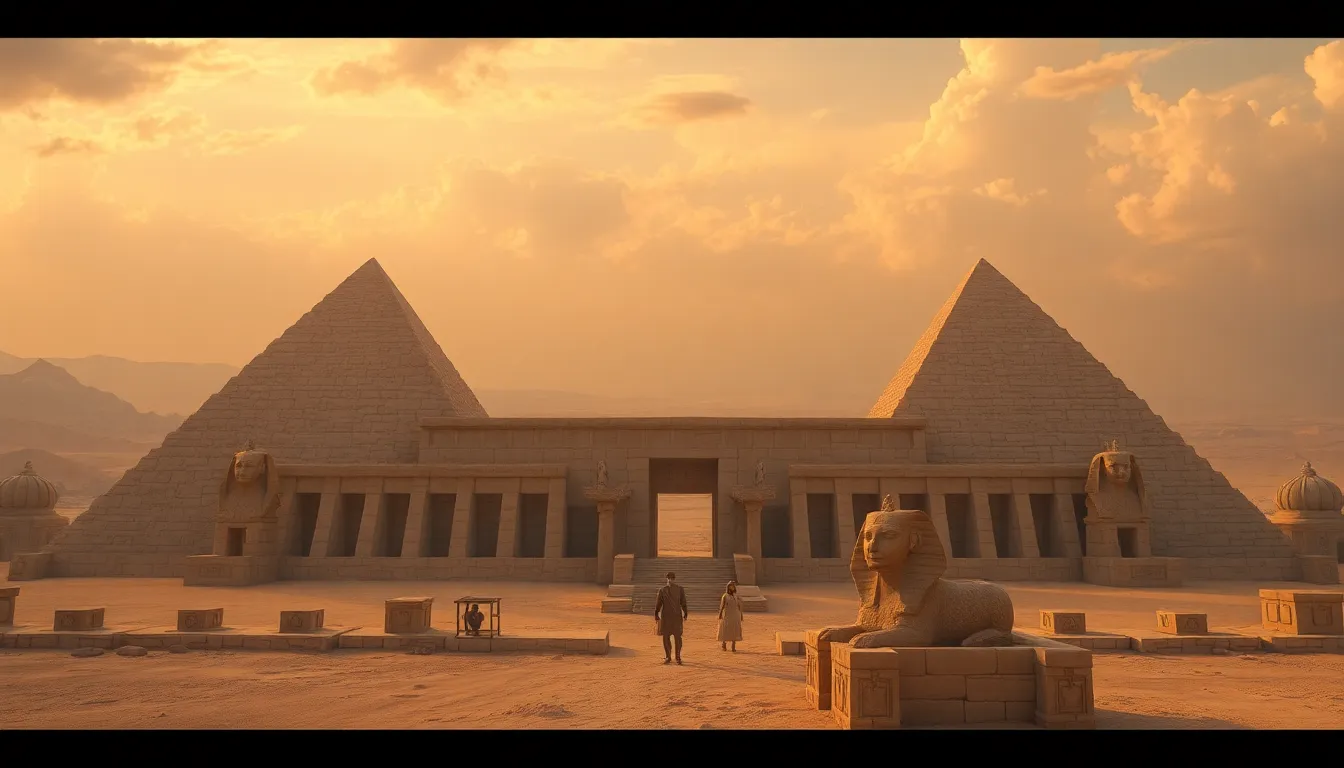
Exploring Egypt’s Nomes: The Intersection of Myth and Geography
I. Introduction
In ancient Egypt, the term “nomes” referred to the distinct administrative regions that divided the land into manageable sections. Each nome was significant not only for its administrative functions but also for its rich cultural and mythological heritage. Nomes played a crucial role in the governance and organization of ancient Egyptian society, and they were deeply intertwined with the myths and deities that defined the Egyptian worldview.
This article delves into the intersection of mythology and geography in Egyptian culture, exploring how these two elements shaped the understanding and significance of nomes throughout history.
II. Historical Context of Nomes
A. Origin and evolution of the nome system
The nome system dates back to the earliest periods of Egyptian history, likely originating during the prehistoric periods well before the unification of Upper and Lower Egypt. Initially, these divisions were based on local tribal regions and later evolved into formal administrative units under the centralized rule of the pharaohs.
By the time of the Old Kingdom, Egypt was divided into 42 nomes, each governed by a nomarch who reported directly to the pharaoh. Over time, the organization of nomes became vital for tax collection, resource management, and military administration, reflecting the growing complexity of Egyptian society.
B. The administrative and political importance of nomes in ancient Egypt
Nomes were not merely geographical divisions; they also had significant administrative and political implications. Each nome had its own local government, with responsibilities that included:
- Taxation and resource allocation
- Local law enforcement
- Maintenance of irrigation systems
The nomarchs, who led these regions, were powerful figures often rivaling the authority of the pharaoh, especially during periods of political upheaval. This administrative framework allowed for efficient governance and resource management across the expansive Egyptian territory.
III. Geographical Distribution of Nomes
A. Mapping the nomes: Upper and Lower Egypt
Egypt’s nomes are traditionally divided into two main regions: Upper Egypt, which stretches from the Nile’s first cataract to the area just south of modern Cairo, and Lower Egypt, which encompasses the Nile Delta. Each region contains its own set of nomes, each with unique characteristics and significance.
In total, there are 22 nomes in Upper Egypt and 20 in Lower Egypt, each with its own capital city and patron deity.
B. Key geographical features associated with various nomes
The geographical features of each nome contributed to its identity and the myths associated with it. Some notable nomes include:
- Nome of the White Wall (Ity-Tawy): The capital of Egypt during the Middle Kingdom, associated with the city of Memphis.
- Nome of the Lotus (Buto): A significant nome in Lower Egypt linked to the goddess Wadjet.
- Nome of the Falcon (Nekhen): Associated with the god Horus and a major center for early kingship.
These geographical features not only defined the physical landscape but also influenced the cultural practices and myths of the people residing within those regions.
IV. Mythological Significance of Nomes
A. Deities associated with specific nomes
Each nome was often associated with specific deities, reflecting the local beliefs and practices of the inhabitants. For example:
- Nome of Memphis: Associated with Ptah, the creator god and patron of craftsmen.
- Nome of Heliopolis: Home to the sun god Ra, this nome was a major religious center.
- Nome of Thebes: Dedicated to Amun, one of the most important gods in the Egyptian pantheon.
These associations underscore the significant role that mythology played in the identity and governance of each nome.
B. Myths and legends tied to the land and its divisions
Many myths are intricately tied to the regions defined by nomes. For instance, the myth of Osiris, which involves themes of death and resurrection, is deeply rooted in the geography of the Nile and its surrounding areas. The division of the land into nomes also mirrors the concept of order versus chaos found in Egyptian mythology, where each nome represents an aspect of Ma’at, the principle of truth and cosmic order.
V. Cultural Practices and Traditions Linked to Nomes
A. Local festivals and rituals unique to each nome
Each nome had its own set of festivals and rituals that celebrated local deities and agricultural cycles. These included:
- Wepet-Renpet: The festival marking the New Year, celebrated across various nomes.
- Local harvest festivals: Many nomes had specific celebrations tied to the harvest seasons, honoring gods of fertility and agriculture.
- Rituals for the dead: Each nome had unique burial practices influenced by local beliefs about the afterlife.
These cultural practices reflect the diverse expressions of Egyptian identity linked to the geographical and mythological significance of each nome.
B. The role of nomes in Egyptian art and literature
Art and literature from ancient Egypt often depicted the significance of nomes. Local deities, landscapes, and festivals were common themes found in tomb paintings, temple reliefs, and literary texts. The representation of nomes in art served both a decorative and a ritualistic purpose, reinforcing the connection between geography and mythology.
VI. Nomes in the Context of Ancient Religion
A. Temples and sacred sites within nomes
Temples dedicated to local deities were often constructed within the boundaries of their respective nomes, serving as centers of worship and community gatherings. Notable temples include:
- The Temple of Karnak in Thebes, dedicated to Amun.
- The Temple of Ptah in Memphis, celebrating the creator god.
- The Temple of Horus in Edfu, associated with the falcon god.
These sacred sites were integral to the religious life of the community and served as a physical manifestation of the mythological narratives tied to each nome.
B. The relationship between geography and religious practices
The geographical features of a nome often influenced the religious practices of its inhabitants. The Nile’s cyclical flooding, for instance, was celebrated in rituals that honored fertility and rebirth, crucial themes in Egyptian mythology. The interplay between the land and its divine significance underscores the holistic nature of Egyptian spirituality, where geography and belief systems were deeply interwoven.
VII. Modern Exploration and Interpretation of Nomes
A. Archaeological discoveries and their implications
Modern archaeology has revealed much about the nome system and its significance in ancient Egyptian society. Excavations have uncovered numerous temples, artifacts, and inscriptions that provide insights into the administrative, cultural, and religious practices linked to each nome. These discoveries have helped historians and archaeologists reconstruct the complex social and political landscape of ancient Egypt.
B. Contemporary understanding of nomes in Egyptian heritage
Today, nomes are recognized not only for their historical and archaeological significance but also for their role in shaping modern Egyptian identity. Understanding the historical context of nomes aids in appreciating the rich tapestry of Egypt’s cultural heritage and the enduring legacy of its ancient civilization.
VIII. Conclusion
The exploration of Egypt’s nomes reveals a fascinating intersection of myth and geography that has shaped the cultural identity of the region for millennia. The enduring legacy of nomes in Egyptian heritage highlights the importance of these divisions in understanding the complexities of ancient Egyptian society.
By examining the interplay between myth and geography, we gain valuable insights into the historical contexts that have influenced not only ancient beliefs but also the modern understanding of Egypt’s rich cultural legacy.