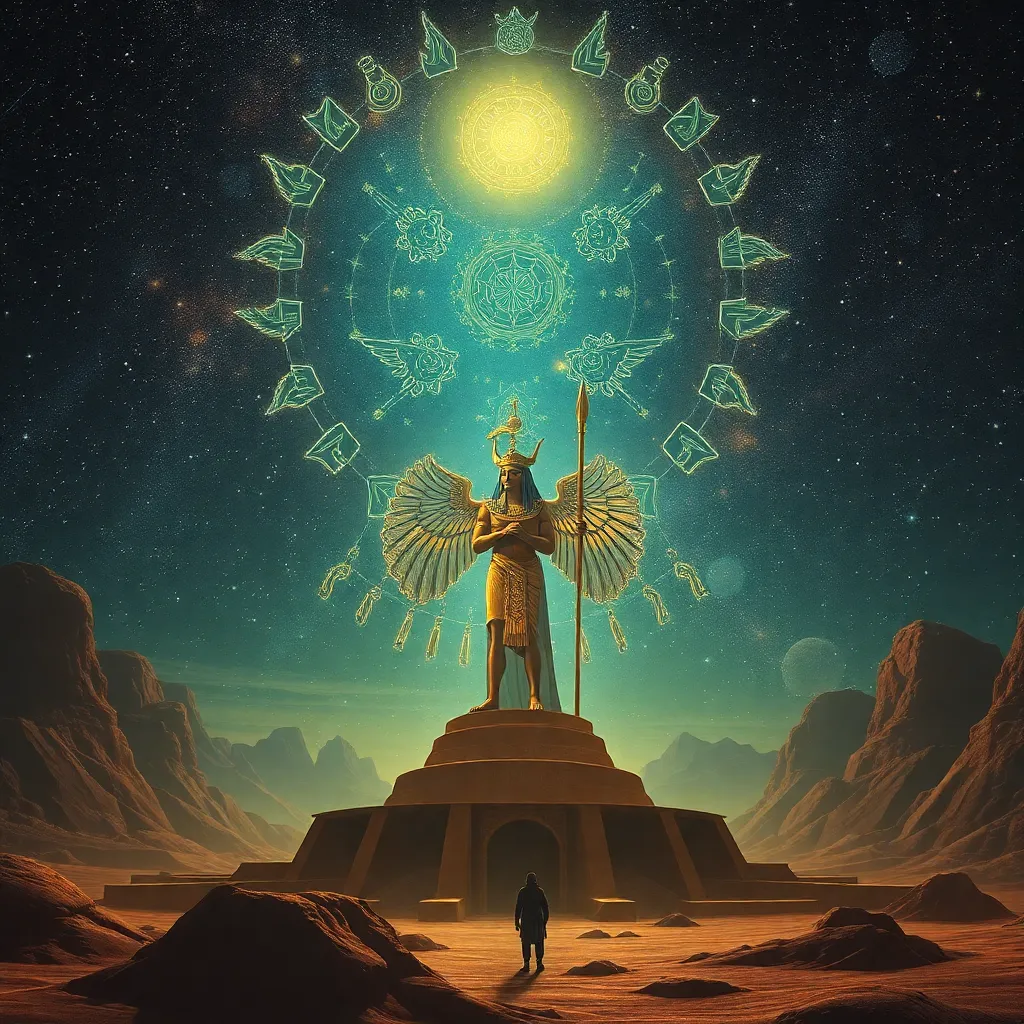
Egyptian Myths of the Afterlife: A Journey Through the Stars
I. Introduction
The ancient Egyptians possessed a rich tapestry of beliefs surrounding the afterlife, a realm they viewed as both a continuation of life and a reflection of one’s earthly deeds. To them, death was not an end, but rather a transition to a different existence, where the soul would embark on a journey through the stars.
The significance of the afterlife in ancient Egyptian culture cannot be overstated. It influenced their art, architecture, and daily practices, as they sought to ensure a favorable outcome in the afterlife. This article aims to explore the intricate myths and symbolism tied to the celestial journey that awaited the deceased in ancient Egyptian beliefs.
II. The Concept of the Afterlife in Ancient Egypt
In ancient Egyptian thought, death was viewed through a dual lens: a natural part of life and a significant transition. The soul, known as the ‘ba’, was believed to leave the body, while the ‘ka’, a life force, remained linked to it. Together, these aspects of the soul would navigate the afterlife.
The concept of Ma’at, representing truth, balance, and cosmic order, was central to these beliefs. Living according to Ma’at ensured that one would achieve a harmonious afterlife. The afterlife was not just a personal journey but also reflected societal norms and practices, as the way one lived dictated their fate beyond death.
III. The Journey of the Soul
The journey of the soul after death was a complex process. Upon death, the deceased would face judgment in a ceremony known as the Weighing of the Heart. This crucial event determined their fate in the afterlife.
- The heart of the deceased was placed on one side of a scale, while the feather of Ma’at, symbolizing truth and justice, was placed on the other.
- If the heart weighed less than or equal to the feather, the soul was deemed worthy and allowed to enter the afterlife.
- If the heart was heavier, it represented a life filled with wrongdoing, and the soul would be devoured by Ammit, the devourer of the dead.
This judgment was a pivotal moment, with rewards of eternal life in the Field of Reeds awaiting the righteous, while punishments awaited those deemed unworthy.
IV. The Role of Deities in the Afterlife
The afterlife was overseen by a pantheon of deities, each playing a crucial role in guiding and protecting the souls of the deceased.
- Osiris: The god of the afterlife, resurrection, and fertility, Osiris was the central figure in the myth of rebirth. He presided over the judgment of the dead and offered them hope for eternal life.
- Anubis: Known as the protector of graves and the guide to the underworld, Anubis played a vital role in the embalming process and ensured safe passage for the souls.
- Other deities: Numerous other gods and goddesses, such as Thoth, the god of wisdom, and Horus, the protector of the pharaoh, also participated in the afterlife journey, aiding the deceased in various ways.
V. The Duat: The Egyptian Underworld
The Duat, or the Egyptian underworld, was a realm filled with both fearsome challenges and wondrous landscapes. It was a place where souls would journey through various trials before reaching their final destination.
The trials included navigating treacherous waters, facing monsters, and overcoming obstacles that tested the soul’s worthiness. The significance of funerary texts, such as the Book of the Dead, was paramount, as they contained spells and instructions to aid the deceased in overcoming these challenges.
VI. Celestial Bodies and the Afterlife
The ancient Egyptians believed in a profound connection between the stars and the afterlife. The celestial realm was not merely a backdrop but a vital component of their beliefs.
- Nut: The sky goddess, represented by the Milky Way, was viewed as the arch that enveloped the earth. The stars were seen as souls of the deceased, journeying through her body.
- Orion: This constellation was associated with Osiris and the soul’s journey to the stars. The Egyptians believed that the souls of the righteous would join the stars, particularly in Orion, where they would live eternally.
VII. Funerary Practices and Their Symbolism
Funerary practices in ancient Egypt were deeply symbolic and aimed at ensuring a safe passage to the afterlife. Mummification was one of the most critical rituals, preserving the body for the afterlife.
- Mummification: This process aimed to prevent decay and maintain the body’s integrity, allowing the ‘ka’ to recognize and inhabit it in the afterlife.
- Tombs: Elaborate tombs served as gateways to the afterlife, designed to protect the body and provide for the deceased’s needs in the next world.
- Offerings and spells: Relatives would leave offerings of food, drink, and other items, while spells inscribed on tomb walls were meant to guide and protect the deceased on their journey.
VIII. Conclusion
In summary, the ancient Egyptians held complex beliefs regarding the afterlife that shaped their culture and practices. From the judgment of the soul to the celestial journey through the stars, each aspect reflected their values and understanding of existence.
The enduring legacy of these myths continues to influence modern culture, as the fascination with Egyptian afterlife beliefs persists in literature, art, and popular media. Ultimately, the significance of the stars in the Egyptian conception of life after death serves as a reminder of humanity’s eternal quest for understanding and connection to the cosmos.