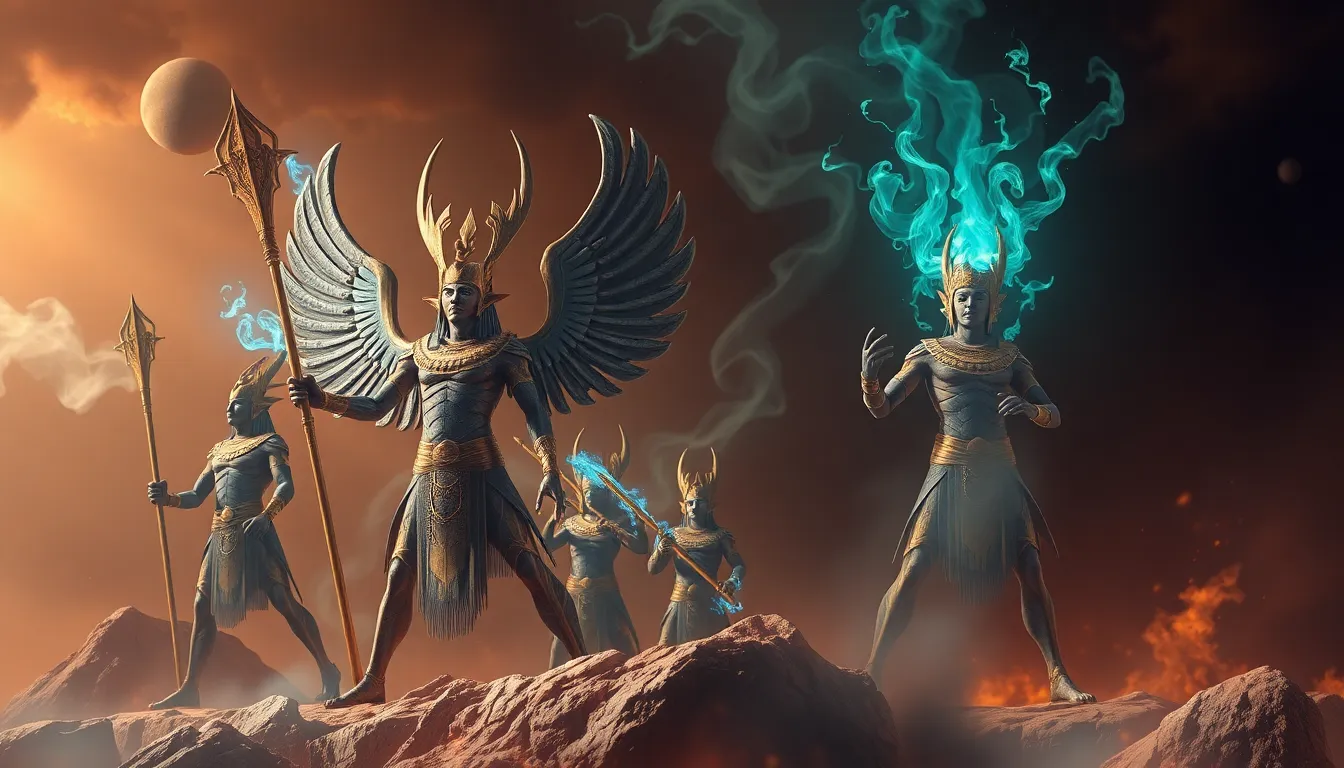
Divine Retribution: The Fearsome Power of Egyptian Deities
I. Introduction
In ancient Egyptian belief, divine retribution refers to the consequences imposed by the gods on individuals for their actions, particularly those that violate the moral order of the universe. This concept is deeply rooted in the Egyptians’ understanding of justice and order, with deities acting as enforcers of these principles. The significance of deities in maintaining balance and enforcing moral order cannot be overstated; they were seen as the ultimate arbiters of right and wrong.
This article explores the key deities associated with divine retribution in Egyptian mythology, the principles they embody, and how their stories and rituals reflect the ancient Egyptians’ understanding of justice and morality. We will delve into the roles of Ma’at, Sekhmet, and Anubis, examining their influence on both the mortal realm and the afterlife.
II. Understanding the Egyptian Pantheon
The Egyptian pantheon is rich with gods and goddesses who embody various aspects of life, death, and the universe. Among them, several are particularly associated with the theme of retribution:
- Ma’at: The goddess of truth and justice, representing the moral order of the universe.
- Sekhmet: The lioness goddess of war and vengeance, known for her fierce temperament.
- Anubis: The god of the afterlife and judgment, responsible for guiding souls in their journey beyond death.
These deities played crucial roles in the lives of the ancient Egyptians, serving as both protectors and enforcers of moral conduct.
III. The Concept of Ma’at
Ma’at is much more than just a goddess; she represents a fundamental principle of order, truth, and justice that permeates every aspect of Egyptian life. Her presence ensures that chaos does not overrun the world, and she is often depicted with an ostrich feather, symbolizing balance and truth.
The influence of Ma’at on divine retribution is profound. When individuals acted against the principles of Ma’at, they faced the wrath of the deities, which could manifest in various forms of punishment or chaos. Ancient Egyptians believed that maintaining Ma’at was essential not only for individual prosperity but also for the stability of society as a whole.
Numerous myths illustrate Ma’at’s power. For example, in the myth of Osiris, the balance of Ma’at is disrupted by Set’s actions, leading to a series of divine interventions aimed at restoring order. This narrative serves as a reminder of the consequences of moral transgressions.
IV. Sekhmet: The Avenger of the Wronged
Sekhmet is perhaps one of the most fearsome deities associated with retribution. Known as the lioness goddess of war, she embodies the fierce and destructive aspects of divine retribution. Myths surrounding Sekhmet often depict her as a vengeful force unleashed upon those who disturb the balance of Ma’at.
One of the most notable tales involves Sekhmet’s rampage against humanity, which was a punishment for their defiance against Ra, the sun god. To quell her wrath, Ra devised a plan to intoxicate her with beer dyed red to resemble blood. This act not only saved humanity but also highlighted the delicate balance between divine retribution and mercy.
To appease Sekhmet, ancient Egyptians performed various rituals and offerings, particularly during the festival of Sekhmet. Such rituals included:
- Animal sacrifices.
- Offerings of food and drink.
- Prayers and hymns praising her strength.
The cult of Sekhmet was prominent in ancient Egypt, with many temples dedicated to her worship, showcasing her importance in the religious practices of the time.
V. Anubis and the Judgment of the Dead
Anubis holds a vital role in the afterlife, particularly in the judgment of souls. As the god of mummification and the protector of graves, Anubis guides the deceased through the realm of the dead, ensuring they receive a fair judgment based on their earthly deeds.
The weighing of the heart ceremony is a pivotal aspect of Anubis’s role. In this ceremony, the heart of the deceased is placed on a scale opposite the feather of Ma’at. If the heart is lighter or equal in weight to the feather, the soul is deemed worthy and allowed to enter the afterlife. However, if the heart is heavier, it is devoured by Ammit, a fearsome creature, resulting in eternal damnation.
The consequences of failing Ma’at’s test serve as a powerful reminder of the importance of living a just and moral life. The judgment scene emphasizes the idea that divine retribution is not merely punitive but also serves to uphold the cosmic order.
VI. The Duality of Divine Retribution
The concept of divine retribution in Egyptian mythology embodies a complex duality. While punishment for wrongdoing is a significant aspect, the deities also offer protection and mercy to those who uphold Ma’at. This balance is essential for understanding the moral framework of ancient Egyptian society.
Examples of retributive justice versus merciful intervention can be seen in various myths, where the gods may choose to forgive or punish based on the context of the actions taken. This duality reflects the complexities of human morality, showcasing that the line between right and wrong is often blurred.
VII. Modern Interpretations and Influences
The legacy of Egyptian deities and their concepts of justice continues to resonate in modern culture. Themes of retribution and moral order appear in various forms, from literature to film, as well as in discussions about justice in contemporary society. The archetypes represented by these deities provide a framework for understanding the consequences of our actions.
When compared to other mythologies, Egyptian beliefs about divine retribution share similarities with the concepts found in Greek and Norse mythologies, where gods also serve as enforcers of justice and morality. These comparisons highlight the universal human concern with ethics and the repercussions of one’s actions.
In contemporary beliefs about justice and morality, the influence of these ancient deities can be seen in the ongoing debates regarding justice systems, personal responsibility, and the balance between punishment and rehabilitation.
VIII. Conclusion
In conclusion, the importance of divine retribution in Egyptian mythology reflects a profound understanding of morality and justice. Through the powerful narratives of Ma’at, Sekhmet, and Anubis, we gain insight into how the ancient Egyptians viewed their relationship with the divine and the moral order of the universe.
These ancient beliefs continue to resonate today, reminding us of the enduring power of justice and the consequences of our actions. As we reflect on the relevance of Egyptian deities in contemporary society, we can appreciate the timeless nature of their lessons on morality and the balance between retribution and mercy.