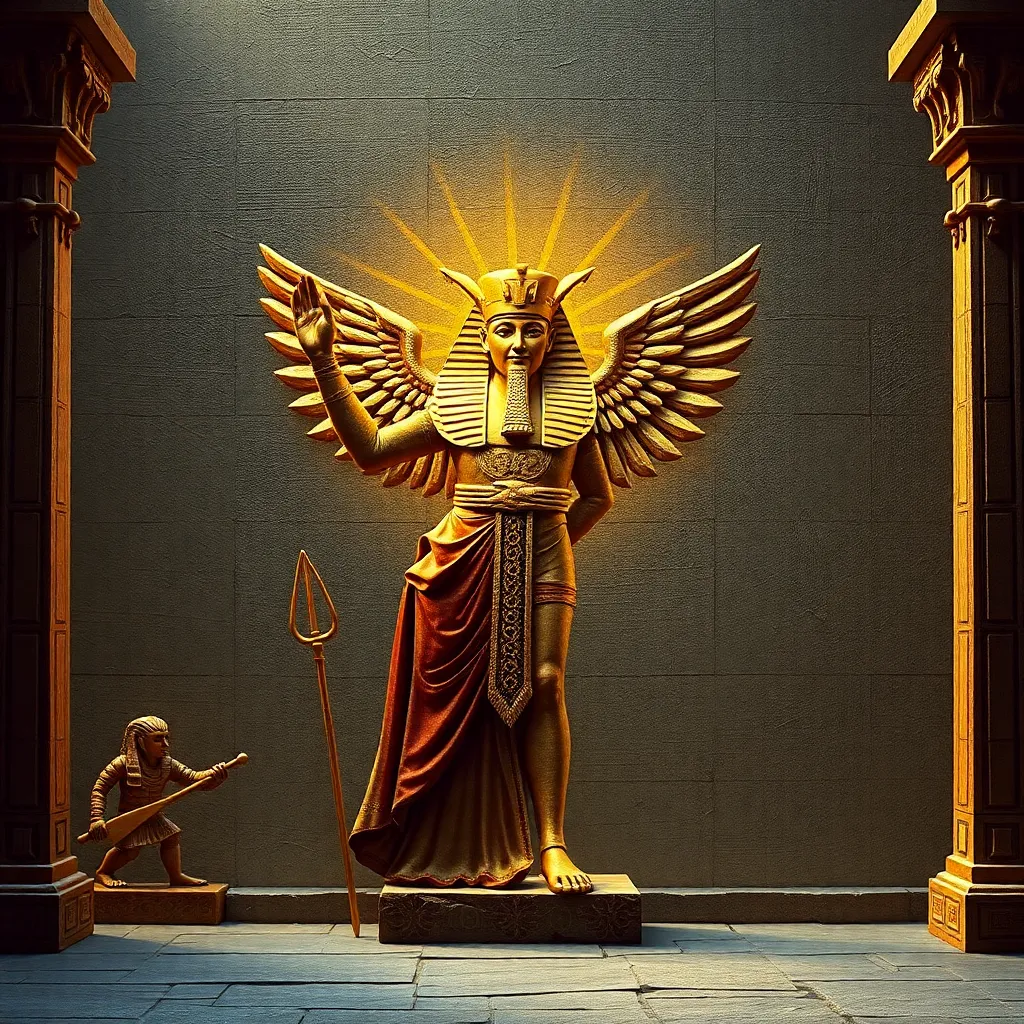
Atenism: A Comparative Study with Other Monotheistic Religions
I. Introduction
Atenism was a revolutionary religious movement in ancient Egypt that emphasized the worship of a singular deity, the Aten, represented as the sun disk. It marked a significant departure from traditional polytheistic practices and introduced concepts that resonate with modern monotheistic religions.
This study aims to explore Atenism’s historical context, core beliefs, and its relationships with other monotheistic faiths, such as Judaism, Christianity, and Islam. By understanding Atenism, we can gain insights into the evolution of religious thought and the nature of monotheism.
II. Historical Background of Atenism
A. Origins during the reign of Akhenaten
Atenism emerged during the 14th century BCE under the reign of Pharaoh Akhenaten, originally known as Amenhotep IV. Akhenaten sought to revolutionize Egyptian religion by promoting the worship of the Aten as the sole god, effectively sidelining the traditional pantheon of deities.
B. Key beliefs and practices of Atenism
Central to Atenism was the belief in the Aten as the sole creator and sustainer of life. Akhenaten established new religious practices, which included:
- Daily prayers directed to the Aten.
- A shift in temple construction from traditional polytheistic temples to open-air sanctuaries dedicated to the sun.
- Artistic representations that depicted the Aten as a radiant sun disk.
C. Transition and decline after Akhenaten’s death
After Akhenaten’s death, Atenism faced significant opposition. His successors, especially Tutankhamun, restored the worship of the traditional gods, leading to the decline of Atenism by the end of the 18th Dynasty.
III. Core Beliefs of Atenism
A. Concept of the Aten as the singular deity
The Aten was viewed as the embodiment of divine power, representing a singular god who was all-encompassing. This notion of monotheism was radical for its time and has been compared to later religious beliefs.
B. Relationship between the deity and humanity
Atenism fostered a direct relationship between the Aten and humanity, emphasizing personal piety and direct communication through prayer and worship. This relationship was characterized by:
- A belief in divine benevolence and grace.
- A focus on individual morality and ethical living.
C. Ethical and moral implications of Atenism
The ethical teachings of Atenism encouraged followers to live in harmony with creation and to acknowledge the Aten’s role in sustaining life. This moral framework laid a foundation for later religious teachings on ethics and responsibility.
IV. Similarities with Other Monotheistic Religions
A. Comparison with Judaism
1. Concept of a singular God
Like Atenism, Judaism emphasizes the belief in one God, who is both transcendent and immanent. This shared concept of monotheism raises questions about potential influences.
2. Influence of Atenism on early Jewish thought
Some scholars argue that Atenism may have influenced early Jewish monotheism, particularly during the Babylonian Exile when Jewish thought was evolving.
B. Parallel with Christianity
1. The idea of divine grace and love
Christianity, like Atenism, emphasizes the importance of divine love and grace. The relationship between humanity and the divine in both religions reveals profound theological similarities.
2. Monotheism and its implications
The monotheistic nature of both faiths raises similar questions regarding ethical living and divine relationship, echoing the teachings found in Atenism.
C. Connection to Islam
1. The oneness of God (Tawhid)
Islam’s fundamental concept of Tawhid, or the oneness of God, parallels the beliefs of Atenism, reflecting a shared emphasis on singular divinity.
2. Prophetic traditions and their roles
In Islam, prophets serve as intermediaries between God and humanity, reminiscent of the role Akhenaten played as a mediator for the Aten during his reign.
V. Differences from Other Monotheistic Religions
A. Nature of the deity in Atenism vs. other religions
Unlike the personal God in Judaism, Christianity, and Islam, the Aten was often depicted more abstractly, representing a distant cosmic force rather than a personal deity with whom followers could have a direct relationship.
B. Practices and rituals unique to Atenism
Atenism featured rituals centered around solar worship, which differed significantly from the practices found in other monotheistic religions. Unique practices included:
- Open-air altars for sun worship.
- Festivals centered on the solar cycle.
C. Impact of political power on religious practices
The establishment of Atenism was closely tied to Akhenaten’s political power. This contrasts with other monotheistic religions, where the separation of church and state often allows for different expressions of faith.
VI. Atenism’s Influence on Later Religious Thought
A. Historical impact on monotheism in the ancient world
Atenism’s emergence marks one of the earliest known instances of monotheism, influencing later religious developments in the ancient Near East and beyond.
B. Legacy in Egyptian religion and beyond
Despite its decline, Atenism left a lasting legacy on Egyptian religion, contributing to the eventual rise of monotheistic thought in the region.
C. Atenism’s role in the development of religious philosophy
The philosophical implications of Atenism regarding ethics and the nature of the divine paved the way for future discussions on these themes in later religious traditions.
VII. Modern Interpretations and Relevance
A. Contemporary views on Atenism
Modern scholars view Atenism as a pivotal moment in religious history, illustrating early attempts at monotheistic worship and the complexities of divine relationships.
B. Lessons from Atenism for modern monotheistic faiths
Atenism provides valuable insights into the nature of faith, the role of leadership in religion, and the importance of ethical living in relation to divine belief.
C. The significance of Atenism in the study of religious history
Atenism’s unique position in the historical timeline of monotheism highlights the diverse paths that religious thought has taken, making it a significant subject of study in religious history.
VIII. Conclusion
This comparative study of Atenism reveals key similarities and differences with other monotheistic religions, emphasizing its unique contributions to the discourse on divine worship and ethical living.
Understanding Atenism enriches our comprehension of monotheism’s evolution and underscores the importance of comparative studies in religion for fostering interfaith dialogue and appreciation.
Future research on Atenism and its influence on subsequent monotheistic traditions can further illuminate the complexities of faith and its development through history.