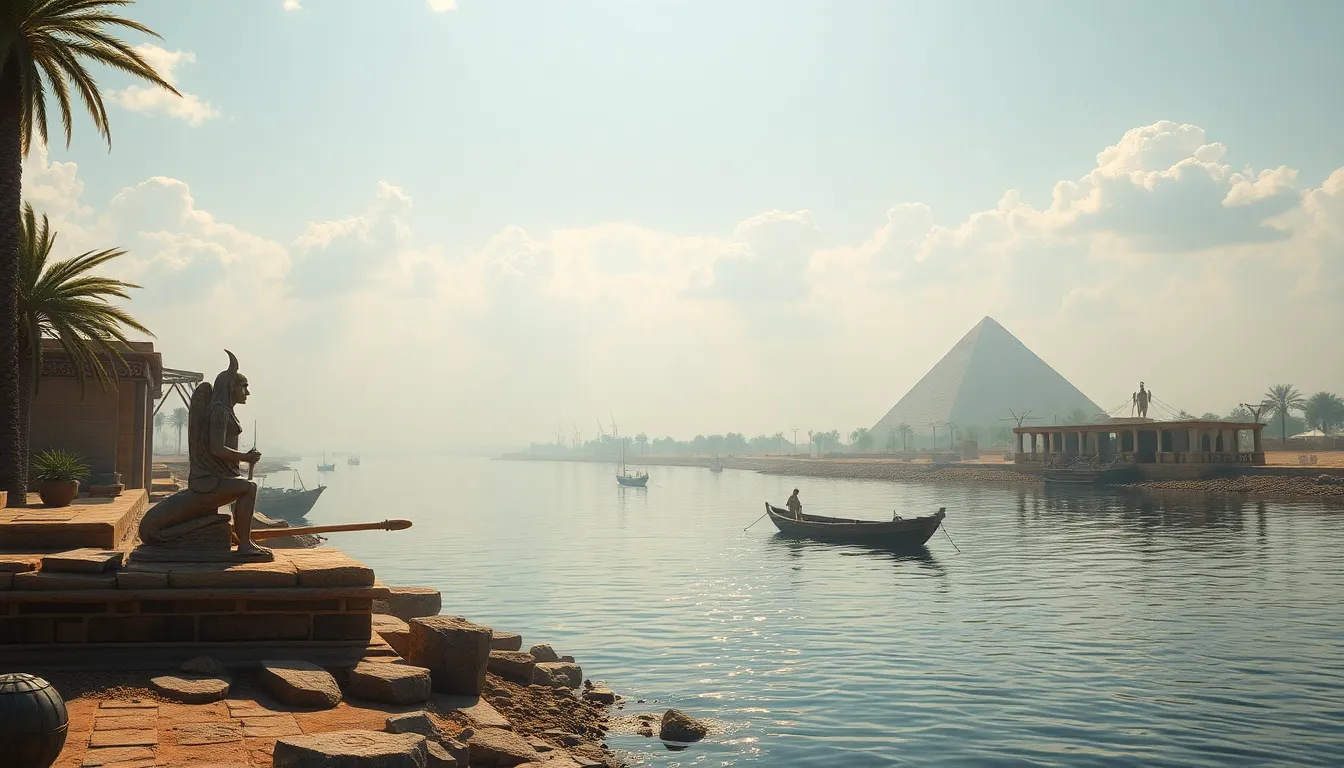
Ancient Egyptians and the Nile: A Symbiotic Relationship
I. Introduction
The Ancient Egyptian civilization, one of the most remarkable cultures in human history, thrived for over three millennia along the banks of the Nile River. Known for its monumental architecture, complex social structures, and profound contributions to art and science, Ancient Egypt was deeply connected to its environment. Central to this connection was the Nile, which provided not only water but also fertile land and a means of transportation. The Nile was not just a lifeline but a central element that shaped every aspect of Ancient Egyptian society.
II. The Geography of the Nile
The Nile River, the longest river in the world, flows approximately 6,650 kilometers (4,130 miles) from its sources in East Africa to the Mediterranean Sea. Its course meanders through diverse landscapes, including deserts, mountains, and valleys, significantly impacting the geography of Egypt.
A. Course and Characteristics of the Nile River
The Nile is divided into two main tributaries: the White Nile and the Blue Nile. The White Nile originates from Lake Victoria, while the Blue Nile flows from the Ethiopian Highlands. These two rivers converge near Khartoum, Sudan, before flowing northward into Egypt.
B. The Nile’s Impact on the Surrounding Landscape
The Nile has created a narrow strip of fertile land in an otherwise arid environment, known as the Nile Valley. This lush area was crucial for agriculture and supported a dense population, allowing cities to flourish.
C. Seasonal Flooding and Its Significance
One of the most important features of the Nile was its annual flooding, which deposited nutrient-rich silt along its banks. This flooding typically occurred between June and September and was vital for replenishing the soil, ensuring successful harvests.
III. Agricultural Practices and the Nile
The lifeblood of Ancient Egypt was its agriculture, which was intricately tied to the Nile.
A. Irrigation Techniques Developed by the Egyptians
To maximize the benefits of the Nile, the Ancient Egyptians developed sophisticated irrigation techniques. They constructed canals and basins to control the flow of water and distribute it to their fields.
B. The Role of the Nile in Crop Cultivation
The river’s seasonal flooding provided the necessary water for crops. Farmers relied on the flooding to sow their seeds in the rich silt, which was essential for crop growth.
C. Major Crops and Their Economic Importance
Some of the major crops cultivated along the Nile included:
- Wheat
- Barley
- Flax
- Fruits (dates, figs)
- Vegetables (onions, garlic)
These crops were not only staples of the Egyptian diet but also played significant roles in trade and economy.
IV. The Nile and Transportation
The Nile served as a critical transportation route for the Ancient Egyptians, facilitating trade and communication.
A. The River as a Trade Route
The ability to navigate the Nile allowed for the movement of goods between Upper and Lower Egypt, fostering trade networks. Essential goods such as grain, papyrus, and luxury items were transported along the river.
B. Development of Boat-Building and Navigation Skills
The Ancient Egyptians excelled in boat-building, creating vessels made from papyrus reeds and wood. These boats were vital for trade and travel, allowing them to exploit the river’s resources effectively.
C. The Influence of the Nile on Communication and Commerce
The Nile enabled communication between distant regions, leading to a robust economy and cultural exchange. It connected various communities, allowing the spread of ideas and goods.
V. Religion and Mythology Related to the Nile
The Nile was not only a physical lifeline but also a spiritual one, deeply embedded in the religious beliefs of Ancient Egyptians.
A. The Nile in Egyptian Mythology and Beliefs
The Nile was revered as a divine entity, embodying the essence of life and fertility. It was often personified as the god Hapi, who represented abundance and nourishment.
B. Gods and Goddesses Associated with the River
Several deities were associated with the Nile, including:
- Hapi: The god of the annual flooding, symbolizing fertility.
- Osiris: Associated with the afterlife and rebirth, linked to the fertility of the land.
- Isis: A goddess of magic and motherhood, who was believed to protect the Nile and ensure bountiful harvests.
C. Rituals and Festivals Centered Around the Nile
Ancient Egyptians held numerous rituals and festivals to honor the Nile, celebrating its life-giving properties and seeking favor for bountiful harvests. The Wepet-Renpet festival, marking the start of the agricultural year, was particularly significant.
VI. The Nile’s Role in Urban Development
The presence of the Nile significantly influenced the development of urban centers in Ancient Egypt.
A. Major Cities and Settlements Along the Nile
Cities such as Thebes, Memphis, and Alexandria were established along the Nile, benefiting from its resources and trade routes.
B. Architectural Advancements Influenced by the River
The Nile’s resources allowed for architectural marvels, including temples and pyramids, which were often located near the river to symbolize the connection between the divine and the earthly.
C. Urban Planning and Infrastructure Related to the Nile
Urban planning in Ancient Egypt was heavily influenced by the Nile, with streets and buildings oriented towards the river. Infrastructure like docks and warehouses facilitated trade and commerce.
VII. Challenges and Adaptations
Despite its benefits, the Nile also posed challenges to Ancient Egyptian society.
A. Natural Disasters and Their Impact on Nile-Based Societies
Natural disasters, such as droughts or excessive flooding, could devastate crops and disrupt the economy. These fluctuations in water levels could lead to famine or hardship.
B. Adaptation Strategies of the Ancient Egyptians
To cope with the challenges posed by the Nile, Ancient Egyptians developed adaptive strategies, including:
- Improved irrigation systems to manage water resources.
- Crop rotation to maintain soil fertility.
- Storage techniques to preserve surplus grain during good years.
C. Long-term Effects of Climate Change and Environmental Shifts
Over centuries, climate change and environmental shifts altered the Nile’s flow and surrounding ecosystems, necessitating continuous adaptation from the Ancient Egyptians.
VIII. Conclusion
The Nile River was the cornerstone of Ancient Egyptian civilization, influencing every aspect of life from agriculture to religion. Its annual floods provided the fertile land essential for farming, while its waters served as a vital transportation route that facilitated trade and communication.
Today, the legacy of the Nile persists in modern Egypt, where it remains a crucial water source and a symbol of life and prosperity. The enduring connection between the Nile and its people exemplifies the interdependence between a civilization and its environment, highlighting the river’s timeless significance in shaping culture, economy, and spirituality.