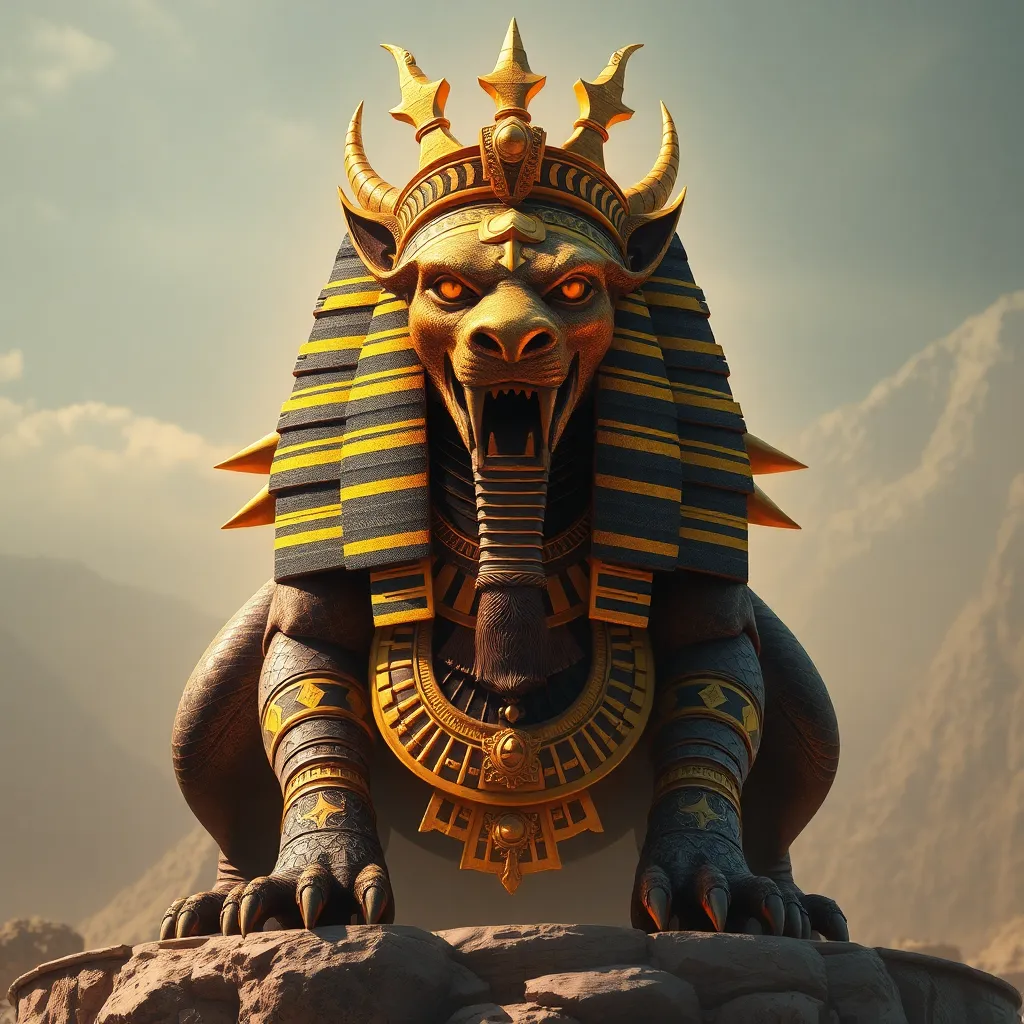
Ammit: The Beast of Judgment and the Afterlife
I. Introduction to Ammit
Ammit, often referred to as the “Devourer of the Dead,” holds a pivotal role in ancient Egyptian mythology, particularly in the context of judgment and the afterlife. This fearsome creature, part lion, hippopotamus, and crocodile, embodies the consequences of a life poorly lived. In ancient Egyptian belief, the afterlife was not merely a realm of peace and reward; it was also a domain where the dead faced divine judgment. This article aims to explore Ammit’s significance in ancient Egyptian culture, her origins, and her enduring legacy.
II. The Mythological Origins of Ammit
A. Historical context of ancient Egyptian beliefs about the afterlife
Ancient Egyptians held a profound belief in the afterlife, where one’s soul would journey to the Hall of Ma’at after death. Here, the heart of the deceased would be weighed against the feather of Ma’at, representing truth and justice. The outcomes of this ceremony determined whether a soul would enjoy eternal life or face annihilation.
B. Description of Ammit’s physical appearance
Ammit is often depicted as a composite creature, combining features of three of the most feared animals in ancient Egypt:
- Lion: Symbolizes strength and ferocity.
- Hippopotamus: Represents unpredictability and danger.
- Crocodile: A symbol of chaos and destruction.
This terrifying appearance underscores her role as a devourer of souls who fail the judgment process.
C. Role in Egyptian mythology and religious texts
Ammit appears in various religious texts, including the Book of the Dead, where she is described as waiting for the results of the heart’s weighing. Her presence serves as a grim reminder of the consequences of one’s earthly actions.
III. The Weighing of the Heart Ceremony
A. Explanation of the ceremony conducted by Osiris
The Weighing of the Heart ceremony is a critical aspect of the judgment process in the afterlife. Presided over by Osiris, the god of the afterlife, this ceremony involved the deceased standing before a diverse assembly of gods.
B. The roles of the heart, feather of Ma’at, and Ammit
During the ceremony:
- The deceased’s heart, which was believed to hold their true essence, was placed on one side of a scale.
- The feather of Ma’at, symbolizing truth and justice, was placed on the other side.
- If the heart was lighter than the feather, the soul was deemed worthy and could enter the afterlife. If it was heavier, Ammit would devour the heart, sealing the soul’s fate.
C. Importance of this ceremony in determining the fate of souls
This ceremony was not only a ritual but also a profound reflection of the moral values of ancient Egyptian society. It highlighted the importance of living a virtuous life, as the outcome of this judgment had eternal implications.
IV. Ammit’s Role as a Devourer
A. Description of Ammit’s function in the afterlife
As a devourer, Ammit’s primary function was to consume the hearts of those who failed the judgment. This act symbolized the ultimate punishment—eternal death, where the soul would cease to exist rather than enjoy an afterlife.
B. The consequences of being devoured by Ammit
The fate of being devoured by Ammit was one of the most feared outcomes. It represented complete annihilation, a fate worse than death itself, highlighting the severe consequences of a life led by immorality and wrongdoing.
C. Symbolism of devouring in relation to moral judgment
Ammit’s role as a devourer serves as a powerful metaphor for moral judgment in ancient Egypt. The act of devouring signifies a lack of redemption and the importance of ethical conduct in life.
V. The Cultural Impact of Ammit
A. Ammit in art and literature of ancient Egypt
Ammit has been depicted in various forms of ancient Egyptian art and literature. She was often illustrated in tomb paintings and sculptures, serving as a reminder of the moral consequences associated with one’s actions during life.
B. Influence on modern interpretations of judgment and morality
The concept of moral judgment personified by Ammit has influenced modern interpretations of justice and morality. Her image evokes a sense of accountability that resonates across cultures and eras.
C. Comparisons to other mythological creatures in different cultures
Ammit shares similarities with other mythological creatures across different cultures that embody themes of judgment and punishment, such as:
- Devil in Christianity: Represents temptation and eternal damnation.
- Yama in Hinduism: The god of death who judges souls.
- Azrael in Islam: The angel of death who separates souls from bodies.
VI. Ammit’s Representation in Popular Culture
A. Depictions in films, television, and video games
In recent years, Ammit has appeared in various forms of popular culture, often depicted as a fearsome creature that embodies judgment and moral consequence. Films, television series, and video games have all drawn inspiration from her mythos.
B. The evolution of Ammit’s character in contemporary narratives
Modern interpretations sometimes portray Ammit with more complexity, exploring themes of redemption and the gray areas of morality, shifting her from a mere devourer to a symbol of deeper ethical dilemmas.
C. Public perception of Ammit today
Today, Ammit is often viewed as a cautionary figure, representing the consequences of one’s actions and the importance of living with integrity. Her narrative continues to resonate, reflecting our timeless concerns about morality and justice.
VII. Theological Reflections on Judgment and Morality
A. Insights from Ammit’s narrative on morality in ancient Egypt
Ammit’s narrative offers profound insights into the moral framework of ancient Egyptian society, emphasizing the importance of living a righteous life aligned with Ma’at’s principles.
B. The role of fear and consequence in ethical behavior
The fear of Ammit’s judgment served as a powerful motivator for ethical behavior among the ancient Egyptians. The consequences of moral failings were stark and unforgiving, shaping societal norms.
C. Lessons from Ammit for modern audiences
Ammit’s story serves as a timeless warning about the importance of accountability and ethical living. In a world where moral ambiguity often reigns, her tale encourages contemporary audiences to reflect on their actions and the impact they have on themselves and others.
VIII. Conclusion
Ammit, the Devourer of the Dead, remains a significant figure in the realm of ancient Egyptian mythology, embodying the themes of judgment, morality, and the consequences of one’s actions. Her legacy endures in both historical narratives and modern interpretations, reminding us of the importance of living a virtuous life. As we continue to explore the rich tapestry of Egyptian mythology, Ammit’s story invites us to reflect on our own moral choices and their implications for our lives and the world around us.